
What story or stories are our models telling us : equally, what stories are we telling with our creations ?
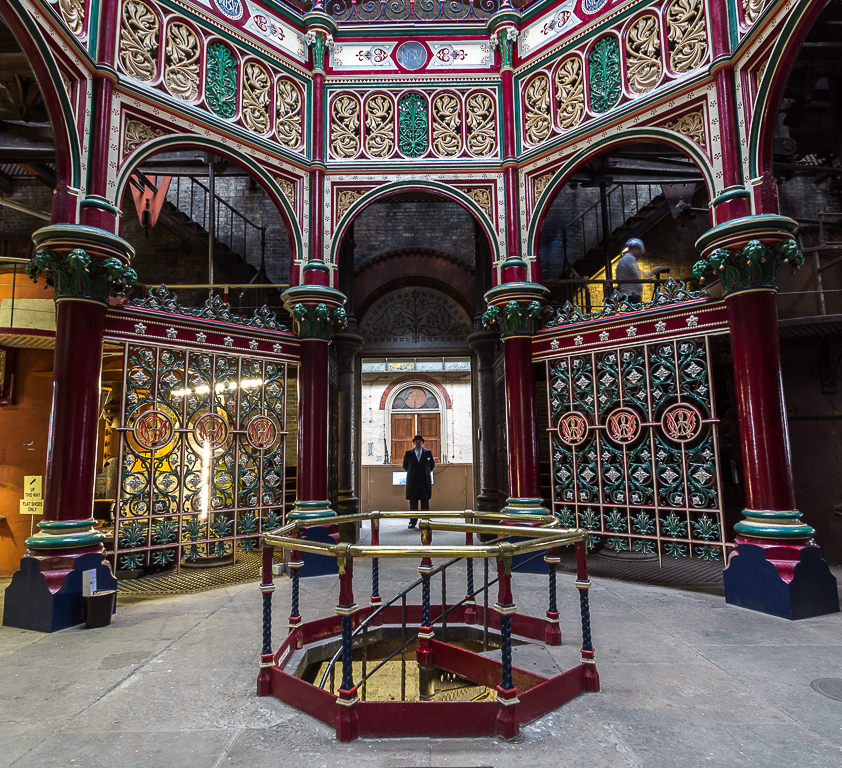
It’s my belief that a three dimensional model of any object or diorama, should tell a story that is both cohesive, believable and historically accurate. Right now i’m working on the centerpiece building for my model railway layout cum diorama based on a Cornish metals mine : I say metals rather than specifying Tin as most Cornish mines were used to mine and produce various metaliferous minerals and their end products. Around where I live that is mostly Copper, Tin and Arsenic although there is also Silver, Zinc, Tungsten and recently Lithium coming from some mines. One of my principal aims would be for a former Cornish miner (or maybe a relative) to see my model of a mine pump house or win engine house and to immediately dismiss it as being wildly inaccurate.
Author Phillip Pullman famously once said that he didn’t like the big Tolkien and not the many small Tolkien’s that followed his line : I once responded that J R Tolkien is, in a way, the alpha and omega (beginning and end) of that kind of fantasy. Tolkien, for me at least, was always believable even though it has a whole cast of peoples and beasties that never existed : it was even more believably so when Peter Jackson filmed it and the excellent crew at Weta studios in windy Wellington made physical models of the settings which are entirely believable ; in film and model terms they ‘read’ properly.
His own novel series – His Dark Materials – was made into an early Tv adaptation, which wasn’t great, and then a recent remake which I found hugely enjoyable : set in a kind of Steampunk setting with flying dirigibles (Zeppelins) and alternative universes, each with their own unique style. For me the Dark Materials remake was as good as it was because the level of technology being shown, and even the sets and buildings had that quality of reading well : one of my favorite film sets was the city of Cittagaze with it’s odd, almost Escher-like details.
I grew up in the sixties and absolutely admired anything by Jerry Anderson (Fireball XL5, Stingray & Thunderbirds) even if, by modern standards, the models weren’t great although they told a great story. My great pleasure was to treated to a day out in London once a year by the husband of my late mother’s shop assistant who was a model maker himself and working on a model diorama of his experience as a gunner in the north African campaign (El Alamein) so I was very much drawn to military modeling. A top day out in London might start with the Imperial War Museum and end many hours later with several hours at the Model Engineer Exhibition at the hall in Earls court where I think Led Zeppelin once played – I may have sneaked up onto the stage and peeked through the curtains – although not actually when they were playing !
It was at a Jerry Anderson exhibition in London that I got my first exposure to film sets and models specifically made for filming : if my memory serves it must have been more than just Jerry Anderson models as it was there that I saw my first life size Dalek and Cyberman. The first thing I ever wanted to be was a model maker for film but of course when I told anyone that I was laughed off the stage ; the careers person at my school had never heard of a professional model maker and even my late parents thought of it as just playing around with kids toys.
I guess now that my childhood infatuation with modelmaking was merely one aspect of being able to disappear into my own world : I suspect that this had more and more to do with my school days as, as soon as I left I mostly came out of myself, put model making aside and instead discovered motorcycles, the outdoors and girls. It’s also true that I was much more a simple kit builder rather than an all round model maker and I suspect that I wouldn’t have had the broad skillset needed to work in the film industry as a beginning professional model maker. Whatever : I gave it up and chased after other dreams instead.
Many years later I started a written and photographed blog as a means of expression : my partner tells me that the main reason she reads it is to find out what’s going on in my head. Recently I almost but not quite called it quits due to the series of strokes I had in 2014 and that the number of views I was getting was slowly declining : nowadays it seems that the audience that at one time enjoyed written stories mostly now turn to video via Youtube, The main reason that I didn’t pack it in is that I found it better to write than to not write – even if it only means something to me I use the basic skill and craft of writing to think about and write about the things that are happening around me.
I have, several times, tried to write actual book length stories – I have one almost complete first draft of one just sitting here as a series of blog pieces that belong together. In my last attempt with that idea I went away from my old genre of writing – sailing boats and the sea – and instead worked on an idea that is more Jules Verne science fiction crossed with Mary Shelley (frankenstein) victorian horror. At one point I was trying to imagine and visualize a structure/building that was a defensive front line watchtower and had a lot of fun writing it up : the main point here though is that I also started to build it as an actual model and only put it aside when I stripped out the old workshop. In my build I held in mind many things that film prop maker Adam Savage says in his workshop channel ‘Tested’. It’s of lesser relevance here but he was advising another model maker that the way to work is to get as close as possible to the original visualization as possible and not be wandering off into a steampunk style mash-up of technologies which are more style than substance.
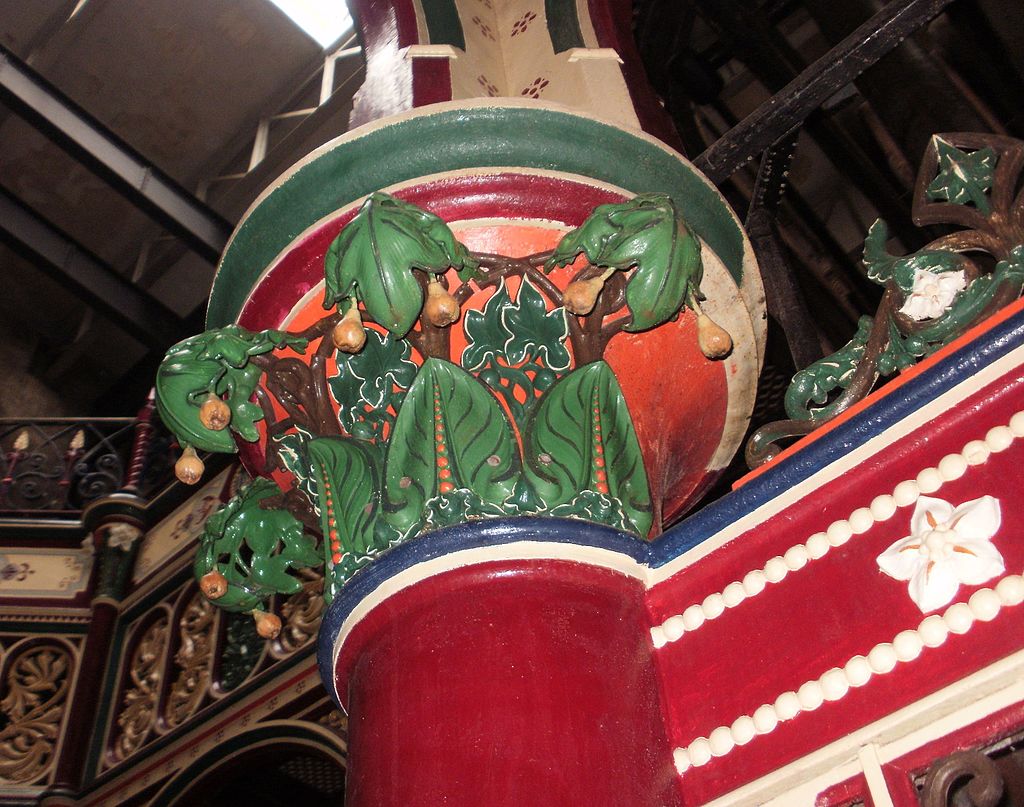
To explain the latter I want to end this post with a short story from my last job in the NHS. We were in the staff room having lunch and the talk was mostly about what the various staff were doing over the coming weekend : I was going sailing of course !. One of the staff nurses was rather into going to cosplay events and usually dressed up in what she said was a steampunk style. I was familiar with the idea of steampunk but wondered how she interpreted the genre for basing a costume. It seemed that her idea of steampunk costumes was to add clockwork type details to fairly ordinary wear and not, as I thought, to wear something with a quite bold Victorian/Edwardian basis and add froufrou to that. I happen to follow a maker of historical costume and a second one who wears historical Tatar costume on a daily basis : neither the Victorian/Edwardian costume or the Tatar costumes needed any frivolous detail to make them stand out and look truly different than the predictable and boring industrial made clothing that most people wear, Most Victorian engineering such as static steam engines and exciting locomotives don’t need tarting up either – if you’ve ever seen a Victorian era beam engine working you’ll know why.