


Getting stuff done (GSD) in 2026
In the short few years that I was a SCUBA diver we used to say “Plan the dive and dive the plan”. It was my first real experience of delivering a short, succint but detailed briefing : it was also the first time that I consciously worked to a checklist. I wasn’t being insufferably anal retentive and I was usually responsible for the people that I was leading on the dive. Many years later I would come to understand and value the use of S.M.A.R.T. plans for my training and quick but effective checklists when I was working as a specialist nurse and often had to be the one in charge of moving very sick patients between departments : hint….check that we have enough oxygen and whether the suction is working today !
Today, I want to lay out why I think it is that creating a granular and detailed plan for something that has lots of potential variables is far more effective and likely to have a much better outcome than making a vague resolution that doesn’t get acted on or is maybe played around with for a short period and is then forgotten. I also want to add some thoughts about setting goals especially when those goals are limited but still valuable.
I’m not a great one for snappy mnemonics – especially when I can’t remember how to even spell the damn word – although I do remember most of the details of what S.M.A.R.T contains so i’ll maybe have to make it up as I go along, Rather than getting all tedious and writing the whole thing out, in at least one of it’s several versions, I thought it best to run through one of my current plans and see where S.M.A.R.T. works nicely and where it seems to have some holes so :
Right now, I feel that i’m in a pretty poor state with my health, fitness and overall mobility. Two years ago I felt I had to give up on the two parts of my life that had always given me my outdoors life : namely my hiking and my sailing. My overall goal this year is to get part of that back such that I can go out for short microadventures locally : I have two specific goals inside that, both of which would require me to walk for several hours and carry a lightweight ‘bushcraft’ pack and loadout. What that needs is that I regain enough walking fitness partially off trail and on forest roads at minimum and while carrying a small amount of weight – enough to bivoauc for the night.
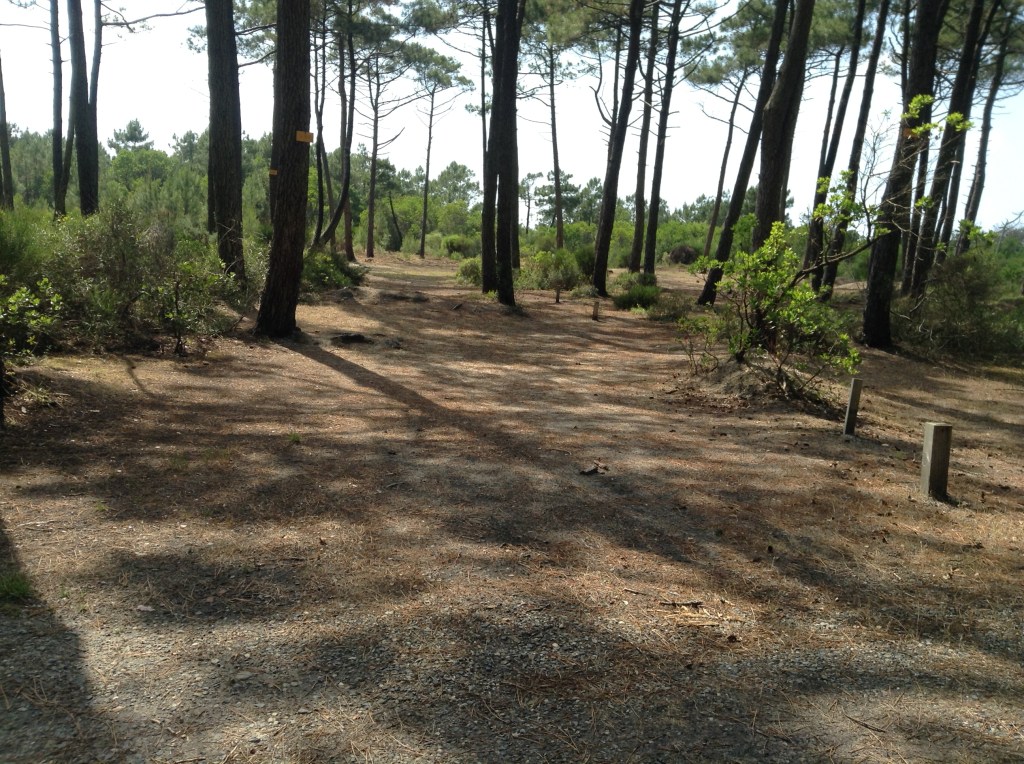
With that goal in mind and applying a S.M.A.R.T. plan the first thing I can say is that I am being (S)specific about my plan – that being that I am working towards being able to walk an increased distance, off trail, with say a load of 25 pounds on my back. That also accounts for (M) measurement in that I can specify a measurable weight and a given distance. That’s all fine as what it translates into is slowly increasing my walking distance by doing multiple short sessions per day and will soon include walking with a minimum load at first which will slowly increase during my next training plan period.
What people get sticky and argumentative with is the (A) achievable, some say that we should only plan to do things that we know we can achieve, do that and not get disheartened as and when the wheels come off and we fail. I disagree in that we could plan to do things that are at the outer limits of what we can do and if that is a bit too much then dial things back a bit. My analogy is with training with weights : most days we should only work at a given percentage of our known capacity and only try for what we call a 1RM or one rep max which is the absolute limit we can press. The training ‘zone’ can be anywhere between 65 and 80 percent of that in a normal session : for instance, if I chose to work at the light end then I would train faster and with less sets of more reps (3×10) than on an 80% day when I would 80% of my maximum but work in a 5×5 reps/sets pattern. The latter I always used to find the most effective for overall gains in strength while the former was best for metabolic conditioning.
I always had a slight problem with (R) relevant in that I would inevitably start with the question ‘why do something irrelevant’ – that never had a meaning for me except in perhaps asking whether a particular exercise was relevant to my goals : doing bicep curls in the squat rack comes to mind !
T (Timely) is the most misused or misunderstood in my opinion. Most users of S.M.A.R.T. take timely to mean setting a time at which the plan should have been achieved but, once again. I demur and say that the better way of setting (T) is to define the points in time that we should make the (M) measurements to determine how well we are doing and often what needs to change up or be dialed down. I have an overall goal of completing my first hiking microadventure in early summer so I tend to work in known chunks of time : mine is usually that I measure and change once a week, for example that iv’e changed up to two walk training sessions of 45 minutes for this week and hope to increase one of those to an hour next week. I say hope, but mean plan of course but the plan needs some wriggle room and flexibility in it and that’s where SMART breaks down and my own model of planning and preparation is more like a military style briefing at squad level.
For anyone that has made a New Year resolution and failed – that will be north of 90% of most people that do so – then the thing to try next is to have a serious think about goals and then go make your first S.M.A.R.T. but be prepared for failure as most people that approach it that way do better initially but are often over ambitious and fall down on making a plan a doable one – at least long term.
My own model starts with defining the goal and for that I take a leaf out of psychologist Dr Jordan Peterson’s play book. Peterson developed hos own methodology from observing how many young men were failing to get through a college degree course. His method, a bit too long to give full coverage of here, has, at it’s end point, a writing exercise in which the student gets to think about and write about the intended shape of their life and to set out clearly what they want in life across several specific domains : for example work/study, friendships, health. hobbies interests and so forth. In his lectures on the subject he also emphasizes that it’s as valuable to think about it as it’s own flip side : to describe to yourself if you fail to do what you really want – what would that failure look and feel like ?
Rather than diving straight in with the specifics and granular detail I prefer to start with the potential outcomes of both doing it and not doing it and giving that a form of score of importance or priority. Right now my future goal for health and ‘fitness’ has a very high priority which is why I tinker with the specific plan/plans almost every week : this week for example I have changed the actual plan from two walk sessions per day to ten over the week – what that means is that I can take a couple of rest days in which I only complete one session but maybe make it a bit longer if i’m feeling good and the sun is shining.


 Dirty Wet Dog, the great adventure.