
From Backpacking as a penniless teenager, through minimalist Bushcraft style Ultralight camping to the heavy-heavy version for camping road trips and holidays, iv’e tried it all at some time or other and right now i’m wondering ‘what next’. For those readers not totally obsessed by the minutiae of sailboat racing as I was then I should explain that the term heavy-heavy comes from the days when America’s cup racing yachts used to have a big lump of lead bolted on to stop them falling over in a breeze and heavy-heavy specifically referred (in yacht designer speak) to a 12 Meter that was at the high end of displacement while terms such as light-medium or heavy medium referred to boats that weren’t such total porkers and usually total failures : Lionheart was heavy-heavy and she was a dog !
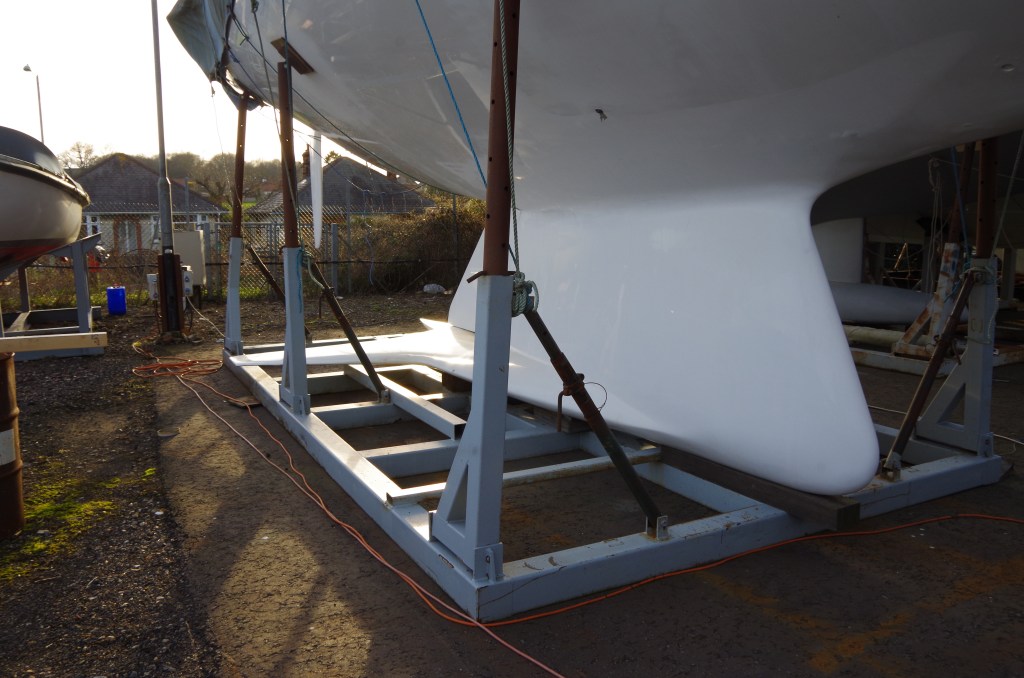
Iv’e no idea which ’12’ this is as I don’t recognize it and couldn’t see it’s name.
Backpacking.
I have no idea why but I took to backpacking almost as soon as I left school and I took to it very well given how simple and crude our equipment was, It was also quite cheap as there was such little choice compared with today’s glut of choice and high prices. From memory my first backpacking rucksack was an external frame Karrimor, I have no idea what model it was but that it was surprisingly light : much lighter than the more rugged internal frame rucksack I bought several years later : a full time job provided me with some disposable income and I spent it on equipment that was more rugged but a lot heavier – all based on the standard works on mountaineering and camping in those days.
Yosemite and the Ultralight revelation/revolution.
For some reason the hospital I worked for, around the turn of the century, sent me out to California : I think it was to learn all about a new cardiac surgical procedure. While we there we hired a cheap car and took the opportunity to drive up to Yosemite valley and back to Los Angeles via Death Valley : we only had a couple of days spare so all we had time for was to walk a couple of the easier trails as day hikes and we were blown away by the scale of the place.
At the high point of our first day’s hiking on our second trip I remember the huge relief I felt when I took off that fully loaded rucksack after what felt like a brutal hike up a long and steep route in the full heat of the California sun. I remember looking at my rucksack and saying to myself “you are the enemy”, knowing that I had to heave it onto my back again and hike several more steep miles while searching for a place to pitch our tent. At the end of that three or four day route we were both pretty beat up by the experience and not much of our kit had been useful : when we returned to the valley floor one of the first things I did was to buy a strange book about hiking written by a one time Yosemite climber : Ray Jardine . Jardine had started hiking as we had done, with rugged gear that was overly complex and heavy : his solution was to throw everything away and build his simpler and lighter kit himself, walk the walk, and then write about the experience.

Jardine had been a climber ; he’s the ex NASA scientist that invented the climbers protection called Friends. He went on to reinvent long distance hiking as an Ultralight affair, wrote several books about making your own kit at home and his work inspired the forming of a company (Golite) and a whole generation of lightened and enlightened hikers. I spent most of the flight home reading his book and those of fellow outdoorsman Edward Abbey, then, when we got home I started weighing everything and replacing it with commercially available Ultralight equipment – the idea hadn’t taken hold in the UK anything like as much as in the USA. My second revolution was getting into Bushcraft and ultimately fusing the two approaches.
The Bushcraft approach.
The Californian style Ultralight approach was great when hiking in the high Sierra mountains but wasn’t so effective when practiced in the cool and damp UK or out in the back country bush of New Zealand : what worked better was more traditional Bushcraft and a more rugged approach to clothing, Jackie and I often joked that our two ends of the sofa were the ‘Ray’ ends – referring to the pile of books usually parked there : at Jackie’s end it was often something by Ray Mears while at mine it was Ray Jardine and later Ray Goodwin when I added canoes skills to my repertoire. In my version of the Ultralight approach I took careful note of one saying more often associated with Boreal forest and sub Arctic travel : to travel far you have to travel fast and to do that you have to travel light. Bushcraft added a whole layer of knowledge and skills to that rather than merely slightly different equipment.
Car camping goes heavy-heavy (with added weight)
For the last few years we’ve had to give up on the idea and practice of going on long treks in high mountains (or deep bush) with loaded rucksacks – even when we invested in the lightest and bestest kit we could afford. Luckily we can both look back on those years and genuinely say that we’re glad we did it when we could : today our various health problems and lack of strength and endurance have slowly forced us into car camping.
This week, as I write, I spent several hours wrestling with the heavy wet skin of an already heavy canvas tent : it defeated us twice when we first tried to get it up and the only way I think we could make it work long term is to store it in a trailer with most of our car camping kit. While being a superb space to live in the logistics and sheer weight is almost beyond us and I need to find a better solution for future trips. Just as a side note here I contacted another maker of Dutch canvas tents to ask them about a smaller and lighter tunnel tent : they in turn referred me to their English dealer whom I suspect has packed in and closed their business – they’re not responding to any of my messages.
Also this week I set out a basic list of wants and needs in terms of future camping and then went for a look around one of the main outdoors/camping suppliers. I have to say that I found the experience quite depressing as it seems that most of the market is saturated with badly designed products built down to the lowest price point (to attract customers) they can.
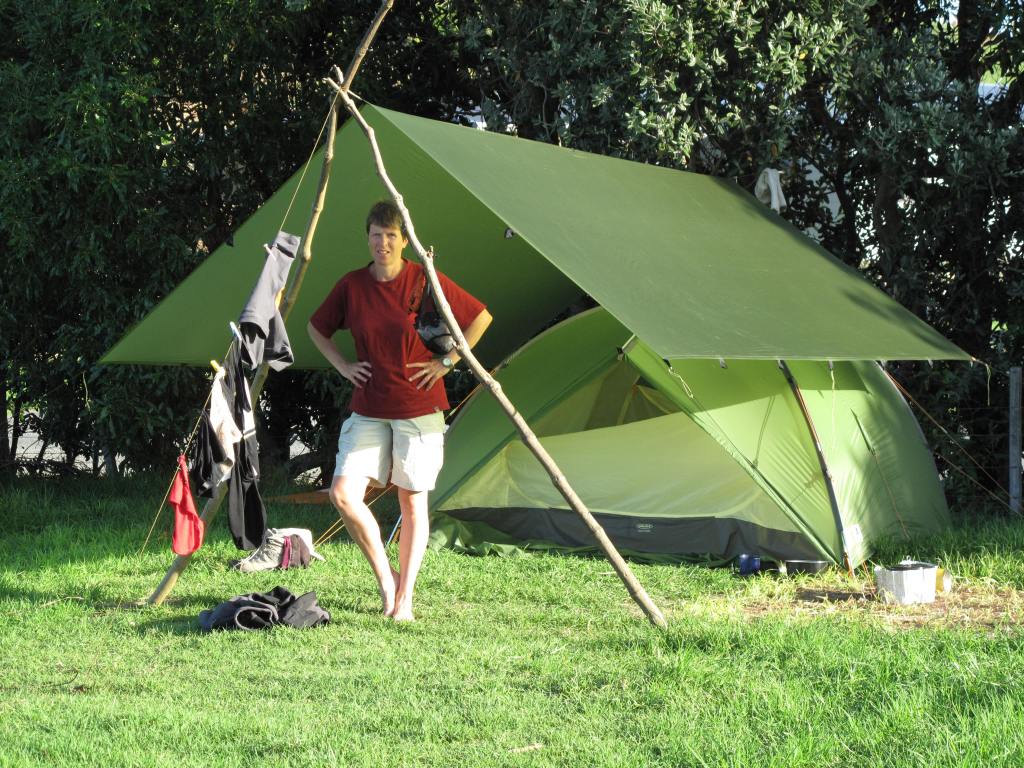
Where I think we may be headed is simply a larger version of our tent and tarp camp above : the one where Jackie is giving me ‘the look’. I have kept one of the larger tarps I used during my bushcraft teaching days so now i’m searching for a smaller high quality tent to park under the back of the tarp to use as a sleeping only or heavy weather space. So far my search hasn’t thrown up much that meets our needs – I am and acknowledge that I am a total tent snob though !
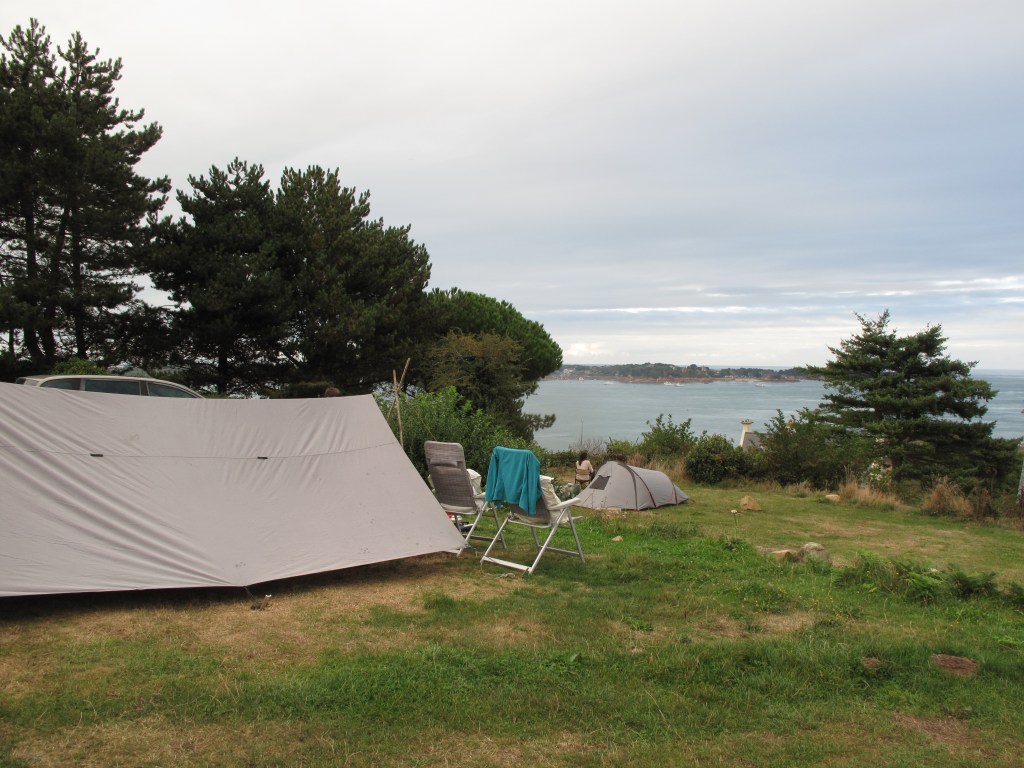

 Dirty Wet Dog, the great adventure.