


Living and sailing on a small income.
What boat to buy or what boat to build ?
I start this post today against the background of many parts of the UK actively rioting – for what exact cause or reason isn’t always clear. Some say it is because of uncontrolled immigration and that the illegal migrants seem to be being handled by the Police and other authorities with greater sensitivity than native British people (2 tier policing) Others say that it is because of festering resentment – that many will never be able to find good jobs or own decent homes. Our own Labour government say that it is all down to far right thugs and if anything appear to be throwing petrol on the flames.
I consider myself lucky and fortunate to own my/our own home -shared ownership with my partner. I was about to use the term privileged but that I think would be wrong because we have worked our entire adult lives in healthcare -which certainly hasn’t felt like a privileged existence most of the time. I am lucky enough to have been able to follow my own interests and even though I have recently had to give up on much of my previous life in the outdoors my partner has already suggested a possible way forward and I am about to start an entirely different journey – a journey of study and intellect.
Sailing on a Small Income.
Most of this series of posts is based on the original book of the same name written by the late Maurice Griffiths almost a hundred years ago. Griffiths was almost certainly searching for a boat himself and in other books details his search, often riding out on his bicycle to another boatyard or another river to see what he could find. Firstly then, at that time, there weren’t many boats as it was a ‘thin’ market and what was available was often in poor condition – a tore out in his words and secondly Griffiths was desperately poor himself with not much in the way of paying work or job prospects. In the context of what I said about the Uk at the start of this post it was also the period directly following one devastating war and where tensions were already rising towards a second and even worse one.
As I say, I think he wrote that first book on the back of his own search for a boat although he couches it mostly as advice to the ‘young chap’ who wishes to start in sailing with owning his own boat rather than say crewing for another boat owner. Griffiths had in mind the many young professionals of the rising middle class – in those days often described as the middling sort – not the established wealthy who maybe already enjoyed yachting and not the poor working class who it seemed mostly enjoyed a day by the seaside courtesy of the railway or steamer.
To even begin to understand the following hundred years we need a firm understanding of world history and an even deeper knowledge of English social history. Griffiths himself served in the Royal Naval Reserve, was decorated for his outstanding service, had one marriage which broke down and a second which seems to have lasted the course. What happened next and only in the context of small boat leisure sailing was first the years of austerity and then a slow rise of wealth which afforded more people a disposable income coupled with increased leisure time.
For some people the combination of greater disposable income and more leisure time in which to use it possibly caused the rise in more costly leisure activities – 2 being leisure sailing and golf. Just a quick word about the working class and lower middle class, that’s largely my background and one of the activities that that group took up was walking (hiking) outdoors and there were several clashes with the employees of the landed gentry ; the so called invasion of the grouse moors being just one of several such incidents. Another and similar activity shows up as the early years of rock climbing which became prominent around the north midlands – home to many of the industry based workers.
We have to jump several decades before I started to take part in this kind of life, I joined my first mountaineering club only in the mid 1970’s and only started sailing at the end of that decade. Even at that time I would have to admit that the great years of mass leisure sailing and the parallel rise in small boat ownership were largely over. Many boatbuilders were closing down and what had been a viable industry in the UK at the time ended as series production of GRP boats moved to France and beyond -partially because of government intervention there and perhaps better understanding of industrial processes and even better designs although the latter is arguable – perhaps a better way of saying it as that the new available designs appealed to the boat buying public more than the rather staid British built boats did.
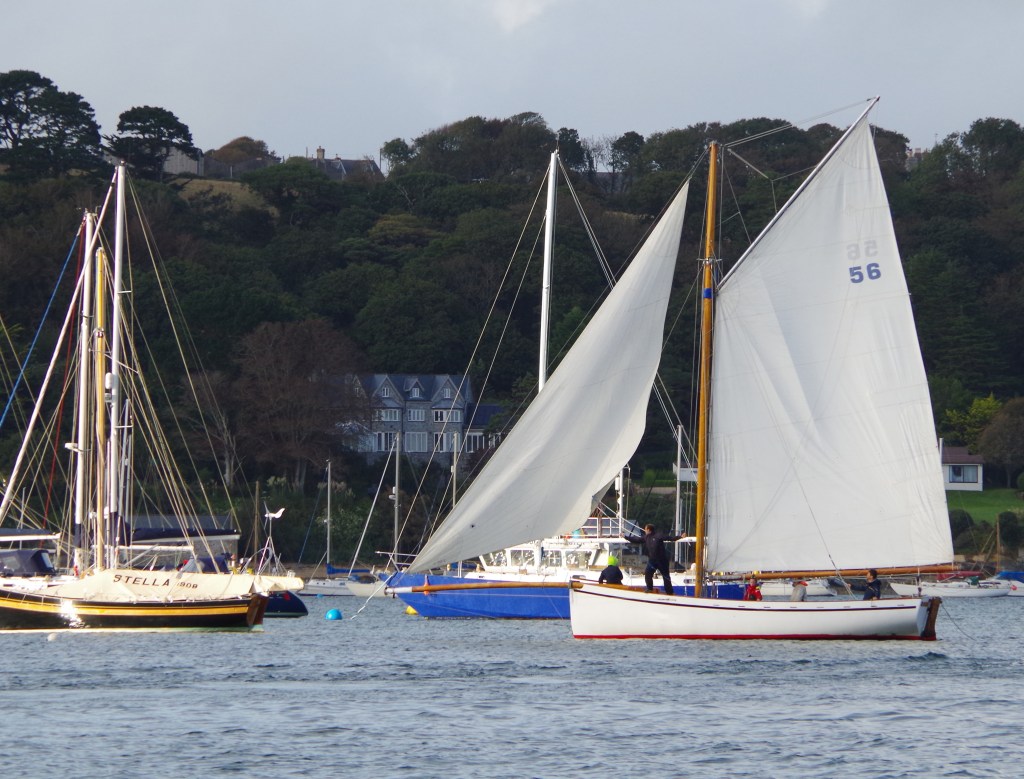
There was always a positive and upbeat element to Maurice Grifiths’s writing and his designs to because at the time the whole scene of small boat ownership and leisure sailing was all quite new and the best years, and inevitable decline, were yet to come. I am probably a bit sad today because not only have I just had to leave due to health problems but I also leave sailing when, in my opinion, it is a dying pastime. My observation today is that most boat owners that I met this year are of a similar age to myself and most of them are in the twilight years of cruising sailing and boat ownership : I have been want to state that ‘yachting is dead’ and I know that’s not quite right because I also see it otherwise. If there is a problem today it is that there are few younger sailors and boat owners taking up the sport and it is this feature that I want to give attention to in this post.
The kind of sailing and boat ownership that Griffiths espoused and wrote about in his many books about cruising around the east coast of England might be best described as ‘Corinthian’ in that boats were often small and simple, the actual sailing was somewhat rugged at times and the average day on the water ended with being at anchor, being aground (deliberately or accidentally) or back on ones home mooring. This Corinthian style of sailing also put a great emphasis on self reliance coupled with a certain DIY (do it yourself) attitude perhaps exemplified by the owner who could lean his boat up against a wall to settle and dry out and then scrub or repaint the underside.
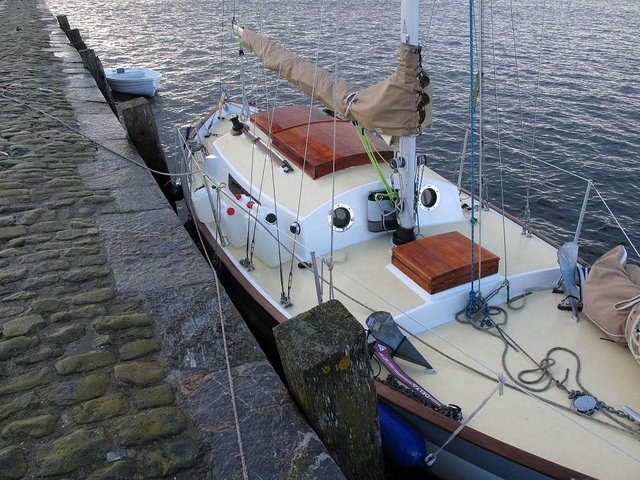
If I try to sum up sailing and cruising today in as few words as possible it would be something like : larger, marina based yachts equipped for greater comfort and convenience, a greater use of engine over sails, less time actually out on the water and yacht ownership conferring status over skill.
Ok so i’m a grumpy cynical sailor although, as I say, this is all based on my own experiences and recent observations.
What of the ‘young chap’ in Griffithsian terms ? what is he or she doing nowadays ? what of the grass roots of the sport ?
When I first started my book project – a re write of Griffiths Sailing on a Small Income for the 21st century and almost it’s own hundred year anniversary I mostly followed the author’s lead. I took his starting point of considering what kind of boat to suggest to today’s young chap and started my work right there. My first failure was, I think, to not exactly write a copy but write along the same lines thus I started with laying out the case for acquiring a small secondhand yacht that came with plenty of gear : my second failure was in not thinking about the lives and needs of those potential ‘young chaps’ (and chap-esses) today. Griffiths was largely talking about the rising middle class and my first departure and contention is that the middle class is both shrinking and is very different in it’s aims and aspirations.
Today, to be middle class is largely to go to university and study for a degree that might be the starting point for a career. I write as one who came from a mostly working class background and one who camped onto the tails of middle class aspirations by commencing my professional training although at a time when Nurse training was basically a form of apprenticeship and although very poorly paid it was not as it is today : aspiring nurses now have to gain a degree and in doing so they usually start their working lives with significant student debt – and I am led to believe that this is common to most professions and other careers requiring degrees.
When the young professional, I am thinking of medicine, nursing and it’s allied professions, dentistry and law starts his or her working life there are a whole heap of financial hurdles to overcome before any chance of having a small disposable income. First there is the actual debt to service and secondly the insanely high cost of rented accommodation, then add to that the normal costs of everyday life and I see it among my younger colleagues as little more than a governmemt created and bank controlled wage slave existence.
If in that young student or working professional there is also a competitive streak then the only sailing options open would be crewing on somebody else’s yacht, as I did for many years and most of my sea miles or perhaps sailing a racing dinghy. It seems today that the competitive drive is more likely to be seen in short sharp events in venues such as sports centers and their squash courts and other racquet sports not only cheaper but much less demanding of time. It is said that yacht clubs and golf clubs, once the social basis for middle class competitive sport, are now failing because less and less members have the time and means to engage in those sports.
This time around i’m going to make my departure from the excellent Mr Griffiths by going down a completely different road with all of this. I would first like to suggest that the way forward is to not attempt to be a young middle class professional earnestly chasing a degree and eventual debt but rather to : get a real job, get a real life and build your own boat with your own hands or go rescue and refit one that has passed it’s sell-by date. I feel that that statement deserves an exclamation mark at least and maybe one of my usual paragraph break photographs before launching into the next and last section……
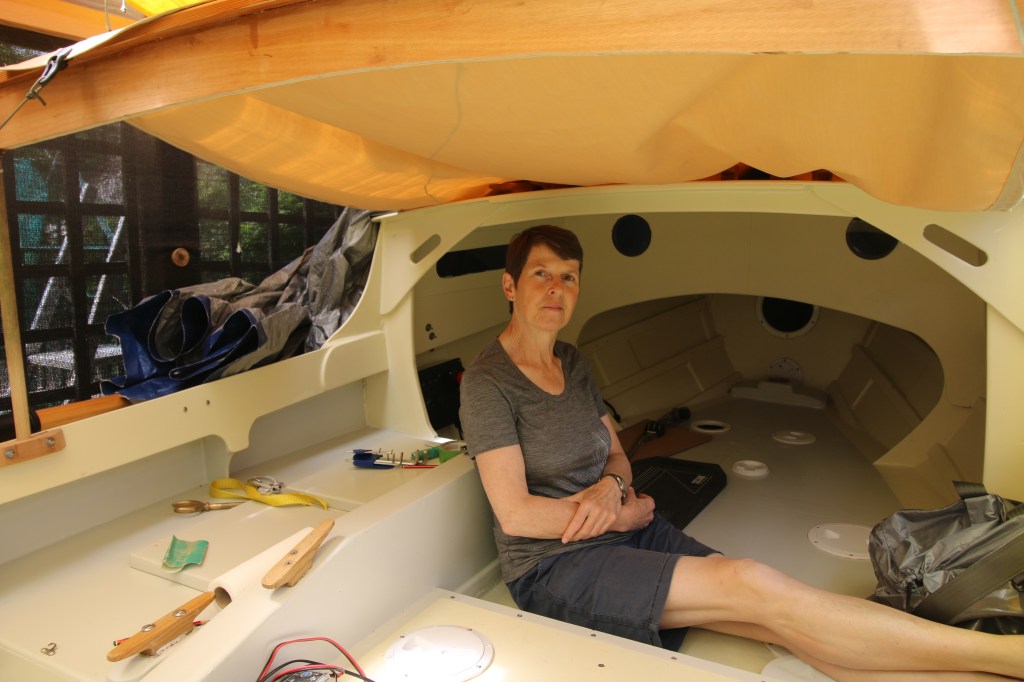
I should add that the first thing to find is a good woman so here’s one I prepared earlier.
A few years ago both my clinical Matron and I both retired from our jobs just at the time we had merged with other teams and been given new job descriptions, mine came to about 17 pages long and in it’s job requirements I found that I really should have had a masters degree at least, in fact both us found that we weren’t actually qualified enough, in terms of university education, to do the jobs that both of us had mostly created anew.
Of course, I’m being a bit ironic and i’m not decrying university education except that in a way I am. Right now for example I have just pre-enrolled for Dr Jordan Peterson’s online ‘academy’ which might end with a degree gained – it’s an exciting journey and an almost entirely new venture for me.
Putting that aside I would like to suggest that the young chap most likely to have the skill and the nous to own and run a sailing boat today is one who works at a practical job, in fact someone whom probably runs his or her own business in a practical trade. He is likely to have and certain to need a set of tools and have the skills and knowledge to use them and his income will most likely be variable to the time and effort he puts into that work.
My partner (above) asked me if I would start a career in nursing today and my answer was an emphatic no ; I wouldn’t start my professional working life saddled with debt and thus unable to start buying my own house. That isn’t the only reason : I finished my career with a pension earned and thus have a small income which has now been used to build my own small craft – nurses today now have much worse pension conditions and I doubt that many will last in their jobs long enough to enjoy retirement.
Today, if I were to chose healthcare I would start at the basic end as a healthcare assistant and most likely work my way up the grading system and at the same time working extra shifts to finance my interests. It’s much more likely that I would take trade training and be my own boss.
End notes
At the start of this post I took a short sideways step by briefly commenting on the state of my own country ; Britain is not only a breaking and broken country but it’s society is basically fractured along wealth, education and class lines. With regard to university style education I have to note that it is the smug elite and I am sorry to say largely feminist ones that now seem to have contempt for the people, blokes mostly who mend their cars and their plumbing, build their homes and transport their luxuries while they espouse the superiority of brain work over hard physical labor and at the same time while not understanding that it is people in the trade jobs who, every day, perform more skilled work and problem solving than they could ever imagine.
At the start I sort-of touched on social cohesion and it’s lack thereof today. I think now that there is an increasing gap in the shared cohesion between various groups. My best example comes from the time I was a member of a sailing club and part of the crew on one of those larger yachts. To get some time at sea needed me and my skills working for the owner who was and would be far wealthier than I ever could be and yet whom also had the grace to respect and acknowledge the time, effort and skills that people like me brought to the game. Friends who work in the industry now tell me, somewhat darkly, that being in that game now is more like being an indentured servant.
Wealth in the world of sailing now wears an ugly and corporate face ……..time for us all to back out gracefully and go build our own small ships in our own back yards.
Ladies and gentlemen…..ok then owners of xx or xy chromosomes….my work here is done.

 Dirty Wet Dog, the great adventure.