
Hard physical exercise at 65+
Correction……any physical exercise at 65 +
A few days ago I made the hard trek into town, it’s only 5 or 6 miles so an easy walk by my younger standards except that the first part is a continuous hard grind up from the road and river bridge that is my new datum point. It’s a deep river valley at this point in the river’s progress and it’s a fair old slog in either direction to escape the valley ; the hill in the opposite direction is known as ‘heart attack hill’. My local town is Tavistock, by the way, and the second half of my trek follows the canal path which is both flat going and shaded……a lot easier than slogging up the road in full sun while being menaced continuously by the Audi drivers and the one hand white van drivers – the other hand either stuffing food into their faces or jamming their phone to one ear !
Once in town I headed to my favorite cafe and as luck would have it grabbed one of the two comfy chairs right by the window and just watched the world go by quite slowly as it tends to do down here in the south west of England. At one point a very elderly and frail looking lady was led past by her carer and a few minutes later an equally old man came past going the other way in his rolling walking frame ; his posture was typical of advanced muscle loss and his gait that of Parkinsonism. Anyone who knows about aging and decline would instantly recognize the pattern and the high likelihood of falls that relate to neuro degeneration coupled with muscle loss and increasing weakness. The expression ‘not long for this world’ came to mind and my second thought was ‘what a miserable way to live’ your last few years.
The reality for most people alive today is that suffering and misery will be the norm for anything up to the last ten or fifteen years of ‘life’ and equally for most people it will be a slow decline except that my shocking observation is that the decline is already visible in many people in their forties if not earlier.
To take this a step further I would also add that in the last week alone iv’e seen the warning signs of cancer, heart failure, respiratory failure and metabolic disease in dozens of people – and not all of them that old either ; here also is an actual observation.
Last week, as I write, we had to drive all the way across the country for a planned break and when we got to our overnight stop we both needed to eat so I drove us to a pizza outlet – not a great choice you might say but at least we get to make choices within the range of food available plus we hadn’t eaten much else that day.
After we sat down and served ourselves with some salads a young-ish woman and her school aged child came in and something that I immediately took note of is that she was wearing a continuous glucose monitoring device and what shocked me a bit was that even before ordering pizza and coca-cola she took the device off. I have to wonder if she was using a continuous glucose monitor and ‘smart’ phone combination as part of a diebetes monitoring programme and that she maybe took the monitoring device off to ‘game’ the results and not show a huge glucose spike which would come from the food and drink combination.
The reality of healthcare in the UK, and from what I know so far from the USA as well is that we have the obviously visible signs of advanced deterioration and disease in many elderly people but if we ‘scratch the surface’ even just a little we would also see the signs of major health problems in a huge proportion of each of those populations. The numbers are absolutely staggering and even more so to my mind because this has all happened in about the same time that I was working as a nurse. What we seem to have is an actual epidemic of chronic ill health that on average will create ten to fifteen years of misery in these people as their disease pattern slowly progresses and generally there is nothing that modern medicine can and/or will do about it except prescribe more medicines and in so doing just fuel the profits of the large pharmaceutical companies.
I honestly don’t think that it is a skewed observation that the general health of the UK population has deteriorated hugely in the last 35 years ; at the start of my life as a nurse for example it was normal to have a couple of hospital wards given over to the care of the elderly and their often multiple medical conditions. Today, walk into our local hospital and every ward is full of middle-aged to elderly people with chronic health problems that have gone acute enough to warrant them being admitted and mostly there is nothing to offer them but a temporary quick fix just to get them home again just to clear the bedspace for the next acute admission. It’s like a rolling door factory of ill health and quick temporary fixes that medicine as it is right now can do nothing about.
My main holiday reading was Dr Peter Attia’s new book ‘Outlive’ and it’s main point is that later life will be pretty miserable for most people unless they do something active right now in terms of diet but primarily exercise, in fact what he says is that we all need to be athletes for later life. In his book he sets out the facts about how to live more actively and healthily in later life and I was extremely surprised that a lot of what he says is about exercise and not so much about ‘diet’. For those who are unfamiliar with Dr Attia , a potted history is that he was an obsessive athlete as a young man, then trained as a cancer surgeon but left that and re-appeared as the poster boy for the keto diet and measuring every health metric of his own that he could – being an American doctor he had access to all the tests and scans that the average British person could only dream about unless they were already extremely sick.
Attia dropped off my radar somewhat although I knew that his major new interest was health and longevity and then just a few weeks ago he appeared in a whole slew of interviews – one of which I have linked to below. Dr Attia is very much the risks and data guy now as he seems to have studied every paper written about anything to do with what he calls the ‘4 horsemen’ of ‘modern’ disease ; basically heart failure, cancer, neurodegenerative disease and metabolic disease. Another way of putting that across is that it deals with ‘slow‘ death rather than the ‘fast death‘ problems that I dealt with as an intensive care nurse ; the very things that medicine generally doesn’t seem to want to do anything about.
To cut an otherwise over-long post down to readable levels one of Dr Attia’s main points is that exercise is possibly the one critical element that, done right (and right now) could lift us all into a much better situation of health in later life. Given that he was once the ‘keto guy’ in my mind at least he now says that exercise is highly probably more important than diet – with just one important caveat ; that diet is much less important an impact as long as we escape the standard American (also read British) diet. Escape that major problem, he says, and it matters very little which dietary tribe we care to join.
And so…..exercise as a 65 year old.
The best thing to do right now, if you’re reading this post, is to stop reading it and immediately go and buy a copy of ‘Outlive’ and give it a long serious read – i’m on my second read through and this time making notes about the exercise details while I formulate my own plan for how i’m going to follow his suggestions. Dr Attia does seem to know a lot about exercise and is very specific about what we need to do to lift ourselves out of the bottom zone where most sedentary modern people seem to exist…..it doesn’t seem to take very much time or effort to gain a large benefit and the great thing is that exercise almost seems to have what medicine calls a ‘dose response’ ie do more of it and get a better result.
The bottom line isn’t hours and hours spent in the gym, that’s good because right now I don’t have access to one, rather it’s several sessions per week totally a baseline of about 150 minutes of basic, zone 2 ‘cardio’ work and that’s defined as enough to get you a bit out of breath. My version of that, as I begin my own journey, is to head out the door and within a hundred yards or so attack the first of several hills during a half-hour stomp around the village : i’m lucky in that it’s almost all hills in every direction here !. The way I do it now is to do an early session, get home and start doing sets of simple press-ups and then get down to some writing. Later on I might repeat the whole exercise aiming for a minimum of an hour a day for at least 6 out of 7 days of the week. That was just the start as some days I do a much longer walk that includes hills that just keep coming.
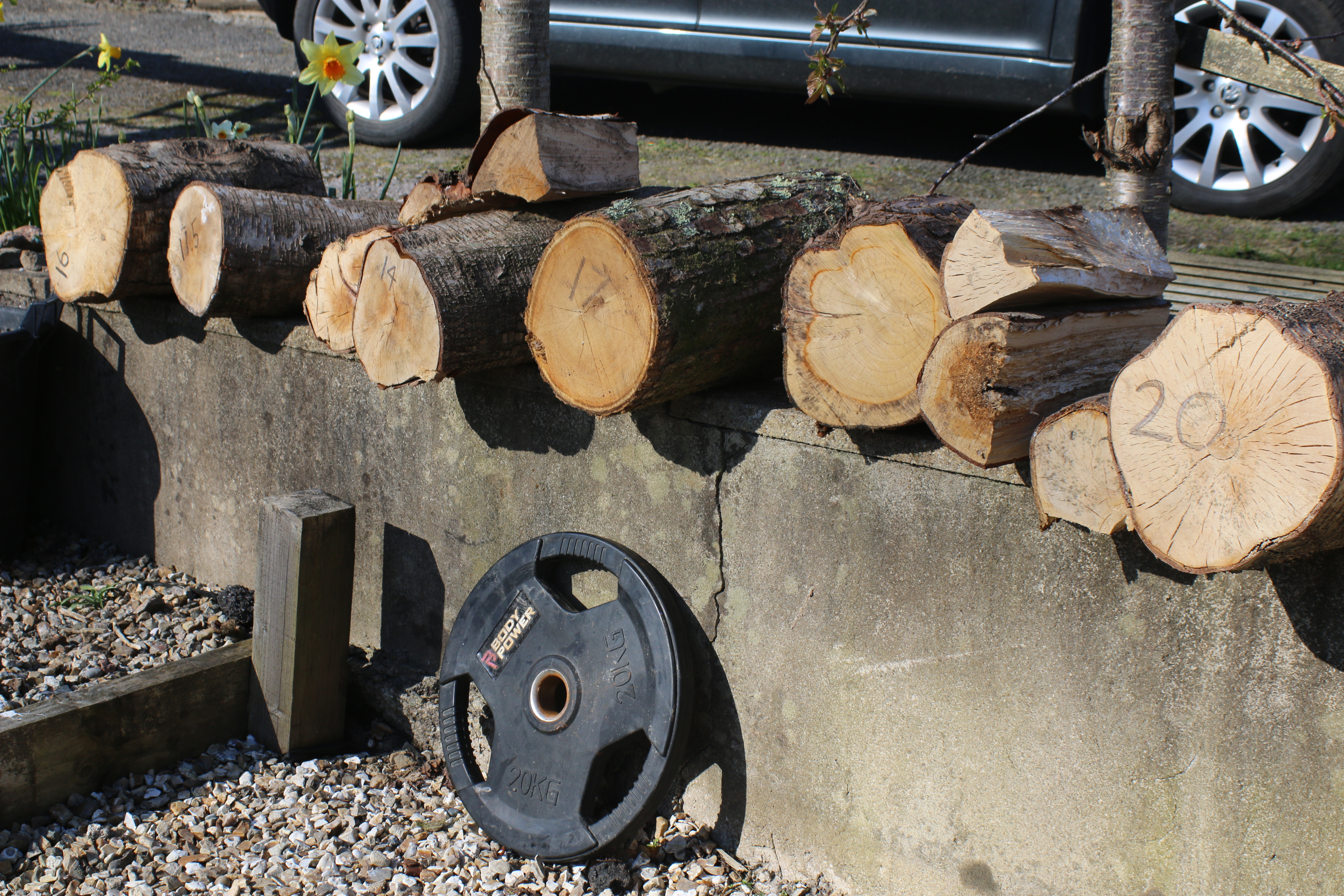
In week 3 I quite literally ‘stepped things up’ as I now also aim for a hundred press-ups a day 6 days out of 7, sets of step-ups onto my newly made plyo box and mix those with sets of squats using my home made squat rack and an old barbell…..not much weight on that yet but form and consistency seem to be the key at this stage. When the hill walking programme starts to feel a little easier what Peter Attia says to do is to add weight and to ‘ruck’…..I used to do that to carry big chunks of tree home as my firewood foraging so i’m familiar with the idea. I’d like to say that I can keep it all up throughout the year but equally I know that i’m going to spend a lot of time at sea and the winters can be difficult for outside exercise – so in time i’ll have to come up with something a bit different on those long, cold and wet days in January and February.
Doctor Attia’s second main point about exercise is that strength is of major importance as muscle loss is a serious factor and has a lot to do with falls for example – that’s why the basic bodyweight exercises of press-ups and now step-ups are so important. According to Attia’s metrics i’m now ahead of the average but equally iv’e got a lot of weight to lose so working hard right now feels like the right way to go.
For my post end-piece I would just like to reflect on a couple of comments that I received about the previous post and specifically about why I don’t run and why I don’t row for exercise.
Firstly, running. Running is a no-no for me because of having had a partial knee replacement that only has a given useful life. It’s fine for walking on and now my back has sorted itself out a bit (the 2 problems are related) I can push my everyday walking out to greater distance again over harder terrain once more and even carrying weight again (rucking). What the orthopaedic surgeon said though is that running is a bad idea because it hugely increases impact on the knee – up to 8 times compared to just standing still. My knee health and back stability would all improve by simply losing body weight again and I can do that mostly with what iv’e talked about so far.
Sport/exercise rowing is another problem ; while I have set up the Pathfinder to row it’s only intended for short distances and i’m planning to row while standing in the Japanese style or equally to scull off the back of the boat -also standing. My big problem with exercise rowing, on an ‘ergo’ for example is that I have great long ‘levers’ and can row quite powerfully but my lower back just isn’t stable enough for my power and I can easily ‘pop’ an intervertebral disc ; even in everyday life I have to do a back recovery exercise before I can settle down to sleep.
What the surgeon recommended as exercise was simply an exercise bike for low joint load ‘cardio’ so i’m looking into that as a winter exercise method when it’s raining here for days on end….access to a swimming pool would be useful too so maybe in the winter I will have to work out some way of regularly getting to a gym with a pool and the nearest one of those is some 20 miles away.
My last comment about exercise and diet for this post is that Peter Attia suggests that I should be eating a lot more protein than I am doing right now because studies suggest that the combination of resistance exercise (weights) and added protein can help prevent muscle loss – which starts to become a definite problem at my age.
That’s all for this post, in future posts i’m going to have to talk about ‘diet’ again because once again I find that everything I thought I knew is probably wrong !.
Best wishes everyone and thanks to everyone who has commented on this journey.
End piece/further thoughts.
When I first wrote this piece I was thinking a lot about my late parents who both went through the slow decline of increasing weakness and decreasing mobility in their later years. In my mother’s case it was a simple fall just outside the house but onto a hard surface that broke one hip, that was successfully operated on and she got home but then basically became more and more exhausted from being my father’s principal carer. At the end she eventually gave up the struggle and very sadly died in continuous pain from badly managed cancer – my last intervention in her life and that problem was to get proper pain control in place…..and that very intervention may have shortened her actual life span.
One of the things iv’e been thinking about in terms of my parents later lives is that I wonder if the environment and life situation that they chose for themselves led to their decline in physical ability, mobility and eventually their health. Some time around 25 years ago, at roughly the same age as I am now they moved from a house, literally around the corner, to a typical suburban bungalow in a city in east Anglia that is basically flat and which offers no physical challenge of daily life aside from the quick up and over of the city railway bridge on the way into town……probably less than 20 feet of road grade ascent and descent.
Living as we do in east Cornwall we live in a completely different environment ; one which is ‘lumpy’ (hilly) in every direction we look. What that means for nearly everyone on this side of the valley is the daily ‘fight’ with the hill up from the village ; I quite deliberately now start my day with a sequence of three lane/hill climbs which lead out onto the higher ground around here and given my heavy breathing and heart rate it must be giving me some degree of training effect – in fact i’m sure that it is. The fact that we also live in a quirky miners cottage with a steep pitch of stairs and even steeper steps up into a back garden mean that we accidentally do step-ups and step-down’s every day of our lives and once again wonder if this daily challenge in our everyday lives is better for us than a life in a boring and flat suburban bungalow in an equally dull and soul-less city.
Right now, as I look out onto the back garden (which needs weeding…..again) I note that it’s raining steadily and that i’ll wait until it eases off before I get out there again and do my second walking circuit and today’s work on the plyo (step-up) box and under the barbell set in place on my home made squat rack. This week my plan is to crank up the walking programme with a couple of sessions of ‘rucking’ : basically that means loading up and old rucksack with some heavy rounds of ‘tree’ and humping that load around the lanes. If the science has got this one right then it’s possible, even likely, that a ‘hard’ exercise routine at my age (65) might just give me a chance of not ending up with the same pain and misery as my late parents went through.
I might be wrong of course but I think it’s worth a try.

 Dirty Wet Dog, the great adventure.
The length of our days is seventy years,
or eighty, if we have the strength;
yet their span is but trouble and sorrow,
for they quickly pass, and we fly away.
Psalm 90:10
On that cheery note, I’ll get my coat — keep on keeping on Steve.
LikeLike