

Cornwall’s legacy in poisonous minerals and rotten boats.
At the bottom of our garden, just over the garden wall, is a ‘green’ that was once the site of a council house and it’s garden – now of course it’s mostly a dog toilet. One day in June 1992 most of that house’s garden disappeared down a large hole just behind the house even though the mineshaft there had previously been capped. For reference the shaft was called Michael’s shaft, once part of the active Gunnislake mine.
We knew we were moving into a former mining area when we came here so one of the essential things that we had to do was a mines survey : we were and are ok I think because the survey only revealed an old adit crosing under the very corner of our front garden although there’s a patch of land just up the lane that can’t be built on because of same.
Under the village at the bridge end there is also an open tunnel (strictly an adit) disappearing into the side of the hill and once in a while local mine explorers go in there for a look around : given that most mine structures are there from the mid 19th century and most of those are wet some or all of the time and the mine props timber I suspect that much of the structure is rotten and also prone to collapse.
Further up the lane from our place, nowadays almost at my uphill limit, are the decaying remains of several mines. The nearest one is technically a ‘Gunnis’ which is more a surface feature but the nearest actual deep mines are higher up the valley : the nearest one being ‘Clitters’ mine and the one with the huge spoil tip is Devon Great Consuls – just into Devon of course. With both of them their primary output wasn’t what most people think of Cornwall – which is mostly Tin and Copper but the much more poisonous mineral by-product – Arsenic.
Let me tell you a little bit about Arsenic and producing the stuff back in the day.
When we first came here I was quite keen to poke around the valley on foot having a good ‘fossick’ around the old mine structures : back then, I came across one that I didn’t understand the purpose of so I had to go and do some basic research. The structures that I found were like mine entrances although smaller and seemed to disappear into something like a short maze – there was also a tall chimney nearby which I took to be the chimney of an engine house.
I was wrong about the chimney, although there are many such chimneys around here very few of them relate to engine houses for pumping or winding engines and instead, many of them are where the Arsenic bearing mineral was roasted with other chemicals and the resulting smoke fed into an Arsenic ‘maze’ like the ones I stumbled across. Knowing a tiny bit about chemistry I suspect that this was some kind of gaseous sublimation and the resulting Arsenical gas would then condense onto the colder rocks within the maze. Local labor (often the local women and children) were then employed to crawl around the maze scraping the Arsenic off of the rocks – the local version of a PPE. was a slathering of wet clay on the scraper’s hands and arms to help prevent skin cancer.
Lets reminisce about the Covid lockdown years for a moment.
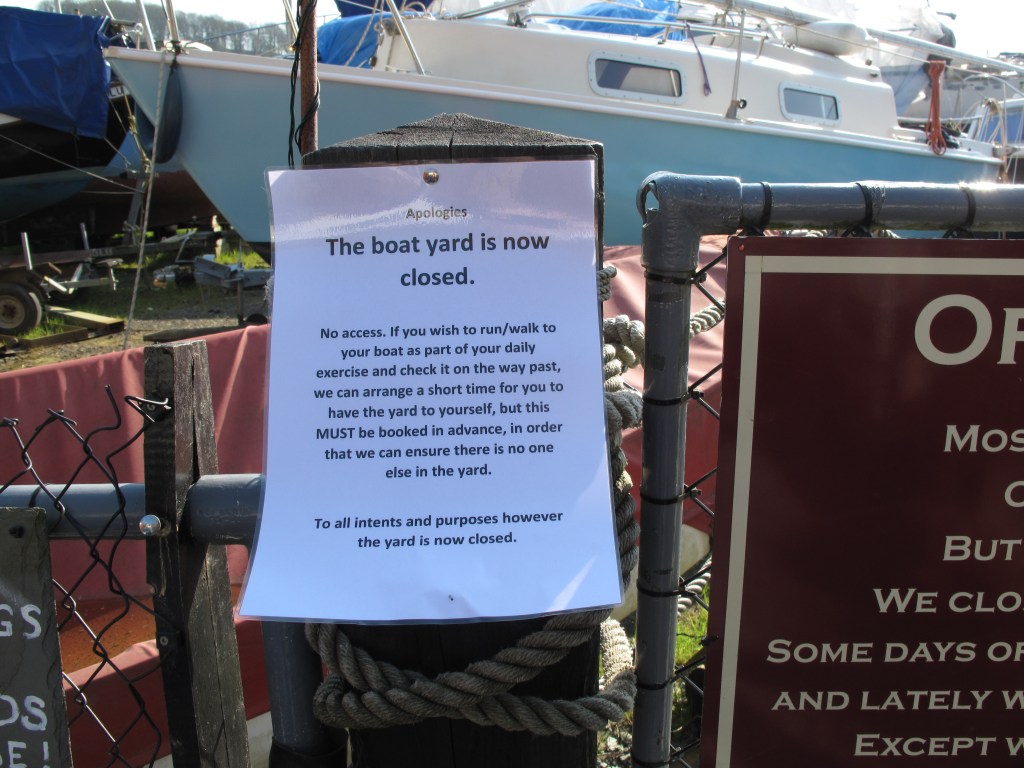
I don’t know what you remember about those years, the first thing that I recall is sitting out on the garden bench listening to how little road noise there was then : I had a huge sneeze just as a very neurotic local lady walked past and she jumped a mile despite being many yards away !. Anyway, I kept the blog going despite not having much to talk about – my boat was already on the launch trolley but behind a locked yard gate.
The other thing I remember about the first year is that I got really bored so once i’d been for my daily walk and sat around in the garden drinking coffee I didn’t have much to do except surf weird stuff on the internet while drinking yet more coffee. It was mainly two channels that helped me through, those being a bloke in California who’d only gone and bought an entire abandoned mining village – and it’s retired Silver mine – and of course the highly entertaining Beau Miles – he of takeover beard and amazingly quirky adventures. One time, twice now I think, he spent 3 days walking to walk along a busy highway and the last time he did the trip it was four days in a kayak.
Anyway, our man Beau Miles did a couple of river trips in his kayak and not any old normal rivers but the most disgustingly polluted ones that he could find : one of them ran (slithered) it’s way through some Sydney (Aus) suburbs and the other was the most chemically polluted river he could find on the whole continent and amazingly it’s somewhere in the outback of Tasmania.
Tasmania is pretty wild and rugged, it has a bit of a reputation for being a bit green and eco minded as does Cornwall but the truth is that both places have some industrial scars not quite hidden away. There’s also a small link between Cornwall, California silver mines and Tasmania in that several Cornish miners allegedly emigrated to one or other – this may go some way to explaining the drunkenness, generally wild and lewd behavior and go some way to explaining why, when you meet someone from Taswegia and Kernow that it’s a good idea to check out the number of fingers and toes on the inhabitants : bits of Cornwall are a still notorious for inbreeding !
The link between Tas and Kernow is that both have some of the world’s most polluted rivers despite their green credentials : in Cornwall it’s the Red river (near Camborne of course) and while the water looks and smells ok it’s almost completely sterile because nothing can grow in it. If you want a really depressing read go and check out the Wikipedia link to the world’s most polluted rivers and note how many of them are in once industrially important (and poor) parts of the UK except for some of the rivers that now run under London.
Back to where we started.
I started this piece literally next door and then only moved half a mile or so to my main sites of interest so allow me to return to the problems with a few things that might spark your interest. During my daily walk, up through Clitters mine I would have to cross about 50 yards of red granite sand which I now know to be the result of the mine tailings which will have been ground in a heavy mill before being roasted. The long bank of tailings, here and across the valley, are bare and mostly sterile as, once again, nothing can take root and grow there. The reason for that is said to be because there is still a lot of fine, ground up Scorotide in the sand – that crystalline mineral being the Arsenic bearing one. Up until fairly recently there used to be some form of car racing up at Devon Consuls mine and it was stopped because the cars would throw up a fine dust containing the Arsenic bearing crystals.
For this piece I went looking to see if I could buy a piece of Scorodite and while I was at it also see if there were any other minerals that I could obtain to put on a short mineral recognition quiz here. I was out of luck though because there is a stand in the local indoor market that sells a few minerals, when I asked if the lady had any samples of Scorodite all I got was some blank looks – what she mainly sells is Crystals – the kind that help you balance your chakras or whatever.
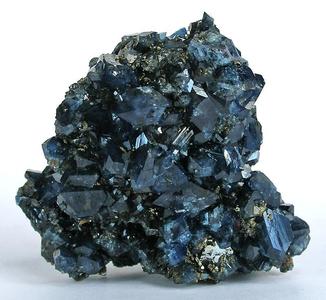
Scorodite – that’s FeAsO4 2H20 in case you were wondering.
Link : https://en.wikipedia.org/wiki/Scorodite
A river known as ‘Pumpkin Soup’
The Silver mine mountain – Cerro Gordo
Part 2 is the next episode – coming soon

 Dirty Wet Dog, the great adventure.