
A bit of a hybrid……… with a wheel missing.
For those of you who are quite new to the blog I live in the poorest county in the whole of England (Cornwall) and in a depressed small village which once used to be a center for metalliferous mining here in the far east of the county. In fact we live in what was once a row of miners cottages which we think were built around 1840 so that’s the oldest house I have ever lived in and which is a comparitive youngster compared to my partner’s family farmhouse – which is so old it gets a mention in the doomsday book.
Think ‘Cornwall’ for a moment and you might think golden white beaches and picturesque (picture – skew) fishing villages…..except that we live hard up against the border with Devon, nowhere near the sea and most of he fishing villages are dead in the winter because most of them got snapped up as second or third homes. We can usually tell it’s summer because suddenly the narrow lanes are jammed with high end cars and caravans that don’t seem to come with indicators, reverse gear and anything resembling a brain.
Cornwall today really is a depressed and depressing place because there aren’t any jobs except for low end work servicing the needs of the tourism industry. Along with very few jobs the county also has a high rate of alcoholism and drug use – having worked in that end of healthcare I have helped with the care of many just functioning alcoholics who need their oesophageal varices banding (again). This village used to have several businesses including a good butcher, now all that is left are a couple of pubs and an off licence.
What Cornwall , and west Devon, used to have is an active mining industry which is where most of the country’s mineral wealth was extracted from. Today all that is left are some unstable mine workings and some awful remnant pollution : for those that don’t know it Cornwall still has I think the world’s third most polluted river – the water looks clean enough but is devoid of life. Again, what few people know is that one of the main products wasn’t silver or copper, zinc or tin but rather Arsenic, which as people will know is rather toxic !. Just uphill in the valley are the remains of 2 Arsenic tunnels or mazes where the Arsenic bearing rock was roasted and allowed to condense/sublime in ground tunnels. One way of getting unskilled work here was to be an Arsenic scraper….check it out if you will.
The link.
Today’s link isn’t alcohol, drugs, depression and Arsenic but rather an element that exists here because it once had no commercial value (Lithium) and now does hence at least one old mine is going to be re worked for its Lithium bearing mineral (Spodumene) and another mine is due to reopen to extract Zinc. In case you didn’t know Lithium is commercially important currently because the automotive industry needs it by the tonne for high end batteries : what people seem to choose to ignore or overlook is that the Lithium in the battery of their high end Tesla is a very toxic and environmentally ‘dirty’ product.
Now, please don’t think that iv’e suddenly become a self styled environmental ‘expert’ but with living next to an abandoned mine, having been very interested in Chemistry as a teenager and having watched hours of video clips about mining history I kind-of take an interest. I am also admittedly deeply cynical and have been having some fun ‘following the money’. Where there is lots of money as in modern Lithium extraction there is also more often a huge environmental cost and that makes my senses tingle when the local guys start to talk about ‘clean’ or ‘green’ Lithium mining in Cornwall.
Now, where was I going with this ?
Sorry about the break but I had to go and do something useful – like make dinner for my partner who is trying to move her elderly mother from the ‘Doomsday’ farmhouse. So…..I spent a lot of time this year dipping in and out of several mines and mining related YouTube channels so nowadays when the local mines engineer is around and checking the local shaft and adits I can now talk (or at least BS) mining knowledge with the best. For those whom are interested it’s possible to spend hours down the deep dark hole of mining video’s because it can go anywhere from history to extreme sport. There is a local guy who does mine exploration for a hobby and he even goes as far as doing what is essentially cave diving…..one of the most extreme dangerous activities outside of an active war zone ; just for a bit of light relief he likes to dive on the local shipwrecks and make video’s about them too.
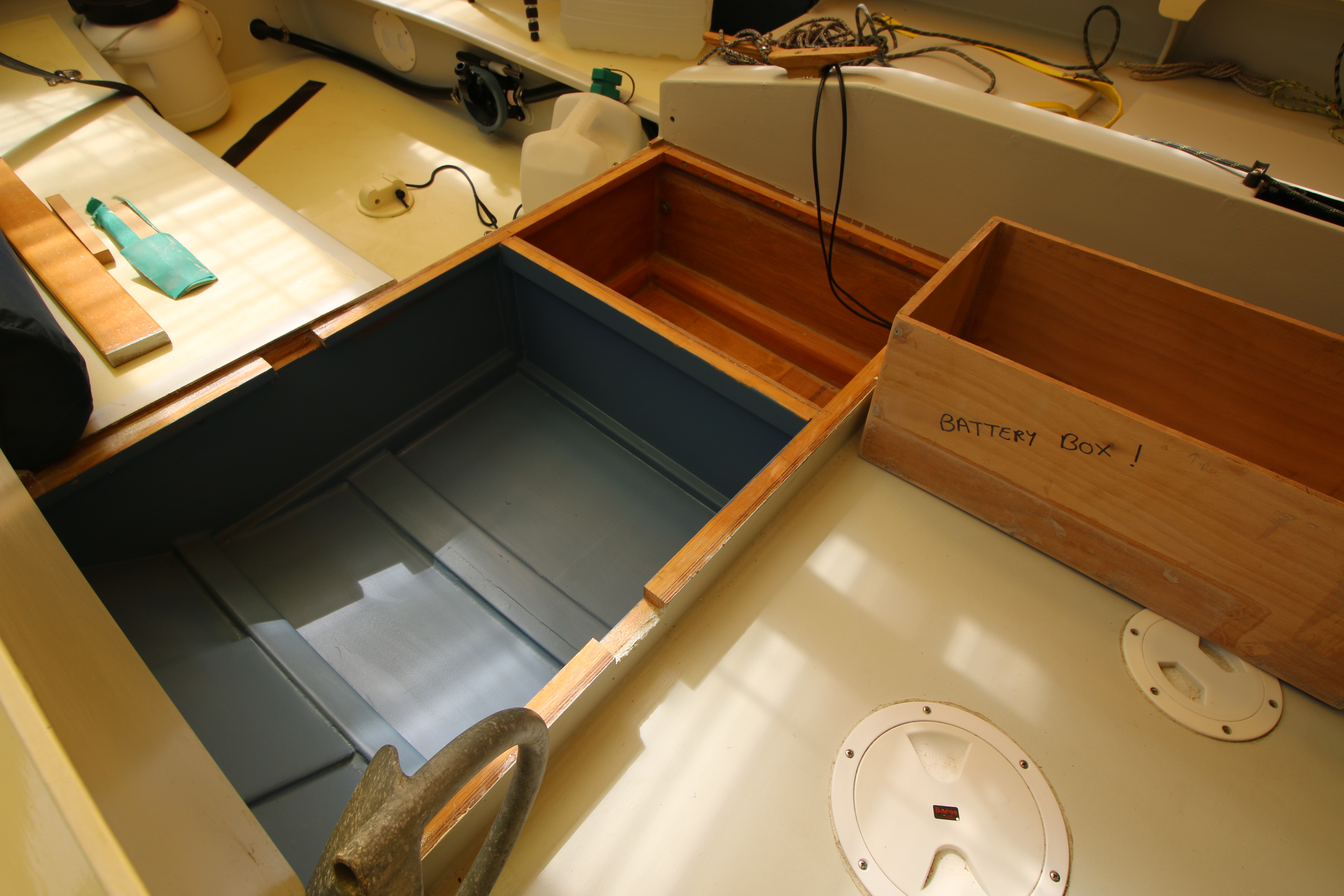
Where was I going then, lets see…….oh yes, life in an old Cornish mining cottage to historical and current mining and all ending up with the local Podumene…….until today i’d not heard of the stuff either so…… !. My actual link was to Lithium batteries as used in kit like powerful torches, boats cars and maybe in Electric assisted vehicles. As a side line to a very tangential post I really do need to find a new high power torch – my last one being in the mud somewhere having gone overboard with me recently. As a tangent to that little sideline my boat will soon need a pair of AGM batteries or maybe one big one and I definitely won’t be buying Lithium batteries because they are hugely expensive, have a horrible tendency to catch fire and anyway – the boat would benefit from the weight of a couple of sealed AGM lead-acid batteries. As a sideline to a sideline to a sideline what the boat currently has in it’s battery compartment is around 10 chunks of granite blocks which were once part of the Royal William yard down at Devonport and before that were presumably heaved out of the ground somewhere local.
Want a sideline to a sideline to a sideline or whatever ?. Ok then…..about half a mile from the village is one of the remaining granite quarries where the blocks may have come from and which still does blasting from time to time.
Weighing-in time for my current ballast solution.

Buying and fitting a pair of lead-acid batteries and then closing and sealing the battery compartment is the last remaining ‘main construction’ project I have to do with the Pathfinder because then it enables me to use the large central compartment which should become a mostly dry stowage compartment for heavier gear. Once the batteries are in place I also have to build a permanent wiring system for the boat and iv’e only ever done that once before because I had to on account of how much a marine electrician was going to charge per hour even back then.

Finally – for today’s post, the Electric Icicle
Our combined experience of living out in the sticks of rural Cornwall is that we really need transport in the form of a personal vehicle because the local services (food shopping) is nearly non existent and the same with local public transport – thus my partner owns a car, we both can drive it although it’s main use is for her to get to work and back. I basically came to the realization that I could either have a car or have a boat – I chose the latter but I still hanker for a personal transport solution faster than my legs can take me. I keep thinking about owning and running a motorcyle again and quite fancy finding something about the same age as I am and donk-donking around on it……something like an old BSA C15 which for those that don’t know their bikes is a 250cc 4 stroke single cylinder in the kind of package that most old gits my age could keep running.
My good neighbour is about the same age as I am and a complete petrolhead but as well as a car he also owns 2 motorbikes and one electric bicycle. He’s quite the little guy and his main bike is an older Honda ‘Hornet’ which, given his lack of height looks like a superbike when he is riding it. I used to be a cyclist many years ago when I lived in Sheffield – my ride to work was ‘yee-ha’ fast downhill but the ride home (uphill most of the way) was exhausting : anyway, that bike was stolen when I lived down in the Hamble and never got replaced. Today, for a couple of medical problems including dodgy knees ( plus one knee replaced so far) years of back pain and two urethral operations (urethral stricture) make cycling on a conventional road bike difficult if not totally out of the question…..think ‘head down’ and ‘bum high’ while bouncing my perineum off a hard saddle.
There is a potential cycling solution though which is the reason I want to make a trip down to Falmouth and go and talk to the nice people at ICE engineering – the solution being potentially in the form of one of their recumbent ‘tadpole’ (2 wheels forward) trikes but with electric assist. I realize that this might be completely alien territory for some people so i’m going to take a writing break and go work on something practical while we take a coffee and video clip break courtesy of a dealer over in Utah USA.
For those who don’t know what a recumbent trike looks like the ICE ‘VTX’ is at the sporty end and subsequently not only potentially fast on the road but ‘knobbingly’ expensive to but a newly built one…..as I write there’s one on Ebay for close to £4 k and that is without electrical power assist. Thoughts ‘against’ come from my good friend ‘Big Al’ down in NZ who says that yes, they can be very fast and might be a good fit for my medical issues but against is that they are very low to the road and that could be a big problem around here where roads are steep and twisty and have poor visibility……and many drivers of sporty German saloons sans patience and brain power (its always an Audi !)
It gets a bit technically difficult when it comes to the precise definition of electrical assist or electrical power with what are basically bicycles. One of the current unfortunate trends is kids (teens mainly) zipping around the streets of London on high powered electric motorcycles and not one, that I have seen, has been street legal. With electric assist bicycles and trikes there is a power limit and there seems to be some argument whether a throttle is legal or not as what many use is a level of power assist control and the ‘vehicle’ is still fundamentally powered by pedals. There are also several different set-ups of motor, where the motor goes, transmission and so on.
The basic trike is only a starting point though because where i’m going with the whole idea is to have one and get used to riding it but also to ‘push the limit’ shall we say, with the power and available speed. The way I read it is that our friends in the USA regard street legal British trikes as being a category 1 trike and the power assist is computer limited to 20 Mph……I would like to have a vehicle capable of 40 !. Going up on the power and speed seems to mean going for full road licencing and an MOT and insurance ; none of which isn’t feasible but just a lot of extra ‘faff’ to achieve.
A story about transport.
Very few ‘kids today’ would remember their family’s first car because car ownership became so common and ubiquitous that it would have been more unusual for a family to not own even a basic car…..not so in my day !. If I go back just one generation I remember my late father buying his first car some time in the mid 1960’s, if memory serves it was an early Austin van whose main feature was a big switch in the center of the dashboard that controlled a short indicator arm either side – more like a railway signal than the kind of flashing light we see today……obviously not on Audis or BMW’s that don’t come equipped with such gear today. My usual job when we were going out somewhere was to be the indicator controller so I guess it was a bit random whether we indicated a turn or not depending on how awake and alert I was…..not, more like.
Go back one more generation and there were very few cars at all but there were simple and low powered motorcycles, often with a sidecar for family outings at the weekend and for Grandfather to donk-donk his way to work and back…..but only if was running. Most working men in the town either walked to work just as I walked to school every day and only later on did some kids cycle. It would be fun but untrue to say that out in the country some kids rode pony’s but to be honest the only 4 legged equine I saw was the big working horse that pulled the rag and bone man’s cart.
The point I am getting at is that for the last 50 years there has been a great need, or desire, for personal transport, with which we can get to work or travel long distance for other reasons – the problem, I feel, is that that need and desire has become fixed with the idea of owning and maintaining a car. Even for me that has been convenient but has come at increasing personal cost as an old vehicle gradually deteriorates. I haven’t had personal transport for around 5 years now and my ideas float around the subject of viable road transport that can keep up with average speeds but doesn’t have to be in the form of a car – in fact what I have in mind is more like a powered electric vehicle but with minimum weight and more like a recumbent trike than a car.
It’s almost cringeworthy to talk about dreams online but I must have been thinking about this a lot because ‘I had this really weird dream’ except that in the dream I was having a coffee with Elon Musk who, as we know, makes very high end electric cars. In my dream I got to ask our man Elon what he would build today if he decided that his market was people like me who like the idea of owning a low powered electric vehicle but don’t need the speed of a motorway worthy vehicle and often only drive solo. Well, one of the truth’s here is that most drivers do drive solo most of the time which is why the intelligent ones ride motorbikes – most of our city-wide problems are created by individuals driving their cars and then searching (and paying) for somewhere to keep them during the day.
What I want (to design and build) would be more like a small hybrid car but on 3 wheels and it would need the features that would have to pass an MOT and need insurance, low road tax, lights etc and the ability to run with local traffic…..I took note a couple of times and while average ‘country’ speed is about 35-45 Mph, average town/city speed is usually only about 15 – 20 Mph which is why a half decent cyclist can easily beat a fat Cornishman in his car……except that the average car driving idiot around here just ‘has to get in front’. This place feels like Essex some days.
The last thing I want to say about my own future project is that it would be more like time when I owned a whole series of secondhand motorcyles, most of which might run on a good day but all of which needed regular attention to keep them in running condition. Transport, in those days, was a bit variable and very much a hobby kind of concern. Today, the kind of vehicles that I have in mind have often been built by a backyard enthusiast and are very individual rather than mass produced : what I have in mind is possibly a unique design but one which uses as many pre-made parts as possible and my first concept is to start with the bones of an existing recumbent trike and take it from there.
Most of this stuff I don’t like……but gives me some ideas.
A full electric postscript.
A few years back I received a random message from another boater where a shared contact knew about what I had done with my previous cruising boat – the little Hunter Liberty, the guy who messaged me had acquired a secondhand one and was refitting it as an electric/eco boat and asked me a few things about what I had done with mine. I forgot about him until recently when I was hard-work rowing my Pathfinder up the Tamar towards Calstock and I passed our man under sail and very quiet motor. The first thing that I noticed was that he had reduced the rig to a ‘Junk’ sloop with an ahem dubious rainbow colored sail but the main feature was an electric outboard drive in the outboard well : that I felt was a logical change because the shape of the cockpit and inside transom on the Liberty reflects all of the sound forward and driving one under motor is a truly horrendous experience.
I don’t know what kind of battery capacity he had below but I do remember him talking about buying (expensive) lightweight Lithium batteries – I remember disagreeing with that approach because I had fitted a large lead-acid AGM battery to my boat and felt that the extra weight in the bottom of the boat helped it sail better.
Come forward a few years and I am contemplating adding a pair of batteries (AGM) into the battery compartment on the Pathfinder and once again also think of those as ballast (about 60 Kg) for the boat. I did, for a while, consider a ‘full electric’ set up for the Pathfinder except that it really seems to need Lithium batteries for the power output except that they are very expensive, as is the power head when compared with a conventional motor and there is a history already with Lithium batteries catching fire in both boats and cars……hence what happened at Luton airport recently.

 Dirty Wet Dog, the great adventure.
Thanks for the read Steve — can’t be many left now…
I look forward to seeing the results of the trike project on your video channel.
LikeLike
You seem free-thinking enough to consider some of the long term implications of our political environment and energy situation to appreciate some of my favorite commentators on our condition.
I live in the states but my two favorite minds on the subject are out of the UK. Tim Watkins (www.consciousnessofsheep.co.uk) lives in Wales and regularly explores British rural decline.
Tim Morgan has created the Surplus Energy Economics Data System (SEEDS) perspective for measuring and comparing the artificial and manipulated Financial Economy of money versus the real Material Economy of energy (for which money serves as on a claim on the future products of energy). Tim’s most recent post –
LikeLike