
What we need right now.
I feel that, in the UK at least, that we are missing a sense of adventure and that awkward word challenge in our time spent on the water……….equally many might be missing something else that some sailors used to gain a sense of achievement from and that is to take a small craft and do something objectively difficult or ‘challenging‘ with. For those readers from the USA particularly i’m talking about events such as the Everglades challenge and the Race to Alaska. We do have ‘raid’ style events but as with similar rally’s over in France these are partly social events….nowt wrong with that, as an adopted Yorkshireman would say
As a sailor I feel incredibly lucky because during my life I got to do some of the longest and most adventurous voyages that can be made , voyages like the old Whitbread race done on a shoestring budget in a bottom-end boat, then a fast circumnavigation and today relatively long passages with a small boat. If anything, going at it with a small craft seems to bring with it an almost immediate sense of ‘adventure’ because unlike doing it with a large, ostentatious and over-equipped yacht the outcome with a big sea and a small craft isn’t always so obvious. Now, it’s purely my opinion that something has been lost in the world of sailing- in fact several things and there is little being done somehow except for signing on to a pre-paid corporate adventure package that somebody else, or a company, has already organized. Not so long ago we used to think of that as ‘credit card’ adventures.
If you can then bear with me for a while i’ll try to ‘parse this out‘…..to coin a nausea inducing now-speak expression.
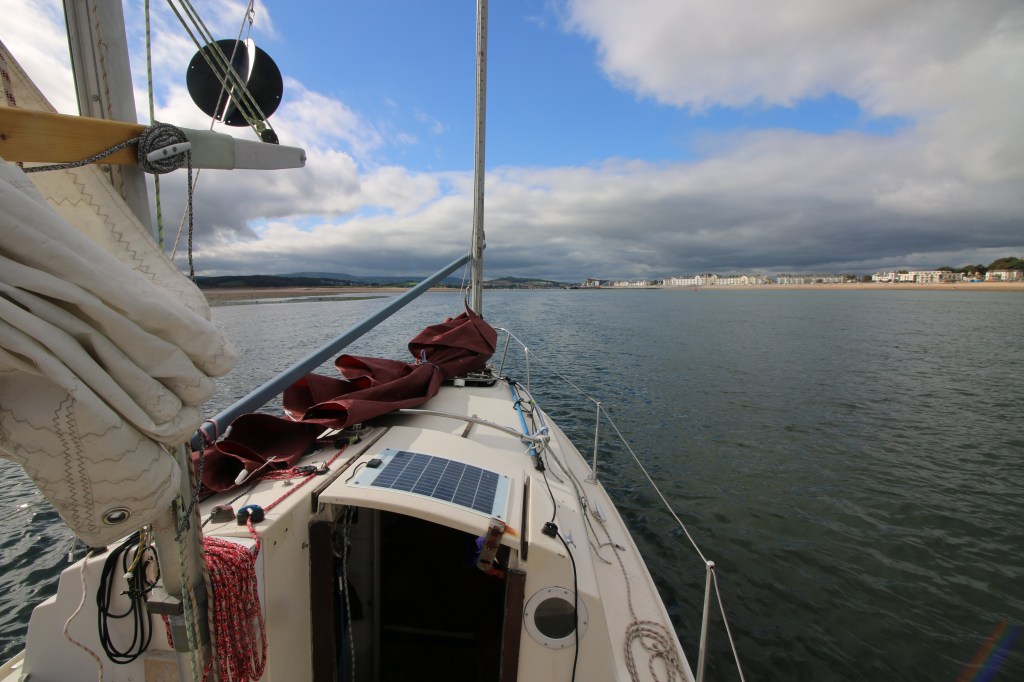
Below….waiting for the tide, river Exe bar, Devon UK.
First thread : small craft and (relatively) big adventures.
I feel that one thing we lack in English (and European) sailing is anything that challenges the small boat sailor in terms of distance sailed, difficulty encountered and competency achieved. For sure there is plenty of small boat inshore racing and equally there are established race series for larger ‘offshore’ yachts and that’s all good if racing yachts around courses is your thing. Equally though many of the once healthy offshore race fleets are in decline and I know of several former offshore race boat owners who have changed down to competitive keelboats and much shorter races – the explanation seeming to be that they can get their jollies in a short race and without the withering expense of running a big boat and the hassle of organizing a big crew.
One thing that we have are active fleets of class dinghy’s but what we don’t have, for small craft sailors, are events such as the Florida (USA) based Everglades challenge and it’s similar events and/or the even more radically difficult ‘Race to Alaska’. In the UK and Europe Raid style events seem popular and in France particularly there is a whole scene of organized small boat events which combine some sailing with lots of socializing, drinking and bad music…..once again, if that floats your boat then all well and good.
Historically, one thing that always fascinated me was the brief existence of early sailing canoes and their larger offspring the Canoe-Yawl’s that once met, sailed and camped in company in the UK’s larger tidal estuaries. That scene sadly didn’t last very long as the once small sailing canoes and one man Canoe Yawls quickly morphed into larger, cruising yacht size, Canoe Yawls and eventually into individualistic yacht cruising.
Offshore racing used to fulfill the need for adventurous sailing and perhaps it still does for some but it does still need a relatively expensive boat to compete with – perhaps even more expensive now than how it was when I raced aboard some pretty basic old IOR yachts. On a side note to that it seems as though the once large and healthy offshore racing fleets are now shrinking and becoming a thing of the past.
On a side note to a side note…..more digression needed here…..and for a little bit of history I spent some time at sea with the late Bob Salmon who instigated the small boat transatlantic race, the Mini Transat – which then got taken over and went from an amateur-possible event to one absolutely requiring a recent design and corporate sponsorship to have any chance of competing well. In the early days of that race it was still possible (just about) to turn up in a secondhand E boat or Anderson Seal, as Bob Salmon did himself, and have a good race. I’m glad to say that there is a more recent Mini Transat style race in one design yachts and equally there is the Jester Challenge which doesn’t need a high end racing yacht and a corporate budget just to take part.
The other side of this whole thread of thought is that yachting and sailing as I once knew it are basically dying so while the super wealthy world of J Class yachts and super-maxi yachts is thriving – as is the building of super-yachts. On the other hand the normal and everyday club boats that many of used to flog across the English channel or the Irish sea with are rapidly disappearing. In a way i’m glad that i’m out of the professional maxi circuit world now because all I would be would be one of the smart looking corporate servant/technician class of professional sailors that sail the professional big boat circuit just like the highly corporate Formula 1 circus-circuit. All I can say nowadays for the kind of professional sailors that I used to work alongside is that I hope that they at least are getting something out of it.
It’s purely my contention that the once ‘middle ground’ of club racing and even Corinthian style independent cruising are either disappearing or being replaced with a cruise or race between marina berths and notably by production yachts that are larger, more fashion conscious…..got to have a reverse stem, wide transom and square windows doncha know…..modern ‘yachtsmen’ seem as trapped by current fashion in boats just as they ever were. In a tongue in cheek kind of way i’m glad to say that most of them seem to prefer cruising between marinas – which leaves the anchorages free for the independent small craft sailor*. There may well be a good argument that yachting in the way that I knew it is dying out and maybe good riddance to it because that whole world of loud obnoxious braying middle class yobbery is also dying out….or at least they have found different things to do with their time.
Now obviously it’s true that everything changes all the time and that we shouldn’t expect things to be as they once were, especially when those things weren’t particularly good anyway. I’m thinking about another contention here and that is one as seen through the lens of another writer – someone who combines an interest in sailing with a career as an academic and I think social scientist.
As many readers will know I read a lot and this winter I re read a lot of the late Maurice Griffths’s work and alongside that I read commentaries about both his work and that epoch of social history. In one sense we get Griffiths telling us about the peace and solitude of his beloved rivers and creeks and yet in the other work we also have to see it against the values and assumptions it seems to hold dear. Seen through that lens we get a now strange looking set of ‘masculine’ values…..I know, it’s odd, and that does seem to include some uncomfortable truths about ‘yachting’ being deliberately socially exclusive, deeply conservative, rule bound and perhaps carrying the cancer of it’s own self destruction.
I covered this more in my recent post about social class, leisure yachting and leisure sailing but I feel today that it’s best to move on and proposing a cure of sorts.
A grass roots revival then.
The kind of thing I am suggesting though would be a grass roots style event based on the ‘Watertribe’ style pasage races such as the iconic Everglades challenge, the Texas 200 and so on. For those that haven’t heard of the Everglades challenge it is basically a 300 mile passage race from Tampa bay to Key Largo in small craft ; one of the main rules of the race being that boats that boats have to be launched off the beach at the starting point and can only be crewed by a maximum of two people. The race organisers place a high value on sailing skills and knowledge coupled with a high degree of self reliance and on the water competency…..and just to add that the race can be paddled, rowed and sailed in anything from a dinghy, a sea kayak, canoe or small multihull.
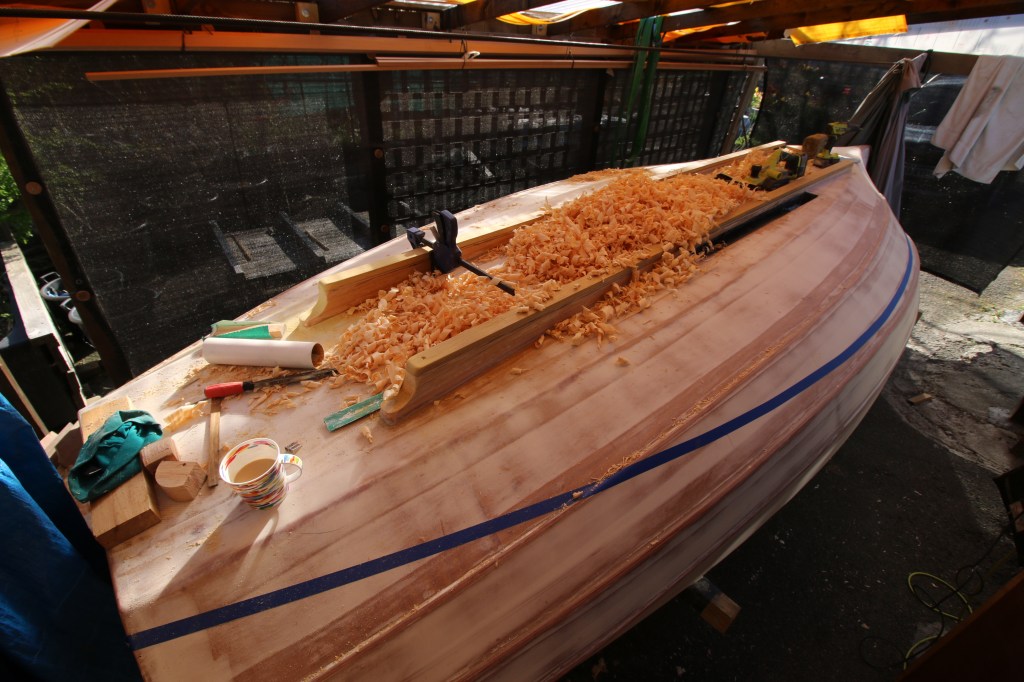
I have many ideas within the main idea, one for example is that the sense of independence created by building, preparing and perhaps even designing your own small craft is the also perhaps the best antidote to post-modern life. It’s not just about working with your hands although that’s a large part of it but also the need for everyday problem solving that it seems to engender in the ‘maker’. I happen to think that the combination of everyday problem solving linked to making a thing of functional beauty and then combined with a seat of the pants exposure to the reality of the sea would be one of the best things that I could somehow promote as a legacy of my own small efforts in backyard boatbuilding and ‘graffiti artist’ writing and blogging.
Warren Ritchey’s YouTube film about the event – it’s a few years old now but still relevant today.
A few years ago I wrote a post proposing a similar but shorter event for the south west English coast which I conceived as either a 100 mile passage race or defined it by the number of west country rivers that it passed and potentially dipped into ; a few years before that i tried to put my own Everglades challenge boat together based on an old Osprey class racing dinghy but the boat was too far beyond economic repair to be raced offshore.
Here’s one of my original posts, I apologise for the low quality of the post – this was way before I was anything like a competent writing blogger.
https://dirtywetdog.co.uk/2017/10/21/the-adventure-alternative/
This is slightly more readable.
https://dirtywetdog.co.uk/2021/01/04/challenge-2021/
Foot notes.
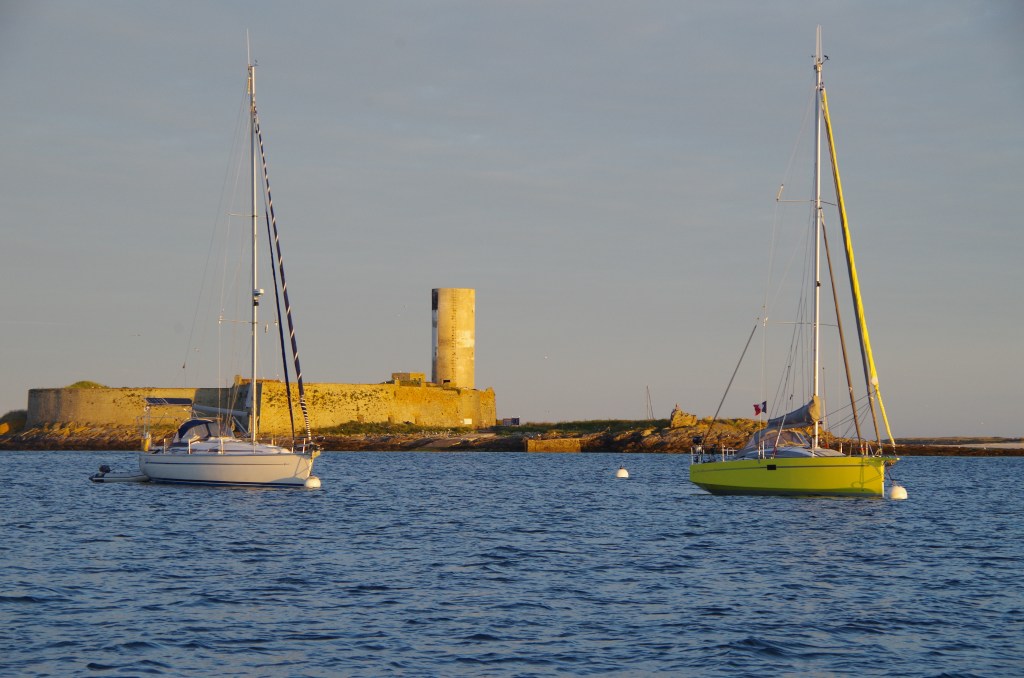
*From a purely personal experience, I was one time, anchored out at the Glenans Islands in southern Brittany with a whole mixed fleet of cruising boats also there. During the late afternoon every boat except ourselves and one similar small yacht all up anchored and headed back towards Concarneau and presumably their marina berths. That night there was just the 2 anchor lanterns alight in our anchorage and just a few more dotted around the other main anchoring spots.
I have a personal opinion that the kind of ‘yachting’ that I took part in as a young offshore sailing crewman in the 1970’s is slowly dying out as that generation of sailors and boat owners are either retiring from the sport or in many cases have already passed over the bar. Sailing itself I think has changed once again, mostly for the worse rather than the better, but there are hopeful signs of a more grass roots revival with a much healthier scene of small boat and small craft backyard boatbuilders and small boat events.
I’m not one for clubs and organizations because (mostly) I don’t like being around other people when i’m at sea – I was thinking just recently that as a young crewman on offshore and ocean racing yachts my hero’s were the great sailors from Blake to Tabarly and Moitessier to the Pardey’s : well today I think iv’e morphed into a 21st century version of Maurice Griffiths or Charles Stock perhaps slipping into a quiet creek at the end of day. Perhaps i’m just getting old and maybe growing up a bit…..it’s taken long enough !.
Offshore racing sailing in the UK used to have as it’s focus the Fastnet race and then as a second string event the round the Island race, I begin to think that adventurous small craft sailors would benefit from an event similar to the Everglades challenge……a focus if you like on self reliant and independent sailing where skills and competence would count for far more than the depth of pocket of the owner.

 Dirty Wet Dog, the great adventure.
A race in early July (for the long daylight hours), island hoping in Scotland might be a thing. Although the rocky lee shore and 3000 mile fetch in the gaps would seem to make it more perilous than the small boat events in the SE USA.
LikeLike