

Questions…..what is it with the middle classes and what’s happening with yachting ?
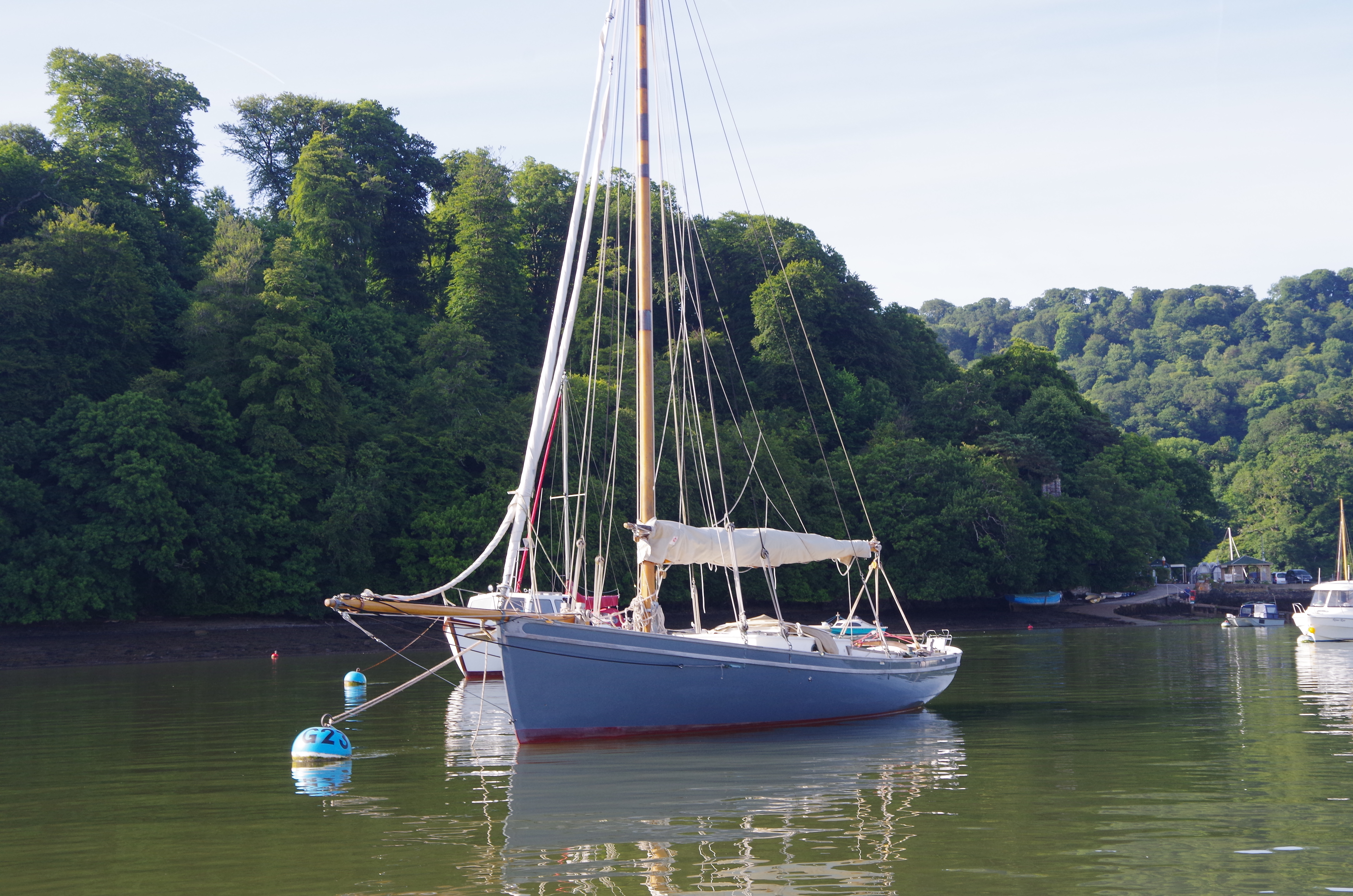
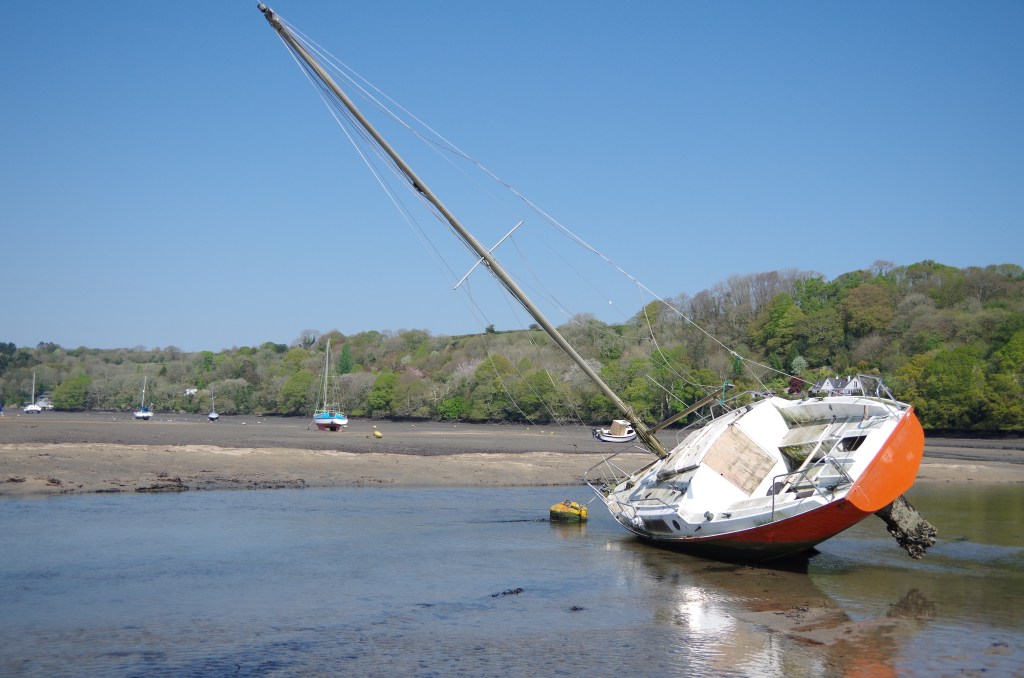
A few years back I thought I could make a reasonable case that leisure yachting and leisure sailing were both dying a slow death. My main observation at the time being that many small production yachts were being abandoned in ports, marinas, rivers and creeks – especially in France where I really noticed it first. When I followed it up further I found that many yachts were simply being abandoned because their owners could no longer afford to keep them as their living costs were going up and up, and that there were actual schemes to recover and destroy those yachts.
Another feature of French marinas that I saw was that most of them had large sections packed with smaller berths and in most of those berths were small modern fishing boats…..and those were mostly the boats that I saw out at sea every day. When I looked into it a bit further I noticed that the British boatbuilding industry had shrunk massively since it’s peak in the 1970’s and as an aside to that that many once famous Yacht clubs had closed or were closing – mostly I say good riddance to the posher and more socially pretentious yacht clubs but the loss of more egalitarian sailing clubs is, I think, a problem.

So I created an argument in my own mind that ‘yachting was dying’ but even I knew that that can’t quite be true because what we see every day in the sailing channels of social media every frickin day are endless images of the J class yachts, superyachts and high-end super maxi’s. Another thought though was ‘just who owns them’ ? – certainly not you and me for sure and the answer seems to be the burgeoning class of super wealthy individuals, oligarchs and heads of large multinational corporations. I think now that yachting and leisure sailing are shrinking towards the edges and a lot of what used to be the middle class of leisure yachting and the once working class of leisure sailing are both dying out or leaving the sport. It’s also possible that the very nature of sailing is changing towards a sport that requires less time and less involvement with a club.
To support that side of the argument I would point to the visual evidence that there has been an increase in large yacht ownership, especially in racing and the J class for example, but the only way they can be crewed and sailed is via the existence of a professional servant/technician class just as it was from the 1900’s up to the 1920’s. I truly hope that those professional crew are enjoying themselves but for most of us that isn’t yachting or sailing as we know it ; iv’e been a professional crew, mate and skipper by the way but infinitely prefer the life of a backyard boatbuilder and muddy boot kind of sailing.
Another unhealthy change, in my opinion, is that a certain kind of sailing couple (usually) has spawned a social media nightmare of Youtube’d lifestyle sailing in a kind-of bikinis meets sunsets, alcohol and Kardashian style personal problems. I say this a bit tongue in cheek given that i’m an established blogger with a struggling Youtube audience. Our man Dylan Winter used to refer to one of the main culprits as La Vag by the way…..can’t think what he meant.
At the bottom end i’m glad to see that there is a grass roots resurgence in building small boats that can be built and kept at home although another disappearing scene is the one in which a couple spend 5 years building their big Wharram catamaran and heading off for the dream of ocean sailing. Not so many years ago I knew of 5 or 6 actual cruising yachts, including 4 Wharram cats, being built by their owners – today I don’t know of a single one so maybe that dream has died a death too.
The Maurice Griffiths perspective.
As many of you will know iv’e been re-reading any books that I own written by the late Maurice Griffiths ; my re-read was partially to track down any evidence of his first wife, Dulcie Kennard/Peter Gerard who was also a yachting writer, boat owner/skipper and later a sailing instructor too….and this at a time when any one of those was highly unconventional things for a woman to do. I failed a bit on that search because I couldn’t find any old magazine articles written by her and still haven’t managed to procure a copy of her autobiography but then I did find that a much better writer than I am had also written about her in his book about the history of yachting. That writer is Mike Bender of Exeter university who not only has a Phd in the subject but has also written an extensive history of yachting and he obviously was able to find a copy of Gerard’s autobiography ( Who Hath Desired the Sea)
In his book A New History of Yachting Mike Bender argues that we shouldn’t think of yachting in isolation rather we should try to understand it as set against a backdrop of social history and in his book basically gives us his take on that especially in the crucial years of the growth, and now decline of, the middle classes – especially in England. I have to admit that I found Mike Bender’s portrayal of the yacht club membership style middle class from the turn of the century and right up until the modern age utterly dismal ; if anything it left me with a feeling of class contempt. Having had a brief involvement with one Royal Yacht club back in the 1970’s I think I saw the near end of the time when ‘women, dogs, professional seamen and the working (artisinal) class of any kind were strictly prohibited from being yacht club members or even from entering the bar at the yacht club.
Even back then I remember feeling distinctly uncomfortable in several yacht clubs that I was expected to ‘enjoy’ as a member of a boat owner’s amateur crew (professional hands were still excluded) and years later I experienced contempt once again when I observed the loud and boorish young middle class at play after some yacht race during Cowes week. At the time I remember thinking that this was something that I wasn’t part of and that even after i’d competed in the Whitbread Round the World Race…..the same time at which I was disallowed from entering the bar of the host yacht club at the end of the race.
For anyone who is interested in this sort of thing I wrote a recent post about this and in it I describe how it finally answered the question I had been asked years earlier – “are you a yachtsman or a sailor ?”. The eventual answer was that I couldn’t be considered to be a yachtsman because I was now a professional sailor and that ‘class’ of professionals have always been regarded with disdain by the middle class yacht club members.
I’m wary when I meet the researched and considered opinion of an academic writer who’s view of yachting, yachtsmen and one time yacht clubs coincides with my own, more visceral sense of distaste and discomfort. I thought at the time that my new way of seeing things came about because by then I was steeped in the more feminine world view of nurses and nursing ; that I was seeing the loud and obnoxious upper middle class yachtsmen at play for what it was and not mere harmless play and letting off of steam and testosterone. In short, that there’s something else going on here which is more to do with class status, exclusion of ‘others’ – women, dogs and the working class for example and something akin to what is now often called ‘the patriarchy’ with it’s obsession for conduct, a specialized and exclusive vocabulary and an adherence to certain social rules.
I am also slightly wary of Mike Bender’s take on things because it does seem to me that he has one foot solidly planted in some of Karl Marx’s ideas about ‘class’ struggle – iv’e seen as much loutish testosterone on the terraces of British football clubs and the beaches of Spain as I have down at a Cowes marina after a yacht race ; the only difference, slightly, being the accents and the overpowering sense of superiority and entitlement.
Anyway….moving on a bit.
Mike Bender’s obviously logical conclusion is that yachting as it once was is dying out because the middle classes are also disappearing and/or losing their confidence and that yachting or sailing no longer have the status allure that they used to hold…..a bit like other dying middle class sports, golf for example, the middle classes have now found better ways of spending their time and money. His end point is the question of ‘who will survive’ ? – it seems that the super wealthy will do so there may be an even greater shift towards high end yachts mainly sailed by a professional servant/technician class, a reduction of time intensive ‘Corinthian’ offshore racing aside from a few prestige events and a general shrinkage of yachting as a hobby.

My final thoughts today are about what I was trying to track down in the work of the first woman to write for the yachting press as far back as 1920 (Dulcie Kennard) – I wondered then whether Dulcie Kennard (writing as Peter Gerard) had a different take on leisure yacthing in the 1920’s and 30’s. If you will we have on one side a continuation of the masculine view of sailing as written by authors such as Maurice Griffiths and just a hint of a sniff that Gerard held an entirely different view ; where male writers talked about manly conquest of the sea Gerard rightly pointed out that the sea can never be ‘conquered’ but in a more natural sense only worked with…..on a good day.
As I write I have hopefully her autobiography finally tacked down and on the way, I think it’s going to be a fascinating read that is maybe unpopular because perhaps she was saying things that didn’t sit well with her mostly male and middle class yachting readers.

 Dirty Wet Dog, the great adventure.
Hi Steve again! Just read this piece (very interesting again) and I realise you now have a copy of Dulcie’s memoir. Hurrah. Best wishes, jane
LikeLike