
The Morecambe bay Prawner or ‘Nobby’
Title photograph unknown.
Many of my life decisions and temporary enthusiasms have got me into trouble one way or another – whether it’s been motorcycles, boats, jobs or girlfriends it’s mostly been a long list of errors….mostly !
A few years ago for example I decided that what I really needed and wanted was a heavier and steadier boat than the light and bouncy Hunter Liberty. Don’t get me wrong, the Liberty was a superb little boat for the rivers and creeks of the west country but not really man enough for my cross channel trips. although, once again, it was a great boat again once it got me to Brittany.
The big problem then was that I needed one of my ‘big end’ bearings (knee) replacing and I wanted a boat that wouldn’t jump around so much especially when I was clambering on and off her. I came to the decision that it would also be the right time in my life to rescue and restore an older wooden boat – to learn new skills and all that. The problem came when the boat I found was all the way across the country just outside Ipswich and that’s at least a ten hour drive from this part of Cornwall. Given that we live in one boat laden region and have several more between us and the east coast it did seem kind-of silly to have to drive all the way across the country to see the boat, buy it, go and set it up and clean it out and then start to bring it home.
That boat was the Deben 4 Ton called ‘Inanda’ and sadly she was yet another failed project but one that taught me a lot more about boats.
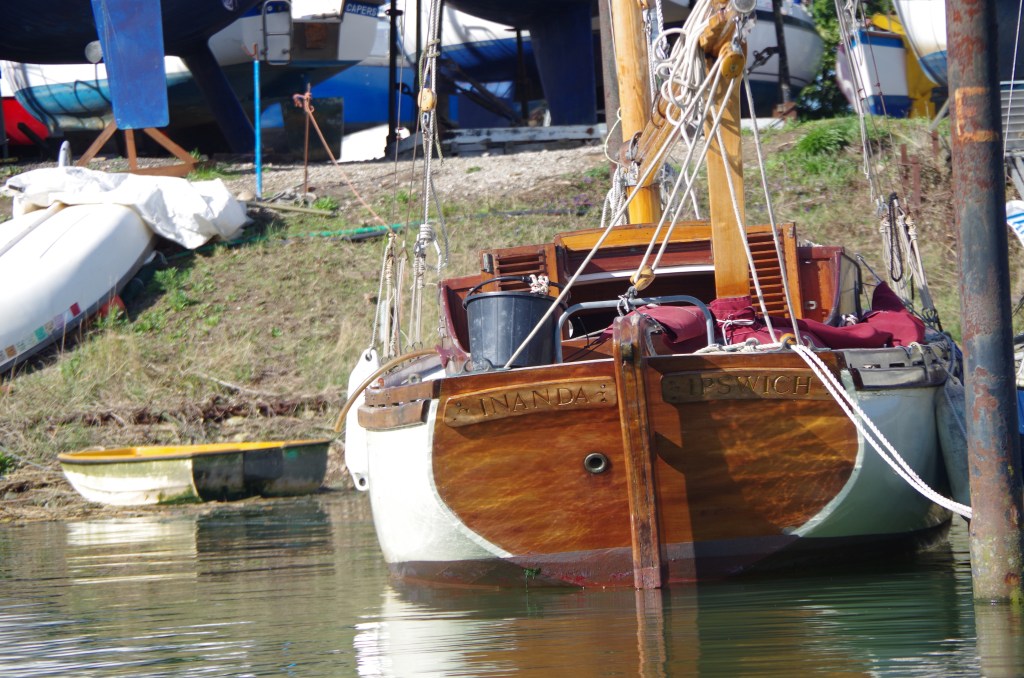
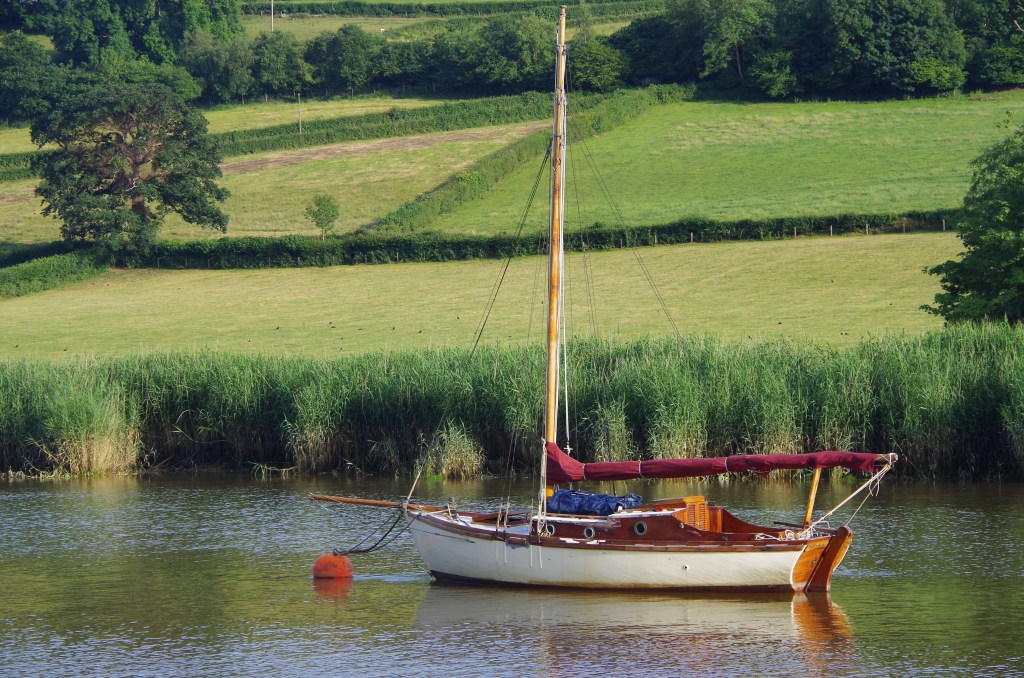
Inanda was a traditional English gaffer with a big mainsail and small jibs set on Wykeham-Martin furling gear and from the first day that furling gear trolled me so hard that I eventually stripped it off and learnt to sail with a free-flying jib just like an Essex smack. She sailed well enough in the Thames estuary once i’d learnt her quirks and I remember well beating up the Black deep (I think) to get around one of the wind turbine studded sand banks with Inanda’s tiller pegged by a bronze pin set in a peg board while I navigated and made dinner.
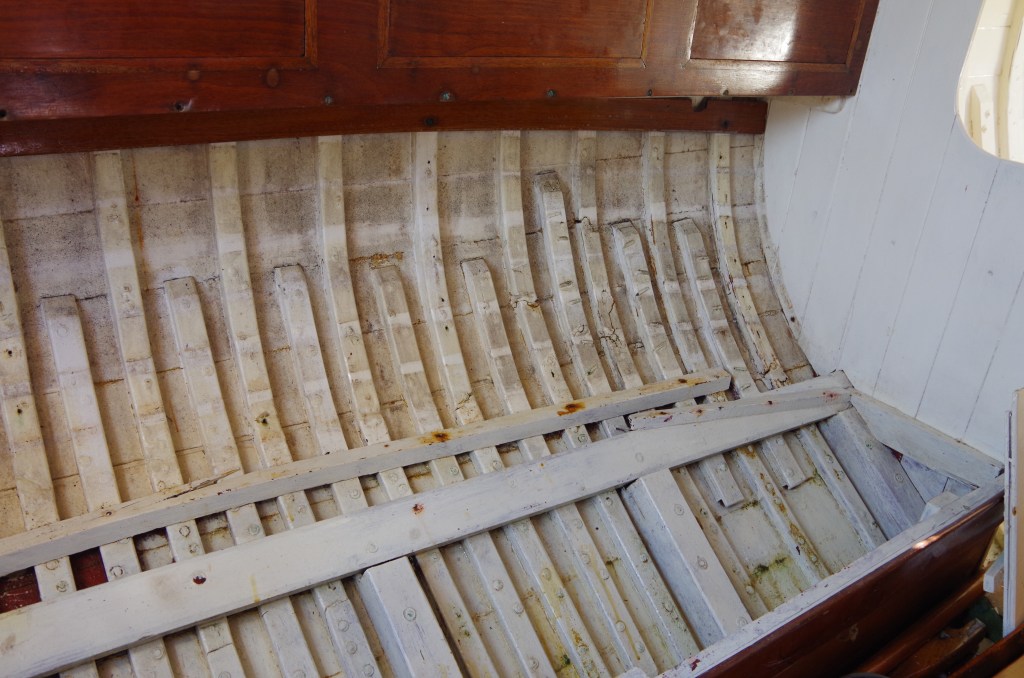
That was almost a ‘Maurice’ moment and made me briefly enthusiastic about my future with Inanda, I thought that if she would do that ie look after herself and me while sailing on the wind in the Thames then I could make a go of her. That her cabin leaked like a sieve when it rained was simply one of her many rebuild problems that I would have to deal with after first replacing most of her ribs (frames) as most were either cracked or broken or sistered and broken. What killed the project though was that she just couldn’t cope with the larger waves in the English channel, instead of her weight carrying her through the waves she would simply butt her head against them and largely come to a halt until I had to drive her off and try to build up speed again. To be honest the little Liberty at a third of the weight did everything better.
Dirty inside and broken too !
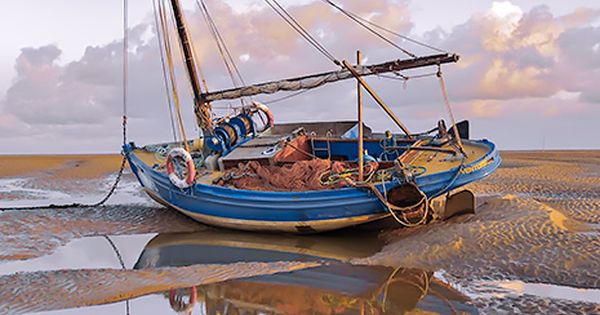
The funny thing about me taking an east coast boat around to the west country was that the commodore (commode) of the Orwell Yacht Club, where Inanda had been based had done the same thing as I had but in reverse – what he had done was to acquire an old west country boat and take her to the east coast. That boat was a very rough looking Morecambe bay Prawner or ‘Nobby’ and must at one time have worked out of the Dee, the Mersey or maybe Fleetwood because that’s where most of the Nobby’s worked from. The Morecambe bay Prawner or Nobby as they are known locally is kind-of the Lancashire version of the Essex oyster Smack and for a few years were the predominant form of working fishing boat on the north west coast of the UK.
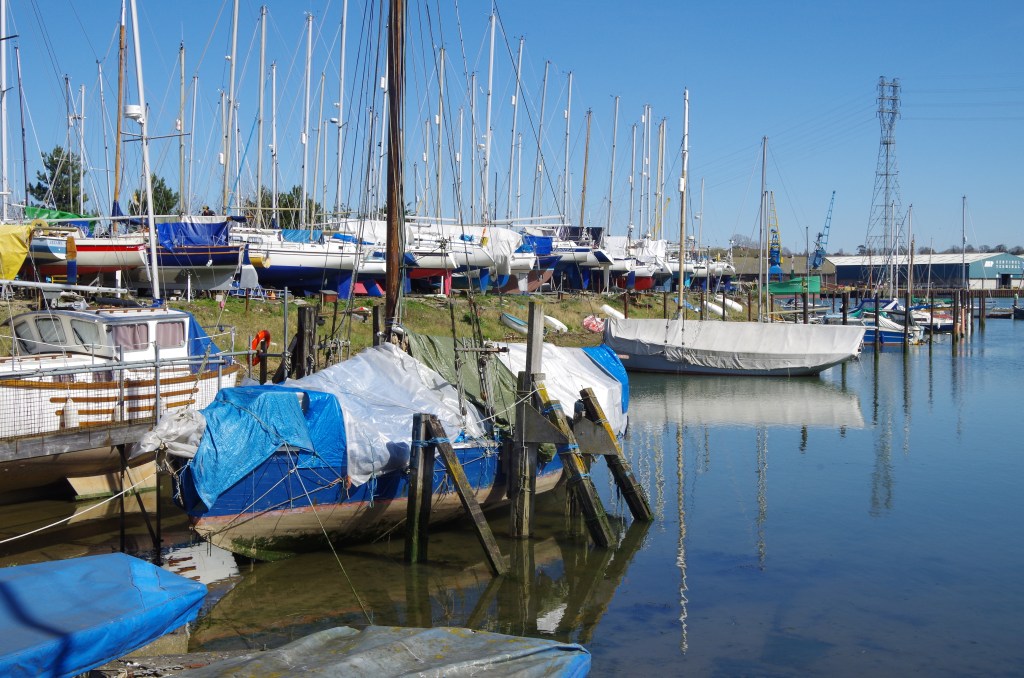
In the late 1970’s I worked at Peter Dickie’s yard just outside Bangor in north Wales and despite having no experience of boats and sailing I went from being the ‘keen but useless’ yard hand to the equally keen but even more useless yard rigger almost overnight. It’s not quite as bad as it sounds because the previous rigger, who was a very experienced sailor, at least taught me how to use the Talurit press and then how to get a mast in or out of a boat. Just after that the yard foreman pointedly left me to it to get the masts out of several boats and help lift the boats into cradles or chock them off in the yard.
I didn’t drop a mast that year although I did the next when the yard hand who was on the bow-to-masthead line simply let it go and down came the rig, bounced noisily on the cabin roof a few times…..and all in front of the yard owner, the boat owner and the yard foreman.
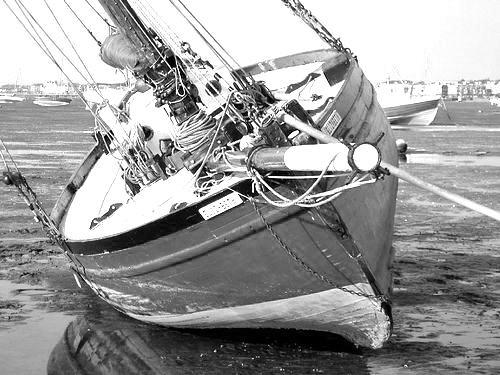
One of my many failures at the yard was in failing totally to get the wooden pole mast out of a rough old working boat that I know now was a Morecambe bay Prawner or ‘Nobby’. I later found out that somehow we had all failed to find the wooden wedges that had been driven up from underneath, around the mast partners, trimmed to size and then painted over – obviously when I put a sling around the mast and secured that to the gooseneck band and then gave it a heave with the crane all that happened is that the boat’s props fell away ……I don’t think I should tell you what happened next.
I did , later still, meet the Nobby’s owner and he said to not worry about the mast as he’d decided to take the boat up to the Isle of Man under motor and work on it there. I wondered about that because i’d been aboard and below when I first went to ‘pull the stick’ and had to clamber over this huge looking Lister diesel that was mostly in the boat’s cabin.
A good mistake.
Although it was hard going, damp and dispiriting when I was trying to get to windward in the English channel aboard Inanda it was also a very good demonstration of that boat’s faults so instead of putting a lot of money and a couple of years work into her….and only then finding this out, I found the faults early and made the quick decision to sell her on. As it is she went very quickly and just as that happened I was listed for a knee replacement so in terms of sailing I was then out of action for the next few months anyway. It was a good project though because it basically taught me to sail a gaffer with no modern gear and gave me a much greater appreciation for how boats were sailed before gear like sheet winches appeared on the scene.
Had I chosen to keep Inanda and to start work on her I would have quickly found the two physical problems that became a major feature of the next two years – firstly that kneeling on the operative knee was a surprisingly bad idea….just imagine having to kneel inside the boat while working on the frames…and the other side was that after the knee op I started to get intense back pain as my body tried to align over the new joint and that was what ultimately made me give up work completely.
After Inanda I still had the Liberty so briefly I was ‘2 boat’ Steve and so when I did give up work in 2019 the very first thing I did was leave Cornwall and sail for Brittany…… I got my arse well and truly kicked in the channel that time too, it being an intensely cold and sick making passage. In between the end of the troll-beast (Inanda) and the 110 day Brittany voyage I had a lot of time to think about what to do next and what I had learned from Inanda. One of the ideas still at the forefront of my thinking was to have a more liveaboard boat, which meant larger than both Inanda and the Liberty, a tough wooden boat because I still wanted to do a restoration project at that time and a wooden boat that had been designed to take the bottom as for example Essex smacks and Lancashire Nobby’s are capable of doing.
The way I was thinking was to not re-invent the wheel but to adapt a hull form that had been designed to be fast, to work offshore, to be able to sail in shallow estuaries and then to lay over in the mud and not come to harm. My post-operative project was to work up that idea into a fully costed future project based around a Nobby if and when I could find one ; as it happens several have appeared on Ebay from time to time and for fun I even worked out the structure of a sailing novel based on one……don’t worry though as it’ll never go to print.
Saying goodbye to Inanda.
The Lancashire Nobby.
The Nobby, or Morecambe bay Prawner is a comparatively little know boat compared to the much more well known Essex smack but then there were far more sailors on the east coast and south coast who would have seen and known smacks and few that would have been to the Lancashire coast.
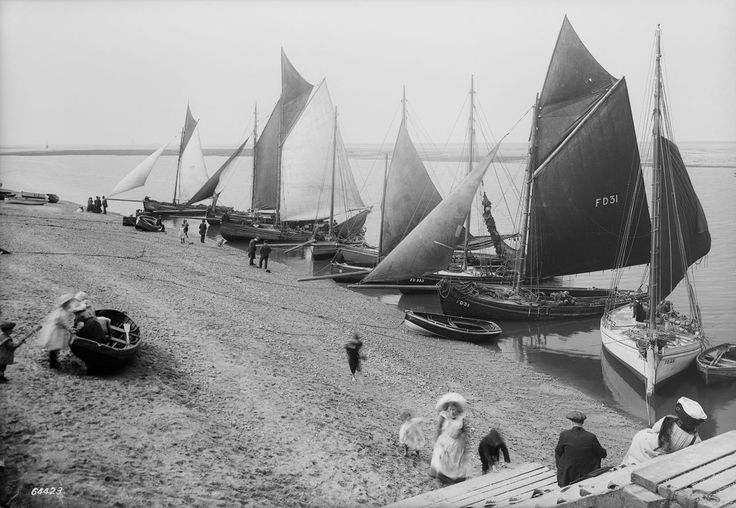
As the name suggests the boat was designed for the job of trawling for Shrimp (Prawn) because of the rising desire for Shrimp/Prawn* among holidaymakers on that coast – we’re talking about the 1860’s onwards when the railway links from Liverpool and Manchester suddenly made that coast a destination for holidays and even day trips. The basic function of the Nobby then was to sail out into the shallow areas, like Morecambe bay and the various river estuaries from the Dee to the Lune, trawl for Shrimp and then race the catch back to port to get the best price. Many Nobby’s were fitted with a boiler to cook the catch in on the way home and they slowly evolved into a boat also designed for speed on the water and to then take the bottom in a river or creek on that coast.
Anyway, for a bit of basic boat type description here goes…..
The Nobby is basically a long keeled working fishing boat with a cutaway forefoot, quite low freeboard amidships to help with handling the catch, powerful gaff rig up top and a long bowsprit out front. Many simply had a large open central cockpit fitted with a boiler and some had a sliding hatch over that. Most Nobby’s were around 28 to 32 feet early on but developed into larger (and faster) boats of around 36 feet later on. It’s purely anecdotal history but it was held locally that one Nobby was still the fastest boat around the Isle of Man up until the time that the trimaran Three Legs of Man took the official record.
I don’t know where this is, could be the Wyre or the Lune but the sail number FD31 suggests a Fleetwood boat and many of the larger and faster Nobby’s were both built there and based there.
For biology nerds….what we’re talking about here is technically Crangon Crangon – the brown shrimp, which according to the sources I looked at is common to all shallow water areas in the north-east Atlantic and notably common to salt water estuaries .
Everyone knows what a shrimp looks like and anyway…..I’m strongly allergic to them so there !

Today, there is an active owners organization and several Nobby’s still sailing, if iv’e got this right then the type was developed into a glassfibre hulled cruising yacht with higher freeboard and full cabin. Most of the working ones were converted to engine power as was the one I briefly knew at Dickies yard in north Wales.
This week’s video blog post.

 Dirty Wet Dog, the great adventure.
Please update me with blogs as they come
LikeLike
The easiest way of catching them regularly is to just subscribe to the blog or just watch out on a Monday morning as that’s when my main piece goes out.
LikeLike