
The life and times of England’s first female yachting writer – Dulcie Kennard /Peter Gerrard.
Post three in a series about the late Maurice Griffiths.
Introduction.
Today, as part of my thread of posts about sailor, designer and writer Maurice Griffiths I want to take a sideways step and take a look at the life and times of his first wife – Dulcie Kennard who both sailed in her own right, owned several boats and also wrote for the new yachting press under her assumed nom de plume – Peter Gerrard. Before I do that though i’d like to explain why i’m writing this post and even before I do that I want to talk about dinosaurs.

A sea story……with dinosaurs.
Several years ago I was at sea professionally as mate on an old Whitbread era maxi yacht, as I remember it we were just a few days into the passage back from the Caribbean and it was my afternoon watch. As was my practice back then i’d taken my watch handover and steered for the first half hour while the rest of the watch woke up a bit – unlike me many of them weren’t used to short daytime sleeps and they were a bit fuzzy. Anyway, after half an hour or so I put one of the watch on the wheel and asked another to ‘keep watch’ and call me in anything interesting or untoward happened – after that I went below to work up my daily noon sight and afternoon sun sights ; at the time I was becoming a (mostly)self taught astro-navigator with the intention of sitting my Yachmaster ocean examination as soon as we got back to the UK.
On that boat the chart table was 5 steps down and one step sideways from the companionway ladder so by taking one step back and turning around I could instantly see who was at the wheel and what was going on in the cockpit – which was basically that one of the crew was steering while looking forward and glancing at the binnacle compass and another member of crew was perched against the cockpit rail and from her stance was looking aft. In other words it was a normal afternoon watch at sea in a slight to moderate sea and the feel of the deck under my feet told me that we were going along nice and easy.
Those that know me will also know that I sweat a bit when it comes to mathematics – although having said that the maths of astro-nav can be done with basic addition and subtraction only…….but anyway, there I was working away at the chart table and trying to work out why my sights put us somewhere on the other side of the world. All of a sudden, the skipper barks in my ear “why is there nobody on deck” ?……..now, given that I know that Sally is on the wheel, Mary is keeping watch and I think both Jane and Alison are sat up there talking I had a bit of a sailors WTF moment. What the skipper meant of course was why there were no apparently competent men on deck at that moment and essentially discounting the fact that 4 of the 5 female members were on deck and doing everything that needed to be done and perfectly capable (in my opinion as mate) of calling down to me if something happened that would need my attention.
So yes……I believe in Dinosaurs because iv’e sailed with several of them !
Lets move on……

A little piece of history.
This entire piece is based around one sentence from the Wikipedia entry for Maurice Griffiths, one black and white photograph and a small section from his own book ‘ The Magic of the Swatchways’ .
The Wiki entry is as follows “In 1927 he married Dulcie Kennard whom he had met while visiting the offices of yachting magazines, trying to sell his articles. She also wrote for the yachting press under the name Peter Gerard. They were divorced in 1934.” The only comments that I have been able to find out about their marriage , life together and eventually their divorce were that Kennard was already an established sailor , that they lived together for a while on their yacht Afrin and their divorce was amicable although perhaps partly based on their contrasting interests as sailors ; we know from his writings that Maurice Griffiths loved the rivers and creeks around the Thames estuary but it seems that Dulcie Kennards interest was for the open sea and offshore passages.
When I came across that I was surprised enough to start researching the life, times and writing of Dulcie Kennard but at the time of writing i’m disappointed to admit that I have drawn a blank and given that she was already writing for the yachting press under an assumed name (Peter Gerrard) I had hoped to find at least one piece from her archived somewhere. My initial thoughts were that in Peter Gerrard/Dulcie Kennard I may have chanced upon the genuinely first independent female ‘yachtsman’ …..and doesn’t that sound odd to our 21st century sensibilities ?, and the first female yachting writer but one who chose to write under a masculine nom de plume.
I would have been greatly pleased to come across any articles written by her , wondered what she was like as a writer and ultimately whether she wrote from a feminine perspective. Today I would be criticized for even suggesting that there might be such a thing as a female perspective but we are talking about the 1920’s here and sailing then was most definitely a male dominated and masculine sport. Then, a female sailor was unusual and an offshore, boat owning female skipper even more so. Now, given the kind of toxicity we face when talking about anything male vs female I wonder if I would get criticized for making that distinction just as I did when writing about Breton sailor Capucine Trochet.
https://dirtywetdog.co.uk/2019/04/19/la-capucine-pure-gold/
We do however have this and it seems to give us a clue as to what she (Kennard) was like as a sailor. This is taken directly from the last piece in The Magic of the Swatchways.
“we tore along in a welter of rain, spray and howling wind”………For a time I sat on the stem head facing aft, my ears filled with the song of the boiling water tumbling over at the bow, while I could see the mate, bracing herself in her sea-boots against the heeling of the ship, tugging at the tiller lines , her face almost hidden by the collar of her oilskins. but her face wore a wide grin of exhultation that said ; ‘To hell with the weather. This is grand sailing’……..”
In another, similar piece, we see mate Dulcie at the helm again, in a winter gale in her long oilskin coat braced against the tiller and Griffiths describes her as looking like a young ‘smacksman’.
In his book The Magic of the Swatchways, Maurice Griffiths wrote an entire piece about a summer holiday spent with wife and skippper ‘Pete’ as he called her and it was a tough voyage across the North sea and back by his account. On the way out they had frustratingly light windward sailing and couldn’t make their course but on the way back they ran into a severe gale right in their teeth and we hear that they were both violently sick and once, when they were ‘headed’ one more time by a shifting wind that skipper Pete liked and needed a good swear.
It would be a grave mistake for me to suggest that this was in any way unusual but alongside my reading of Griffiths’s work I am also reading Herreshoff and in his writing from the same period his female characters wear nice floral dresses, do their hair and make up and spend their ‘heavy weather’ time below discussing dress patterns. I hope and suspect that Griffiths work and his description of mate Dulcie is the real deal while Herreshoff’s lame and tame depiction of daughter ‘Miss Prim‘ and wife Mr’s Goddard is a poor fiction.
Once again …..mate Dulcie in oilskin jacket and with skippers hat in hand.
Bad tropes.
When I was doing the reading and research for this piece I dropped a quick post on 2 of the sailing related social media sites that I regularly post on – basically I was asking for any information about the life and times of Dulcie Kennard/Peter Gerrard. One of the few replies that came back was a hint of a sniff connection between Dulcie Kennard and Dawn Reilly although the connection wasn’t explained. I did however go ‘I know that name’ because if it’s the same person then that was the same Dawn Reilly that I met in the 1989 Whitbread boats when we were both riggers on our respective boats…..it’s a long time ago now and I really had to think hard to even remember what she looked like. In all truth my Whitbread race was half a lifetime ago and my memories of the race and the boat that Reilly was crewing on have changed and crystallized in an unexpected direction so….
At the time I remember being mildly and cynically amused by the press broughah generated around Tracy Edwards, Maiden and her all female crew. For example, I was right there on the dockside when Maiden sailed into Fort Lauderdale with her all female crew in their matching swimming costumes….predictably the American press went nuts for that as though they hadn’t seen women in cozzies before ; today I see that as just another of Tracy Edwards cynical marketing ploys. Then, I was also briefly there when Maiden docked in Ocean Village (Southampton) at the end of the race when Edwards had her 15 minutes of fame and everything was made of their accomplishment being all the greater because of their being an all female crew. Even at the time that felt like a ‘thin’ story made much of by the media and Edwards herself and one thing I noted at the time was that there was very little attention given to the fact that Maiden didn’t actually do very well in the race and secondly it wasn’t the start of an amazing career in ocean racing for Edwards, unlike say what Peter Blake went on to do with the America’s cup.
Over time my thoughts crystallized towards an annoyance , and ultimately boredom, of the trope that became ‘the first female to do this or that’. Early on I would have expressed that as the fact that Maiden was designed by a bloke (Bruce Farr) built by a bunch of blokes and then originally sailed by another bunch of male sailors under skipper Pierre Fehlmann. I admit to being prone to cynicism especially when another project built to a huge budget and given huge attention in the yachting press – Pete Goss and his maxi catamaran went on to break up in the English channel…..English channel 1….arrogance and hubris 0.
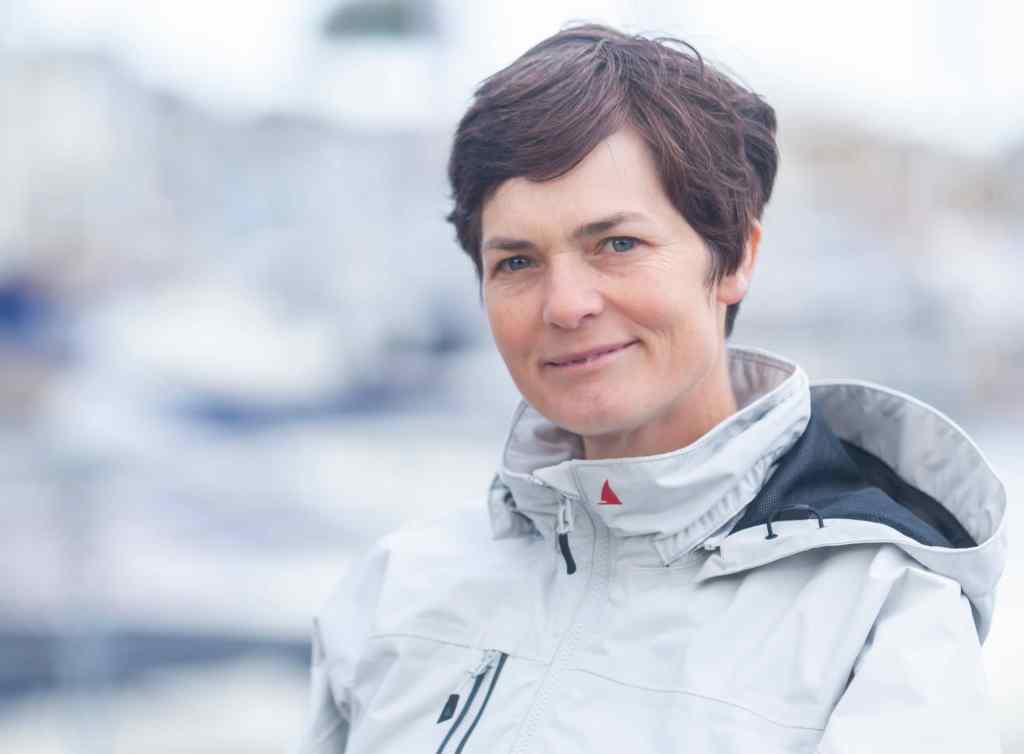
On the opposite side I was completely charmed, and then greatly inspired, when another young kid (Ellen MacArthur) that I once literally bumped into down at Hamble marine went on to race in the Mini Transat, then a Vendee race and the rest, as they say, is history. Ellen of course is now Dame Ellen and rightfully so, I would love to cover her story for this blog but not so much the later hero stuff but her first solo voyage around the UK in her little Corribee. As many of you will know I enjoy covering the small and quirky boats, their skippers and the great voyages they do so that boat, skipper and voyage combination would be exactly the right fit for this blog. Ellen Macarthur, to the best of my knowledge, retired from ocean racing and simply disappeared – the last I ever heard of her was driving a canoe somewhere…..which, if true, is excellent.
Bad arguments.
Recently, I re-published a piece I once wrote about Breton sailor and adventurer ‘Capucine’ Trochet and her voyage from the bay of Bengal to the south of France in the Jute and scrap built Taratari. When I re-posted that piece in a kind-of response to international women’s day I received some nice feedback and some bad – one male respondent heavily criticized my post for the fact of my talking about the voyage in the context of it being undertaken by a female sailor and his further comment was that it would have been of no interest had it been a male sailor. I disagreed, of course, because I thought that it was a challenging and difficult voyage in a highly unusual boat and on top of that it was a voyage undertaken by a skipper who was in a difficult medical state after multiple surgeries.
There is an argument that arises from both radical feminism and post modernism that ‘men’ can’t or shouldn’t talk about ‘women’s issues’ because they can’t understand them – the same thing is said of ‘black’ (Racial) , gay or transgender (gender) issues and so on and so forth. There was , for example, a comment on my Taratari piece that it was actually sexist to point out that the voyage was undertaken by a woman and which seemed to deliberately miss the point entirely.
There are genuine misogynists – I know because iv’e sailed with many of them but equally iv’e worked with far more sharp tongued and resentful/hateful misandrists during my lifelong career in nursing. According to personality psychologist Dr Jordan Peterson aggression plays out equally across the genders but simply has different outcomes ; men tend to be dangerously physical while women use verbal attacks – especially against other women which is a genuine feature of girl on girl bullying in schools and social media. To say that ‘it’s only words’ and not a physical beating is to not understand the destructiveness of female on female character assassination in social media for example or in the work place ; my experience is that women make worse bullies than men……and that’s from 35 years of working with them.
While interesting and perhaps useful I do realize that i’m going off track a bit so…..
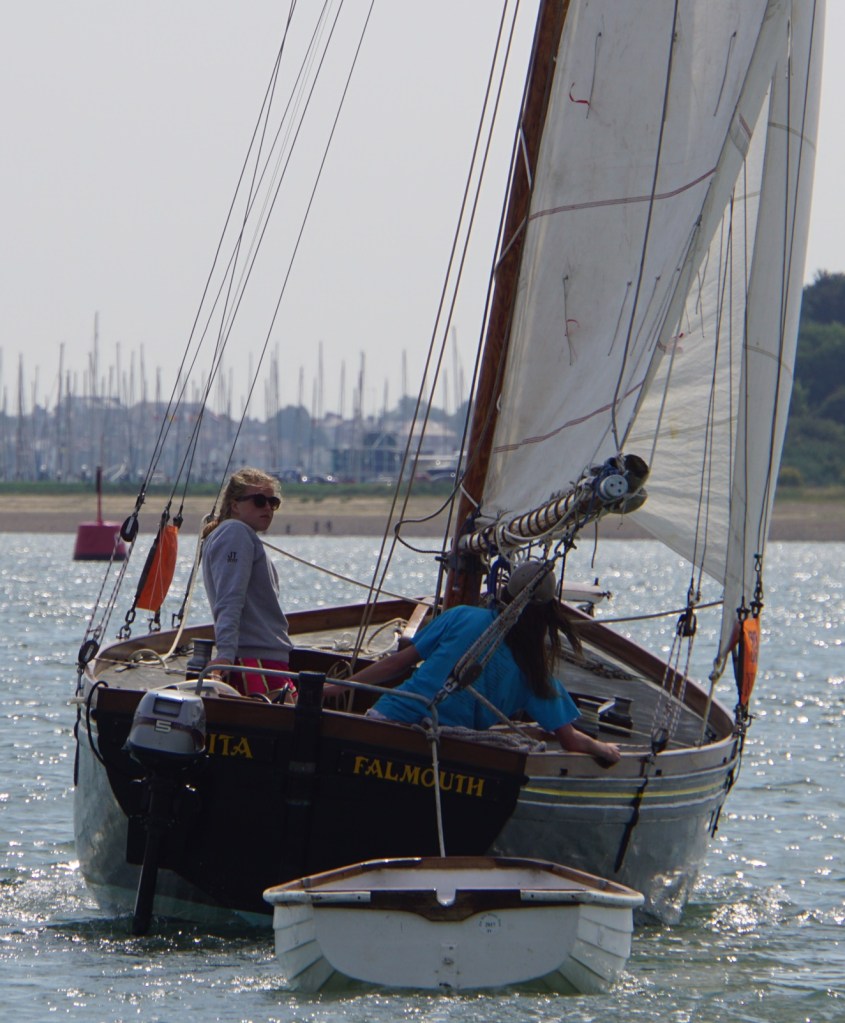
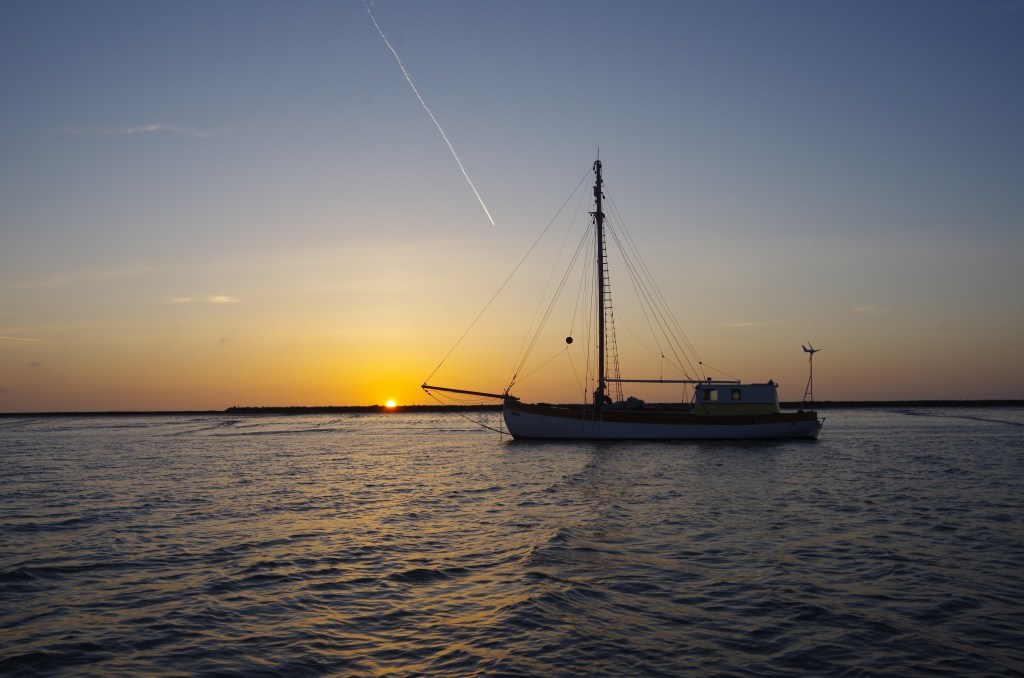
Below….Juanita which was once owned by Dulcie Kennard and which I think I last saw parked outside the sailmaker’s loft in Ivybridge (Devon UK)
End-piece.
And so…..Dulcie Kennard married Maurice Griffiths and for a while they did something unusual for their time which was to live together on a yacht, on a mooring on the east coast. What we know is that they both wrote – Griffiths commuted to London while Kennard stayed aboard and did her work there. We know a bit about first mate Dulcie through Griffith’s writing and she comes across as tough and capable and someone who enjoyed heavy weather and offshore sailing. In a way it seems now to have been an ideal partnership but it didn’t work out and so they divorced amicably in 1934. From what I have been able to find out they both married again ; Griffiths second wife was a serving ‘WREN’ and is later remarked on as being an excellent home-maker but not as a sailor. Kennard we know also married again to another yachtsman but there the trail goes cold.
I would like to finish with one short piece, almost the last words in fact from Griffiths best known book The Magic of the Swatchways and then a second piece from Swatchways and Little Ships
“In London I met a quiet slender girl with dark shingles hair who was writing articles for the yachting papers under her pen name Peter Gerrard. Her love of the sea was patent, for she had read avidly such writers as C.Fox Smith, Basil Lubbock. Keble Chatteron, Villiers and others and knew more about the voyages of the square riggers than I ever did, and she nursed a passion for rough coasters and fishing craft and sturdy se-going yachts like the quay punts of Falmouth. Peter was no dinghy dolly ready to crew some helmsman in Saturday races around the buoys : she hated such stuff and told me what she longed for was a real ship she could command and call her own. To see her in her London clothes you would not guess how wiry and tough and utterly fearless she could be once afloat.“
“ I don’t wonder that you are fascinated by these wild places , my shipmate replied at last in an undertone gazing about her. There’s something mysterious about these deserted creeks and tiny islands that you never get in the Solent. There’s probably not another living soul within miles, and yet just think of the crowds that must be hurrying home on the roads tonight. There’s scarcely a sound is there ?.”
First mate Dulcie having a bit of a ‘Maurice’ moment perhaps https://dirtywetdog.co.uk/2023/04/24/having-a-maurice-moment-here/
Where it comes from.
Who hath desired the sea ? – the sight of salt water unbounded.
The heave and the halt and the hurl and the crash of the comber wind-hounded.
The orderly clouds of the trades, the ridged roaring sapphire thereunder –
Unheralded cliff haunting flaws and the headsail’s’s low volleying thunder ?
His sea in no wonder the same – his Sea and the same neath each wonder.
His Sea that his being fulfills ?
(Rudyard Kipling)

 Dirty Wet Dog, the great adventure.
Hi Steve, thank you for the v interesting post. I’ve just finished re-reading Dulcie’s memoir, long out of print. It’s called ‘Who hath desired the sea’ published in 1962. It’s excellent, and shows how she opened sailing up to dozens of women who she took sailing as ‘cadets’ from the 30’s onwards. I would send you a picture but can’t see how. A remarkable pioneer. I emailed Lodestar Books who reprint out of print maritime/sailing books but they weren’t convinced there’d be a market for it. Hmm!
LikeLike