
The simple sailor’s skill of heaving to and getting stuff done more quickly.
Spring passage-spring gale.
Leaving Plymouth sound by it’s western entrance when there is a spring ebb running and a fresh sou-westerly blowing against the tide is an uncomfortable and even potentially dangerous experience. The day I did that I basically got it wrong because I mainly think of using strong tidal flow to get me somewhere more quickly and hadn’t thought about what it would be like trying to deal with a 5 day swell and fresh south westerly blowing straight over and against a whole load of a big spring ebb sluicing out of Plymouth sound. To get through the standing waves more effectively and quickly I had to run my little outboard motor hard and motor-sail to get the job done, then, once I was clear of Penlee point and the worst of the standing waves I just sheeted in on my mizzen, dumped out the mainsheet and let my little Cat-Ketch slowly motor-sail it’s way to windward while I sorted the mess out.
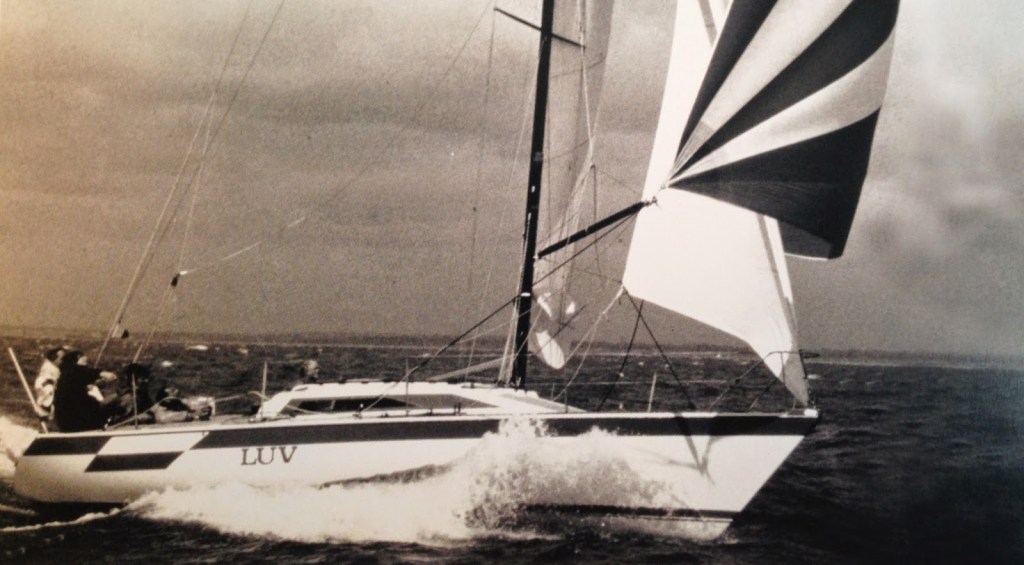
Dehler DB1….Luv
Leaving Plymouth in a wind over tide situation , even via it’s western entrance, doesn’t have to be a dangerous experience – I have learnt since then that the trick is to squeeze well up to windward in Kingsand/Cawsand bay and be close to Penlee head as I sail out into deeper water – there will still be wave action as the longer channel waves are shortening as they hit shallower water but just by going offshore a bit it all sorts it self out .
A much more difficult place is anywhere that has a shallow bar at it’s entrance and we have a notorious one just down the coast a ways at Salcombe which has a shallow bar that breaks, often has a standing wave pattern but that gets really dangerous when there is a strong spring ebb running directly against a strong southerly. The Dehler DB1 ‘Luv’, a hot racing yacht in it’s day was lost on Salcombe bar when it came in over the bar against a strong ebb, under spinnaker and pitchpoled in the standing and breaking waves.
Anyway…..moving on and heaving to.
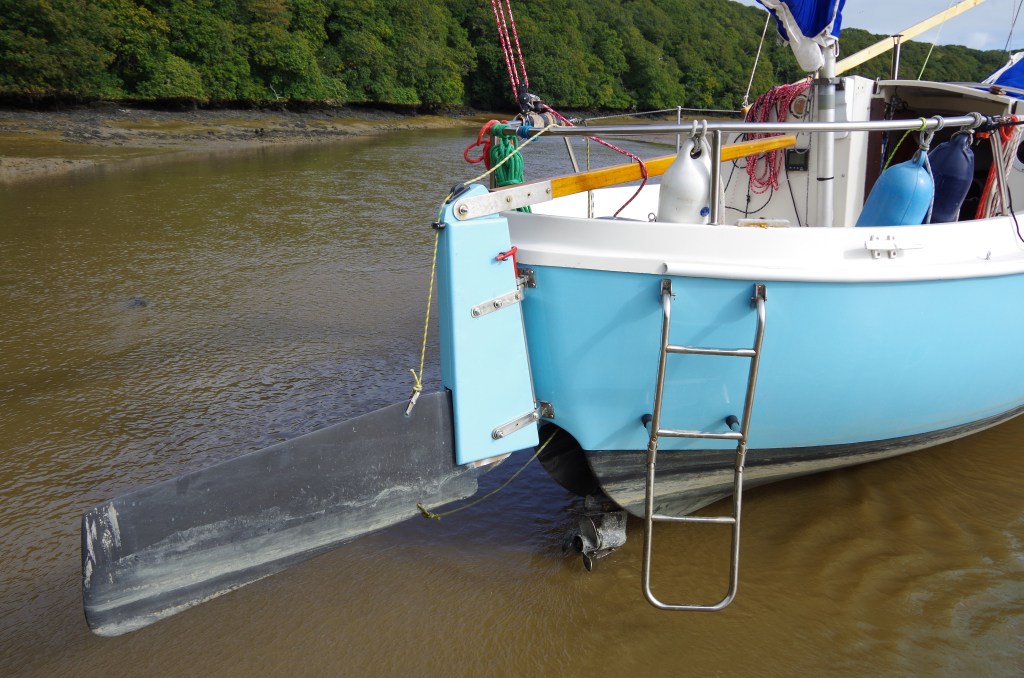
The act of heaving to was a much more common practice in the early years of leisure sailing and notably when a lot of yachts had long keels – if anything heaving to is more difficult with modern fin keeled yachts that tend to lie across the wind when doing so rather than mostly into the wind as a long keeled yacht will do if set up nicely. My last boat was neither long keeled or a fixed fin keel but rather a lightweight centerboard boat but which had a split rig and hove-to easily because the mizzen, when sheeted in, kept the stern downwind thus cocking the bow into the wind ; just to say though that heaving-to doesn’t make the boat lie head – my cat ketch tended to ‘tack’ each side of head to wind but work it’s way upwind under mizzen and motor with no attention from me.
Incidentally I tried the classic technique of heaving-to under an eased gaff mainsail and backed staysail aboard the long keeled Deben 4 tonner ‘Inanda’ during my passage across the Thames when I was both disorientated and really needed more coffee.
Just about to heave the staysail to windward and get the kettle on aboard Inanda.
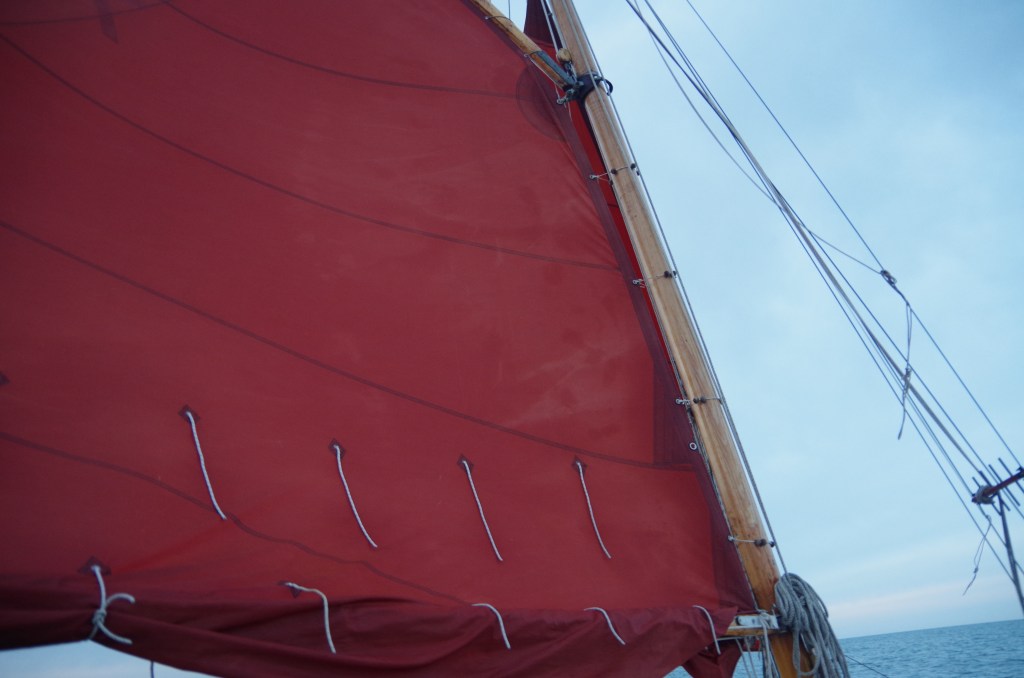
Today, I have a lot more respect for powerful gaff rigs than I did when I was an ignorant dweeb that thought IOR maxi yachts were cool – I also really like split rigs, especially Yawls and Ketches because they can be made to heave-to quickly and easily and they also have the advantage of laying quietly at anchor under a reduced mizzen when nothing else seems to work. One difficulty I had with the Hunter Liberty when I first bought and sailed her is that she could be wild at anchor and would sheer all over the place – that was because of having too much wind resistance forward with her mainmast right up in the bow and also with the mainsail stowed in it’s deep stack-pack – hoisting the mizzen with a reef in always sorted that problem out in a tight anchorage.
Anyway, and as they say ‘several hours later’…….
So…..left Plymouth via the western entrance and got slapped around by a nasty wind against tide and some decent sized standing waves , gear all over the place so I hove-to in deeper water and sorted the boat out then hoisted the mainsail again and initially stayed high on the wind to clear Rame head and then eased off onto a power reach and made distance towards Fowey.
It was a brisk reach, for power I kept as much sail area on as I could and stayed up to windward to get my weight in the right place – the Liberty being both light, under ballasted and short on sail carrying power. It was also a long, cold and lonely reach because the only boat out on the water that day was me until the Fowey lifeboat came powering past me going the other way – they all had a good look at me as I came past but ‘nothing to see here matey”.
I’d chosen to stay well to windward to try and use the tide to best advantage so I was well off Lantic bay as we cleared the corner and then needed to come off the wind a lot more to reach down to Fowey harbour entrance. For those here that don’t know Fowey the entrance is well open to the south west and a swell can kick up some decent waves right in the entrance and the high ground both sides can funnel the wind through there hard.
I chose to heave to again to drop another reef into the mainsail – at that time a slightly awkward job on the Liberty because I hadn’t changed to the sprit boom layout with tack downhauls led aft but instead had to be on the coachroof to pull the reef lines down. Then, once I was back in the cockpit and powered up again I quickly handed the mizzen completely because the little Liberty gets strangely heavy on the helm when broad reaching : as I predicted I had a surging surf-y ride through the narrows and up the harbor. Without the mizzen up the Cat Ketch won’t heave to at all so just before the harbor narrows into the river off the town I quickly turned up into the wind and with the halyard ready to go I hoisted it again to give me better control when I came to anchor.
The sun was dropping fast as we sailed past the town, upriver past the Ferry, then the China clay dock, turned the corner and sailed more slowly and in shelter past the mooring field and for the last time that day hove to once more to anchor and haul the mainsail down. By then wind and tide were working against each other so the last sailing job of the day was to hand the mizzen once more to let the boat settle to whichever force, wind or tide, was the greatest.

After my Brittany cruise in 2019 I spent a month in the west country mainly dodging gales and running from river to creek and back to find shelter – eventually I decided to run for home during a break in the weather. It was a pre dawn start and going to be a long day on the water so I started my passage with just coffee in hand so as to make distance down track – a few hours later and I was really fancying a bacon buttie (ok- so started salivating ?) and I was just about to clear the Dodman so instead of running on past Fowey roads I reached up behind the headland and Vault beach to heave-to off Gorran haven. No need to drop the anchor and faff about with gear – I just hauled in on the mizzen and dropped the main – bacon butty made in about ten minutes and then a fresh mug of coffee made and away again.
So…..I have hove-to to take a pee, hove to to make breakfast and done several to just stop and check my navigation (I only have paper charts) – park and think I call it – my most contentious act of heaving to was on a long light weather passage across the English channel , about ten miles off the French coast , fuzzy-tired barely able to think I ‘parked’ in open water, well outside the shipping lanes, hoisted a lantern in the rigging and after a good look around I went below , laid down and shut my eyes for a while. I may have slept very briefly but mainly just relaxed – like taking a break during a 12 hour night shift – then, after a drink and something to eat I motor-sailed towards Roscoff and entered the harbour in a grey dawn.
It’s funny when I think back to what I considered important early on in my sailing life when I was mate on a big old maxi and what I find important today ; then I used to think it was important and useful to choreograph twin pole gybes and peel spinnakers – then how to band and pack them – now, not so much. I didn’t come here today to teach and caw about how clever a sailor I am just because I occasionally do something sensible – ok, it happens but it mainly happens because life on the sea has knocked a few of the sharp edges off and taught me a thing or two……perhaps !