

From Corinthian sailing to the the collapse of convenience yachting.
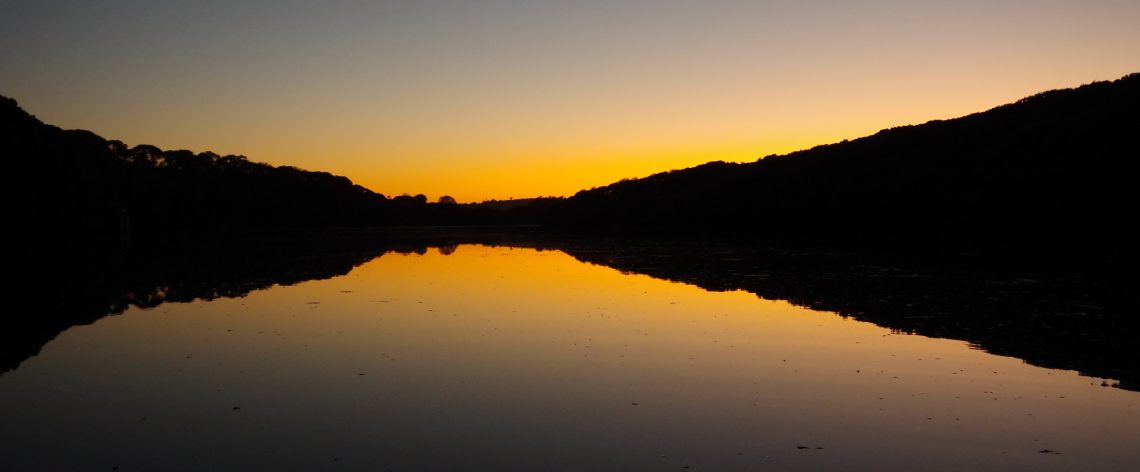
Title photograph by Capucine Trochet
In this post I make the slightly contentious argument that yachting has become worse (in some ways) at the same time that yachts, on average, became larger, got larger engines and more gear and started to hang around in convenient marinas rather than laying to a mooring. With this post i’m going back to a much earlier writing style which is to start with a personal observation and sea story.
I dropped my mooring just as the little Liberty started to swing to the gyre of the tide as it came to it’s peak and began to ebb again. It was a dense and clammy fog so I only had the outboard motor running at just over tickover speed and made down the river by handrailing the reed beds, first on one side and then the other. I got across the open water between the Tamar entrance and the first road bridge on a compass bearing and then felt my way carefully down the Hamoaze while being constantly aware of the chain ferries crossing my path. Eventually I cleared the narrows and groped along the edge of Plymouth Hoe until the bay opened out slightly and I put alongside a visitors berth at the Barbican marina to fill up with water and fuel in preparation for my intended channel crossing.
Once tied up alongside the visitors berth behind a very smart looking large new yacht it was clear from the dock master’s attitude that he was unhappy about me being there with my admittedly scruffy little cat ketch – at that time there was a big streak of mud all down one side where the Liberty had been laying over a bit in the thick Tamar mud. I think he would have much preferred it for me not to be there at all and only accepted, with bad grace, that I was only there to get fuel, water and provisions after which I would be gone.
I did a very quick trot around the nearest supermarket to buy some food for the next few days and I was back in the marina at the end of the hour topping up my jerry cans with water. I noticed that the young looking owners, of the big yacht had arrived and of the couple he was walking back and forth with one of the marina trolleys loaded with their kit, she meanwhile was perched on the stern, overlooking my little boat, with obvious distaste, while she talked loudly on her mobile phone. I dislike being subject to other people’s telephone conversations at the best of times and detest it when the mobile phone use has a loud and abrasive voice and uses frightful intensifiers – she seemed to be complaining loudly that they’d had an awful journey on the motorway and were now sat in this awful fog that was obviously going to keep them in port. I made my presence known by starting up my little outboard which caused her to glower down at me although it did get her off the stern that I noticed was replete with every navigational aid known to man and yachting.
As soon as I could I reversed out from behind the large lump of plastic and went alongside the fuel berth briefly to buy a reserve can of petrol for what looked like being a light wind channel crossing. I paid for my small amount of fuel – which the fuel guy commented on – it being his smallest sale that day but he was good enough to print me out an updated weather forecast which made my day as the fog was set to lift anytime soon.
I reversed my course alongside the Hoe, staying as far outside the ship channel as I could and I was so close inshore that I could hear, but not see, the sound of cars on the road that runs around the Barbican. At one point I called control room (QHM) using my mobile phone to tell them who I was and that I was motoring towards mount Edgecombe and the main channel across the Bridge reef there….and I asked them if they could see me on radar and whether there was anything big likely to be using the channel : there wasn’t, they could see me and were happy that I was only going as far as the anchorage in Cellar bay on that tide.
As it happens I motored slowly into the anchorage below the beach at Mt Edgecombe but there was some kind of event going on thus lots of noise so I upped anchor again and largely guessed my way to the posts that mark the ends of the channel across the Bridge reef on the now fast running ebb and made my way round to the quieter anchorage off the beach at nearby Kingsand/Cawsand. There, I anchored, made myself a much needed coffee and got my head down for a sleep as my plan was to leave just as it got light the next morning.
I’m pleased to say that I still seemed to have the skill of taking short sleeps as and when I needed them – it always used to work for me when I was on board a boat. When I woke just before midnight it was dark but startlingly clear and I could see clear all the way down to Penlee point and open water. I did my very few preps – sail covers off and kettle on and I had sails up and was running in a light northerly within a quarter hour. The light northerly faded as I cleared Penlee point but by using my outboard at low speed I was able to bring what wind there was forward and thus motor-sail.
My log book records the whole passage across the widest end of the English channel as having taken 28 hours of which sometimes we were sailing slowly downwind and some of the time we were motoring : that 28 hours also accounts for the couple of hours that I spent hove to off the Brittany coast with my anchor lantern hoisted as a riding light.
By first light I was up and motoring into the harbor and marina at Roscoff and fast asleep again when the more friendly Breton marina guy came around to see who was there and who needed checking in. The marina found me a berth among the smaller yachts, I spent half a day there and then walked across the road to the ferry terminal and a shorter ride home : my little Liberty would stay in the marina until Jax and I made the return trip on the ferry a couple of weeks later.
I did often wonder what became of Mr and Mrs yacht owner in the Barbican marina in Plymouth that day. One of the last things I heard her loudly complaining about was this horrendous fog which had awfully spoiled their plans to have a nice coastwise cruise to Fowey where they had a night booked in a delightful hotel following a meal at a very in (dahling) restaurant. When I told one of my more Corinthian friends he used the often heard term from hiking and climbing ‘ all the gear – no idea’.
Part, the second.
My story now is pretty much as it was when I first wrote it and yes, I still sound like an arrogant know it all cock !. Back then it was to have been written into a novel that I was trying to write – luckily I abandoned it and recently deleted it from my desktop entirely apart from that short section which might have seen the light of day as a blog post. Since then i’m glad to say that I tried to re write the post from their perspective inasmuch as I could work out what that is. It perhaps shows,if anything why I wouldn’t make it as a novelist as far too much of me and my sarcastic wit show between the cracks.
When I took the time to flip the whole thing upside down and try and see that day from their perspective I first have to realize that i’m making a whole load of assumptions that might not be correct. In their experience I have to accept her view (I think of the couple as him and her, mentally assigning them different roles) which was that they’d had a difficult motorway journey due to the fog and then perhaps that their plans for an enjoyable escape to the boat and coast had been scuppered by the same. Somehow, perhaps in observing and listening to them I came to the idea that maybe this was their first boat and not only that but their experience was limited and they were ineffective and inexperienced when doing jobs together.
If so then their decision to stay in port was the reasonable, safe and rational one and it was my actions and decisions that were rash, even foolhardy ; to navigate what is often a busy waterway in minimal visibility and then go straight into the preparation for a channel crossing in a boat which isn’t rated for that kind of passage, I thought maybe confident and sporting and had they know I suspect that any modern yachtsman would have regarded as a bit on the stupid side.
Probably my worst assumption was the one that all of the navigation aids on display – Radar, Radio Satnav etc etc would have made it entirely feasible to navigate in poor visibility. The problem there is simply one of attention and task loading : while all of my attention was on the visual and the auditory their attention, maybe his attention would have had to been split between managing a brand new big boat that he wasn’t familiar with, managing the extra inputs from all of the navigational toys while perhaps talking his partner/wife through steering the boat while he concentrated on the navigation and watchkeeping.
When I sailed around the world many years before we were able to split the boat management between several capable heads. For example, when we putting into Port Stanley one thick and dirty night it was the skipper that steered while I ran the deck and my opposite number (a former RN radar operator) did the navigation with the radar set from the nav table very much as he would have done in his submarine days. As it was we were each functioning at a decent level of skill and experience but could each concentrate on a limited number of inputs.
Part, the third.
In his book A New History of Yachting, author Mike Bender sets out a distinction, first between Aristocratic yachting and Corinthian yachting and then later on between the Corinthian approach, which he explores at length, and the new world of leisure yachting that we might call the Comfort and Convenience yachtsman. The former is something that I don’t need to deal with here except to say that I rubbed shoulders with it during my time as a professional sailor
I recognize myself, through Mike Bender’s description, as having come more clearly from the Corinthian side than any other. As it takes up a large section in his book I can only summarize the more salient points here – that it has a lot to do with more masculine values and virtues associated with the late Victorian period. Bender sets out a whole table of Victorian manly values which include an element of physical danger and difficulty, a high value in self reliance, self help, self education, self betterment and pluck (boldness in facing all conditions under sail).
I also recognize myself in not being anything like the paid crews employed aboard the big yachts owned by the then aristocracy : paid hands in those days came from a hard background of actual year round working under sail and not as it is today where to work on a superyacht or modern racing yacht seems to me more a lifestyle choice but one that is still what we might describe as a subservient one to more corporate wealth.
In my post sailing life i’m hugely entertained to read Bender again and see how much I absorbed and acted out of the whole Corinthian sailing shtick, even more so that as I developed as an actual sailor I became more Corinthian and more reactionary. This is all a bit odd given that I had my feet in entirely different camps – in one I was a careful and moderately professional intensive care unit charge nurse while in the other I was an increasingly independent sailor, often a solo one, straight out of the playbook of Victorian era masculinity. The strange thing now is to realize how much the kind of sailor that I was becoming was out of touch (with modern yachting) and that I regarded myself as having been active in the wrong era entirely.
I can’t say that modern yachting completely passed me by as I benefited from GRP hulls once or twice, often from a modern reliable engine, modern sails and cordage and latterly from things such as satellite based navigation and communication. The opposite view is that I didn’t follow the trend for ever larger yachts, didn’t like or use many of the now common sail handling systems and preferred a mooring over the convenience of an expensive marina berth.
I can see, from my blog, how much I bemoaned the kind of modern yachtsman who seemed only to cruise from marina to marina – usually under motor only, who never anchored, in fact that their yacht might not even be set up to anchor at all and whose whole idea of cruising seemed to revolve around an easy and hedonist ideal.
Returning to Mike Bender’s work once more his second table of comparison is between the Corinthian sailor and the Family sailor and once again it’s quite a long section so i’ll only use a few salient points. Where the roughy-toughy sailor, such as me, might be self reliant, have a decent set of DIY skills and be comfortable with risk taking then the family sailor is my opposite – risk averse but with an emphasis for the size of boat and it’s accommodation rather than quality of build and seakeeping ability. It’s also where the boat is much more likely to be just one aspect self reward for a well paying career – along with a status car, and will be kept in a marina at distance from home and will only be used in ideal conditions : Mike Bender’s list is a lot more complete but I think you’ll get the gist of the idea he is putting across.
Where that takes us is to my encounter with a modern family based couple that were clearly a lot younger and wealthier than I was. When I first wrote up my encounter I felt a bit self justified (and rather self important) as the older, far more experienced and a whole load more Corinthian than they seemed to be. Nowadays I am I hope a lot more understanding of their position and their more risk averse decision making and I did also try to see myself through their eyes – after all I take scruffy to the max ! ….and that’s on a good day.
Now, I am far nearer the end of the trajectory of a sailor than they were at that time, in fact I have left sailing entirely although I hope that they are still doing it, enjoying the life and gaining from it in some way. Had I ever got to speak with them I hope I would have put across the value of gaining some practical skills because they are generally valuable in life and more so that I hoped that they would gain some actual sailing experience in different weather conditions and in smaller boats where the sailing is more direct and seat of the pants.
Anyway, I started with a sea story so I think I will end with one.
The original encounter story happened at about the time that I left my then specialist/senior nurse career behind and took a part time job as a bargain basement healthcare assistant in the endoscopy department. Just before I left my more senior role I had a sharp argument with one of my specialist nurse colleagues and it was an argument centered around both of us being sailor/bloggers although ones with polar opposite attitudes about sailing.
I seem to remember it as that we had both read each others blog and found nothing of value in it from either my view or hers. You might think that two sailors of similar age in the same team would have had a lot of similar experiences or at least a lot to talk about but in truth we were poles apart and for the most part heartily disliked one another.
For her part I think she found me and my kind of sailing to be the worst kind of independent male machismo and escapism combined – perhaps my Whitbread racing past not having quite met up with my Griffiths esque future. Specifically she found my solo offshore passages as wholly unseamanlike and unnecessary. There is perhaps a point in that because, while I followed the whole scene of solo offshore and ocean racing even I had to admit that it’s impossible to maintain a 24 hour lookout in those conditions and at best I could only hope for a good look around the horizon every 15 minutes or so – then what I thought of as the shorthanded sailors standard for watchkeeping.
For my part I remember that I was new to blogging and still a very poor user of words, thus I mistook my own salty wit for deep insight and once again my sarcasm and contempt showed through. At that time, it’s going back a while, I had recently come across the video sailing channel created by professional film maker Dylan Winter and I made it my aim to write in the way he filmed : it’s not really feasible unless your name is Maurice Griffiths and even then the visuals of Dylan’s work speak for themselves.
One of Dylan’s obvious dislikes was another video channel, recorded aboard a much larger yacht, largely around the Pacific Islands but not so much featuring the place and the travel but the self celeb aspirant lifestyle of the principle couple involved. It was an incredibly popular channel at the time and seemed to me to be very much in tune with the self obsessed, celebrity obsessed and status aspiring younger generation compared to the muddy welly brigade that followed Dylan and watched the wildlife rather than the bikinis and fashions.
Going back to Mike Bender’s classifications again it’s obvious what kind of sailor I was and perhaps why it sounds as though i’m antithetical to the modern style of yachting exemplified by video channels such as La Vagabonde (Dylan rather wittily called it La Vag). I have to remind myself that Bender, while being a yachsman himself and often a solo one is, in his professional life an academic and historian – what I take from his work is that it is based on a social construct that I find uncomfortable – perhaps because it is accurate.
If I have any thoughts about the end points of the whole Corinthian sailing shtick and then it’s opposite – family or convenience yachting then it is this. I see the logical end point of Corinthian sailing for me as being the slow drift towards ever smaller and simpler boats and doing my sailing thing under sail and oar only. For an analogy with the world of modern pop music I see the end point of Family/convenience sailing as a bit like the infamous millennial whoop : what starts out in sailing as regular use of a marina and everyday use of the engine ends up with always using a marina and always using the engine such that you may as well throw away the big white flappy things (sails) – as with the regular use of an annoying at best musical trope (millennial whoop) it soon turns into only and all millennial whoop with no real content, or in the modern expression no diversity.
Perhaps I should leave the final thoughts to what we thought about our own versions of leisure sailing.
In her words, my erstwhile colleague that is, she saw me as nothing more than some kind of patriarchal dinosuar that should now have had the good grace to become extinct, a lot of what she said and which author Mike Bender says in his book far more clearly is all true if you see things in that way : one small example is that I had been a member of a so called Royal yacht club except that I rapidly came to the view that I just as Royally detested it and today i’m glad to see that whole social mileu mostly collapsing and closing their doors one by one.
I tried and failed to equate an ocean going skipper as being similar in function to something that we both worked with – which was the medical leader of a cardiac arrest team during a crash call – everyone should know what he or her is doing, often doesn’t and it’s the team leader (skippper) responsibility to make sure that it does all happen ; that isn’t often a touchy/feely process just as skippering a big boat isn’t.
At around that time we both took early retirement and left the team, I followed her blog for a while and saw the failure mode that she and her partner got into when they joined up with another couple to take a larger modern yacht across the Atlantic and cruise around the Caribbean : the whole venture failed because they couldn’t decide who was in charge making decisions and allocating work plus they ran into personality problems with the other woman in the crew who insisted on not doing any of the necessary work and essentially crashed the whole project.
I realize that iv’e gone way off piste with this post as I set out to describe how I thought that that all of the so called progress in yacht design allied with greater overall size, the habitual use of engines, marinas and the reliance on technology on screens are all progressive in a way but to be read as progressive in a negative way.
I would like to finish finish with a few words that sum up my Corinthian attitude to sailing and life – Spenser I think. I am always reminded of these words when I recall my outward trip to Brittany in 2019, it was achingly cold and there was eventually a brisk south easterly running for a while against a strong flowing spring tide – a classic wind against tide channel kicking. I became intensely sick and horribly cold such that I almost took the option of heaving to but that would only have added to the time under maximum discomfort. Eventually I turned the corner into the Chenal de Four and shortly after that I found the channel marker and reef that marks the seaward end of the Wrach estuary. A couple of hours later I was tied up to someone else’s mooring in the river, lit my pansy stove and had the first of many drinks while I warmed up and eventually slept. I woke, once again, around midnight when I took a look outside the hatch and what I saw was the top of the tall lighthouse on Ile Vierge and the light sweeping across the rocks and shoals of the estuary. It was thorough a kicking as I ever got but it led to the best time I ever had with a small boat.
Sleep after toyle,
port after stormy seas,
Ease after Warre,
death after life doe greatly please.
First edit/postscript.
First, can I just apologize for drifting so far off topic and only, just about, pulling it back ever so slightly right at the end. Second, that the people I wrote about in this piece are actual people and I acknowledge that iv’e been pretty salty about them now and in the past. Whether or not they are still in sailing I have no idea and maybe the only casualty is me, the Corinthian one.

 Dirty Wet Dog, the great adventure.