

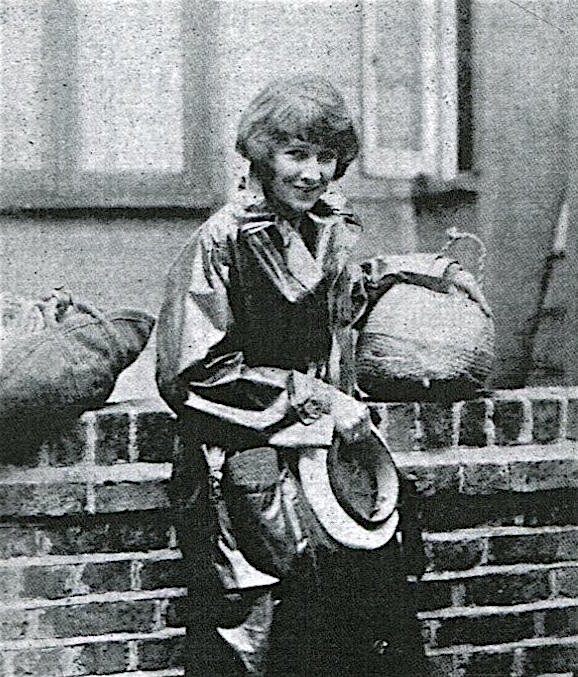
Dulcie Kennard/Peter Gerard/Mrs Griffiths the 1st revisited.
If you’re wondering who any of those names refer to then iv’e used Pete (Peter) for Dulcie Kennard, later on Mrs Griffiths the 1st and later still Mrs Charles Pears, ‘Bungo’ is actually Maurice Griffiths because that’s what Dulcie often calls him and ‘Charlie boy’ is her later husband – the marine artist Charles Pears.
Secondly, if you’re wondering what this entire post is about it’s me making a re-visit to the lives of Maurice Griffiths, his first wife (Dulcie Kennard) and her later husband Charles Pears although it’s also a lot about her writing and her autobiography in ‘Who Hath Desired the Sea‘ which I have only recently finished reading. It’s purely my opinion but I just happen to think that in her life as a writer, yacht owner and skipper and then sailing instructor she was a sailing pioneer who is hardly known now.
Signs of the times.
It isn’t so obvious as to how both Maurice Griffiths and wife to be Dulcie Kennard came to ‘Desire the Sea’ as neither of them came from seafaring families and both grew up with other interests which had nothing to do with boats and sailing. In her autobiography ‘Peter Gerard’ does approach the subject but even then can’t fully explain the desire in it’s own right but what is clear from her writing is that she was consciously trying to create a life other than one that seemed to be expected of her. It’s perhaps hard to understand women’s lives in the 1920’s and 30’s because so much changed in that period…..but then everything changed, for everyone and for all time at the end of the period that she writes about.
I know that this isn’t a myth because I experienced it directly myself in my life as a professional sailor but I did half-think that it was a kind of urban myth that ‘women and dogs’ weren’t allowed in the bar of the average yacht club of the time but then neither were professional seamen and the working class. One incident really did happen and it was when ‘Pete’ and MG both sign on as crew for the Irish yachtsman and circumnavigator Conor O Brien to sail his yacht Saoirse in the second Fastnet race and the crew were invited to ‘drinkies’ at the yacht club. When they got there the stewards on the door were clearly deeply embarrassed by the rules but wouldn’t allow ‘Pete’ into the bar with her crew-mates. Yes….that really happened.
Yachtsman and academic Mike Bender says that to understand yachting we really need to understand the social background against which it is happening – once again we need to try and understand what was life like in the 1920’s and 30’s and then leading into the wartime years. Despite knowing the history of that period well enough I know little about the social side when it comes to the life of women at the time but whatever and however it was it was definitely something that ‘Pete’ wanted no part of. I did wonder if her years of freedom and command of a small independent sailing vessel later made it much more difficult to have maybe played a useful role in one of the services but one in which she would always have been playing second fiddle to some male officer.
Lives as writers.
Maurice Griffiths first met Dulcie Kennard when he was trying to make his way in London as a budding writer of articles for the then new yachting press and at the same time he produced the booklet ‘Sailing on a Small Income’ originally intended for sale on railway station news stands. At the time Kennard was already working for the yachting press and they essentially got into accidental competition when the post of editor came up. Having talked about and both wishing each other well in competing for the job neither of them got it but they did form a friendship which did, in time, result in them sailing together and later getting married.
For a while their marital home was the yacht ‘Afrin’ which Griffiths found and bought and then promptly gave Dulcie (Pete) a half share of as a wedding present. Afrin’s mooring home was in the Walton backwaters and while Griffiths rowed ashore to catch the early morning London train to go and do his job as the new editor of Yachting Monthly his wife Dulcie kept ship and wrote her articles from aboard the moored boat.
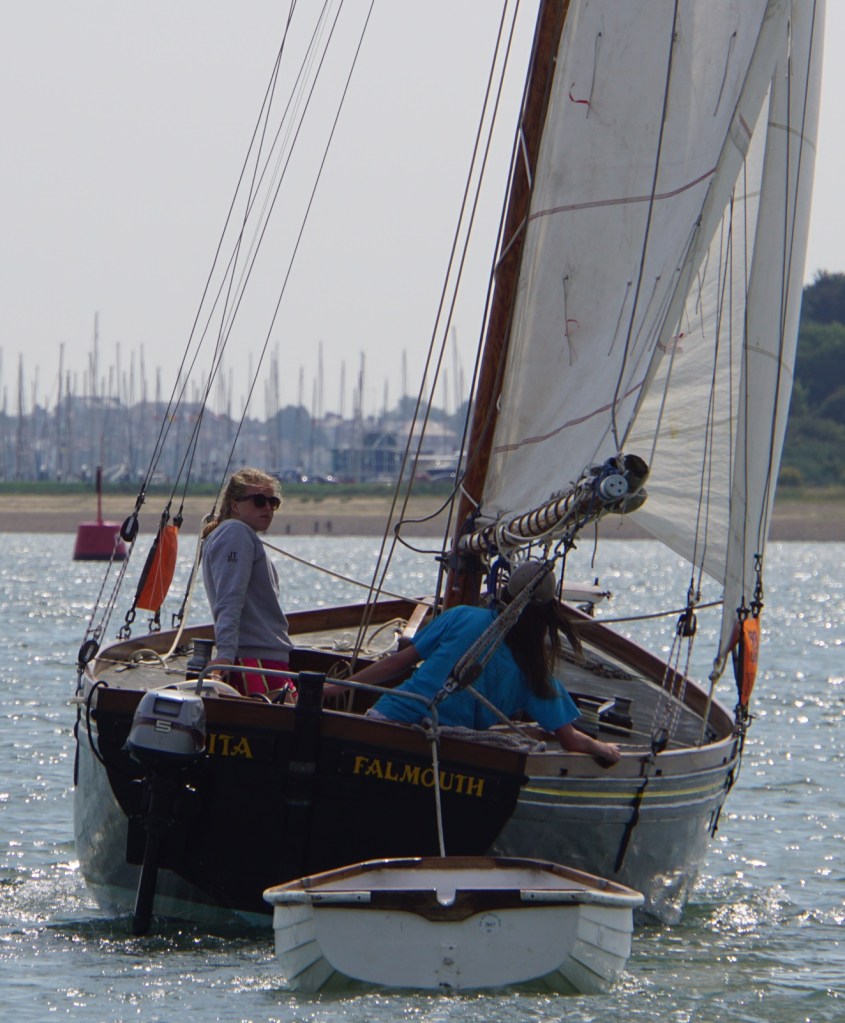
Today, we can still read Griffiths books which are mainly about his experiences of sailing around the rivers, creeks and swatchways of the Thames estuary – one of the main features of his life and writing after their marriage ended was that he went on to own several different boats and unlike Dulcie never settled with one boat. Dulcie Kennard (Pete) went on to meet and marry the yachtsman and marine artist Charles Pears and unlike her former husband found and bought the one boat (Juanita) that she would own and sail for most of her life.
I find it sad that I still can’t track down any early magazine articles by Dulcie Kennard, writing under her assumed name of Peter Gerard but did recently find a copy of her much later autobiography ‘Who Hath desired the Sea’. I found it a very good read in that she gradually develops her relationship with her yacht Juanita, unlike Griffiths seemingly bouncing from boat to boat, and one of the features I found in her book was that she talks about people and characters far more than Griffiths ever did. For a while Gerard, now Mrs Charles Pears, ran a sailing school or academy for female ‘cadets’ as she called them and, taking usually two or three at a time ranged up and down the east and south coasts from her base in Heybridge basin as far as the Scillies and the west country.

While I often found it difficult to follow Maurice Griffiths stories about events occurring in the Thames estuary – I often had to refer to my Thames chart, I know Gerard’s ‘coast’ far better because she is usually writing about the south coast- which I know well. At the end though I found her autobiography rather sad and lacking purpose when in 1942 she was forced to lay up Juanita under Admiralty orders and seems to have lost a lot of the purpose in her life. Her new husband, marine artist Charles Pears spent his war years flitting between the west country, his London base and for a while their combined base at Heybridge. While they didn’t often sail together as Charles pears already had hos favored boat (Wanderer) they often did cruise in company or arrange to meet up at a given anchorage ; the impression I got is that both Charles Pears and his wife ‘Pete‘ distinctly preferred being their own skipper and doing things in their own, often idiosyncratic way.
The big contrast between their wartime years and that of her former husband Griffiths is that he went on to find a completely new life as an officer in the ‘wavy navy’ in command of a small squadron of minesweepers in the Thames estuary and later went on to learn demolition techniques that allowed for the creation of the wartime ‘Mulberry’ harbors. Given that Gerard had come from a military family and by all of her own accounts was pretty good at taking charge and ordering other people around I found it surprising that she didn’t find a useful role in one of the services – I can easily imagine her as a fairly senior WREN except that she didn’t take well to taking orders from others.
Juanita
Lives as sailors.
This is where their accounts of what happen diverge : while Griffiths says that they realized that they had different sailing temperaments and broke up because of that, Gerard says in her autobiography that her then admirer, Charles Pears, recognized that there was ‘something rotten in the state of Denmark’ and that what was rotten was that another woman, on Griffiths part, had been, gone and wrecked the marriage. That Griffiths seems to have had an affair no hint of it appears in his books and his next marriage is to the WREN officer he meets while based in Portsmouth.
Griffiths reason for their break up is that he says that his wife was the offshore sailor and he was far happier in his rivers and creeks. In various of his sea stories they are pictured sailing together and during a trip across the north sea when ‘Pete’ gets her way they are both violently sick when a gale springs up and they are both glad to get back into shelter. Of the two of them it is definitely Gerard who spends more time at sea, teaching her cadets aboard Juanita while Griffiths is somewhat chained to his office chair as editor of Yachting Monthly.
In her autobiography Gerard says that she is happy to be both a ‘one man kind of woman and a ‘one boat’ skipper to boot while Griffiths finds boat after boat but can never settle with just one and really get to know it’s ways. Gerard does have some difficult times with engine-less Juanita especially when she often recounts passages where all is going well and then the wind dies – leaving them rolling to a left over swell and drifting backwards with the tide.
What they say about each other ; in this case MG about mate ‘Pete’.
Earlier in this piece I said that Griffiths wrote about boats more and people less but he did write about first mate ‘Pete’ in his best known work The Magic of the Swatchways and it comes from their time together aboard Afrin – their marital home.
“I have a vivid recollection of the shipmate standing on the weather deck like a young smacksman, her red thigh-boots wide apart, a muffler and blue stocking cap almost meeting at her nose, her right hand thrust into her jacket pocket , the other holding the tiller line, the snow driving past in a continuous storm, while the wake gurgled and hissed in the lee scuppers.
She’s going like a train, sonny ! Isn’t this great !. We took ten-minute spells each at the helm“
‘What ‘Pete’ has to say.
While Pete (Peter Gerard) writes about the many characters she meets, especially later on when she is being skipper and sailing instructor aboard her own boat Juanita, she doesn’t say much about her first husband (Maurice Griffiths) except to refer to him as either ‘The Boy’ (boyfriend I guess) or later as ‘Bungo’. I wonder if his near absence in her writing is because most of it spans the period after they separated and by then her lifelong partner had become the marine artist, and also yachting writer, Charles Pears.
By our more modern and a bit cynical standards one aspect of their relationship is ever-so slightly ‘cringe’ making in that they often flashed, by morse code a simple message that read I L Y in plain text and . . . _ . . _ . _ _ in morse code. I’ll leave that for the sailors to work out.
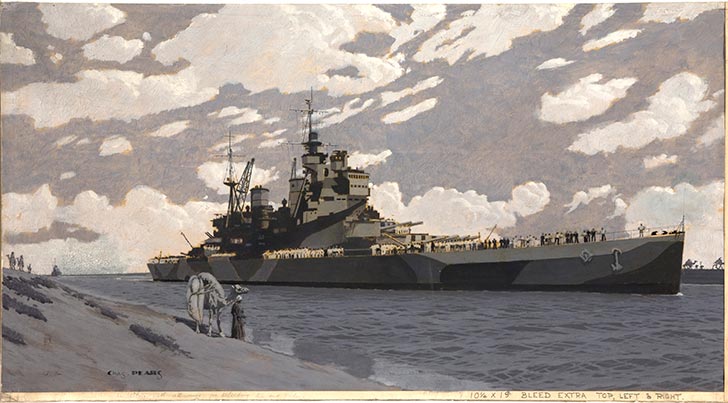
Marine art ‘Battleship in Suez Canal’ by Charles Pears.

 Dirty Wet Dog, the great adventure.