
Canvaswork and fabric related jobs on the Pathfinder.
Tent, covers and stowage bags.
This week’s video segment :
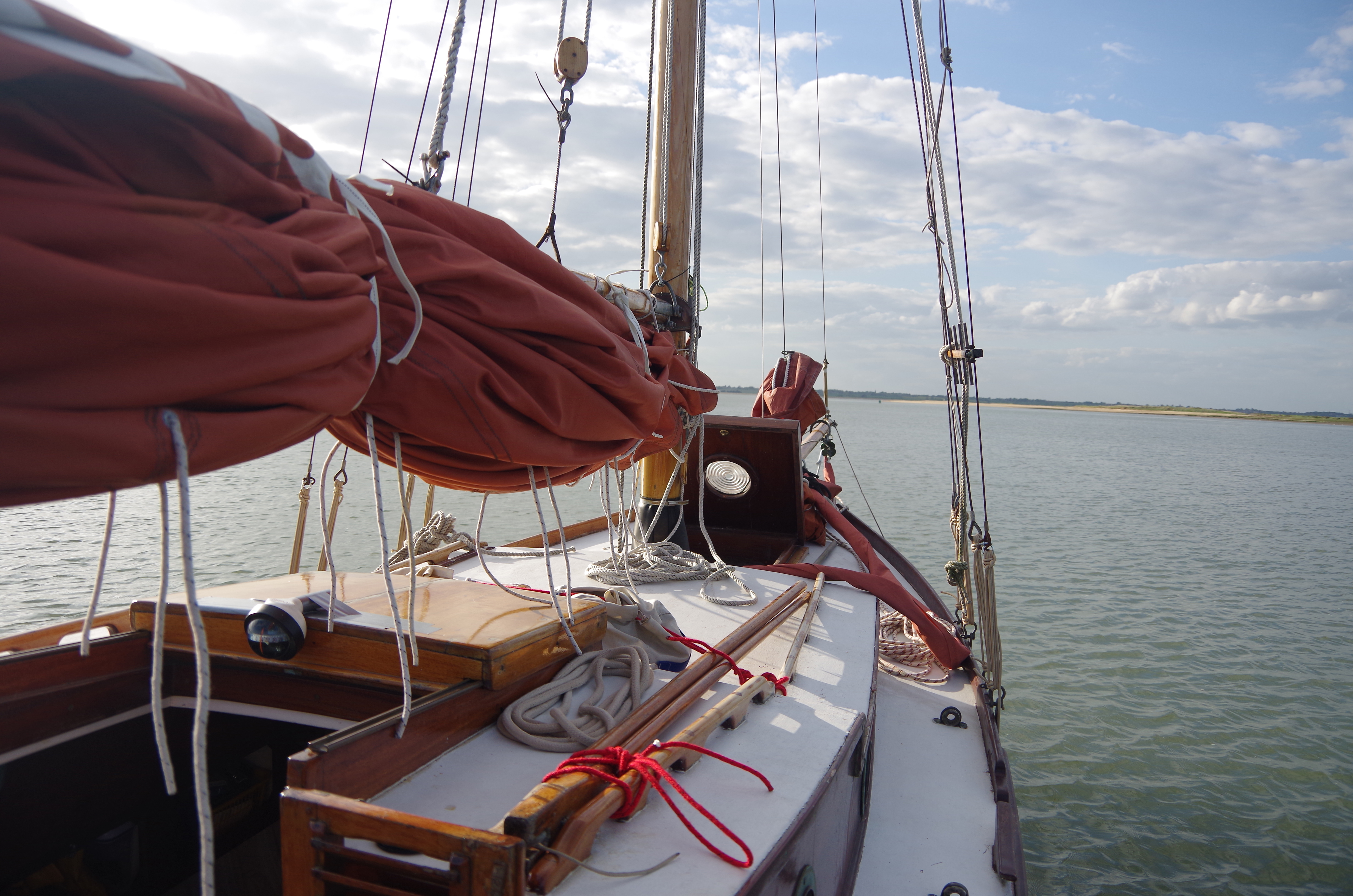
Several years back I was aboard the 80+ year old gaffer that i’d found and bought in Ipswich on the east coast and which i’d decided to make a summer project of by sailing it all the way around the the south coast to get it back to my mooring in the Tamar river, which, if you don’t know it is the main river inland of Plymouth. After a few days spent just cleaning the boat out and changing all of the shroud lashings I left Ipswich, sailed and motored down the river Orwell, had an uncomfortable night rolling in the wind against tide slop somewhere just west of Harwich docks and the next day escaped that and sailed across to the Walton backwaters…..which was surprisingly lovely given that basically it’s bordered by thick grey/brown mud and marshland.
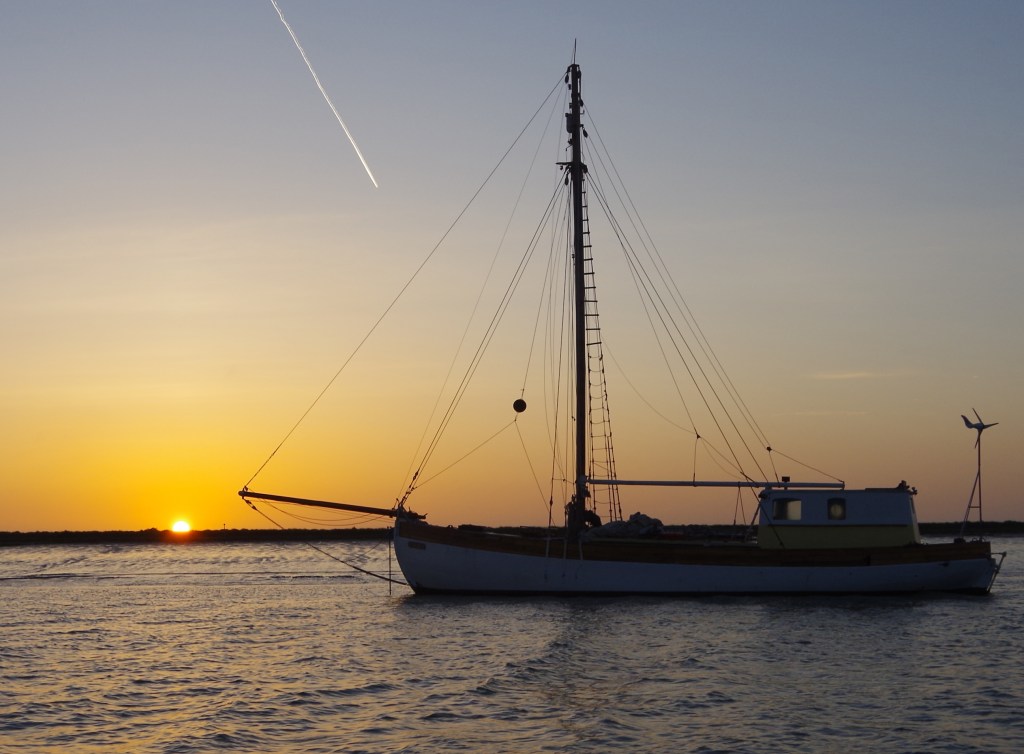
Given the pace of work that i’d had to sustain to get the boat ready even to that stage, and the sheer awfulness of Ipswich itself I remember that I gave myself a whole day off at anchor in the Walton channel before I made my passage across the Thames estuary to Ramsgate. I knew that crossing the Thames in either direction is said to be a difficult navigational challenge and even the boat’s previous owner had said to just go outside (seaward) of all the banks rather than trying to deal with the complexity of channels and swatchways. I’m not a great east coast navigator because i’m much more used to deep water offshore and ocean and then steep and deep river entrances….even ones with rocky entrances like most of Brittany and Cornwall. The great thing about all of those places is that the hazards are well marked and the water is clear enough to work right up against the more difficult rocks and shoals….not so in the Thames where the water is a thick soupy brown and the many mudbanks mostly just invisible ….even when the keel finds them.
To make shorter work of that story and also make the connection with this one I should just say that the old gaffer was a ‘wet’ boat in that she dripped constantly in rain through a leaky cabin roof and portlights that wouldn’t seal properly whatever I did to them. When I did get across the Thames and put into Ramsgate the next evening I went looking for a builders merchant or just a good hardware store to find a simple plastic builders tarp and some tarp clips to make a rain cover to rig over the boom. As it was I had lots of other things to do and I failed on that job so after a hard and frustrating motor-sail around England’s south east corner we fetched up just to the east of Dungeness point and had to sit through a night of heavy rain. To deal with that I packed away my comfortable bedding and instead wormed my way inside a fleece sleeping bag liner for warmth and then slipped inside the British army bivvi bag that I used for rough camping out in the woods.
The connection with my new boat, WABI IV is that she is mostly an open boat with a dry cuddy but to set her up to cruise and camp aboard we’re going to need some way of keeping the rain off the rest of the boat. In short she needs something like a rain tarp or boat tent that I can rig and take down quickly – rain being a regular feature of sailing in the south west of England. Many of you not from the UK may have heard that we live in a damp-to-wet country even in our version of ‘summer’ – in fact, down here in the south-west and this side of Dartmoor we get at least 900mm of rain per year. The other side of this problem is that a mostly open boat also needs sun shelter…..sometimes.
Working up my Thames navigation aboard the gaffer.

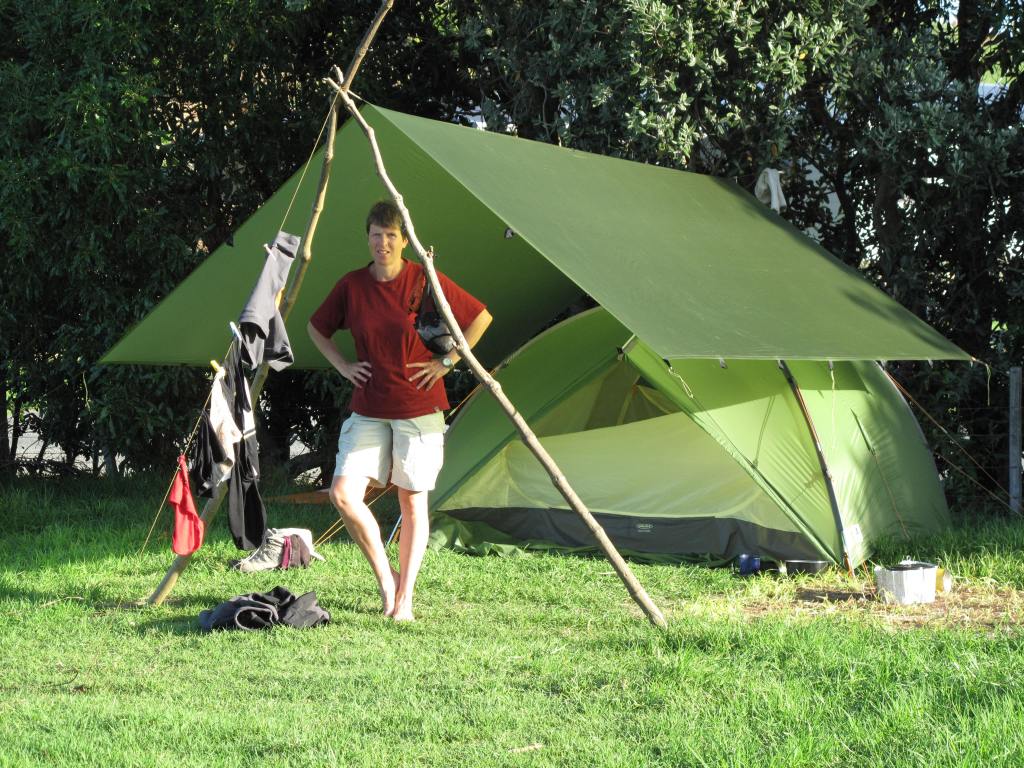
My partner and I are both adept campers, in fact we’ve just come back from a very wet campsite where we took an early season camp down near Weymouth on the central south coast. While it didn’t actually rain (this time) the inside of the tent seemed continually damp from condensation and the wet grass we were pitched on. Each day I had to pull all of our bedding out and dry it out in the wind ; my preference while camping isn’t to use a tent at all as I prefer some version of open tarp/flysheet for airflow and a more rugged groundsheet under us than the flimsy offering of even a good modern tent. The connection between each of those points is that I like to keep the rain off us with a waterproof tarp but prefer airflow to deal with the inevitable condensation and above all to make things so simple that I can rig and un-rig the whole set up quickly.
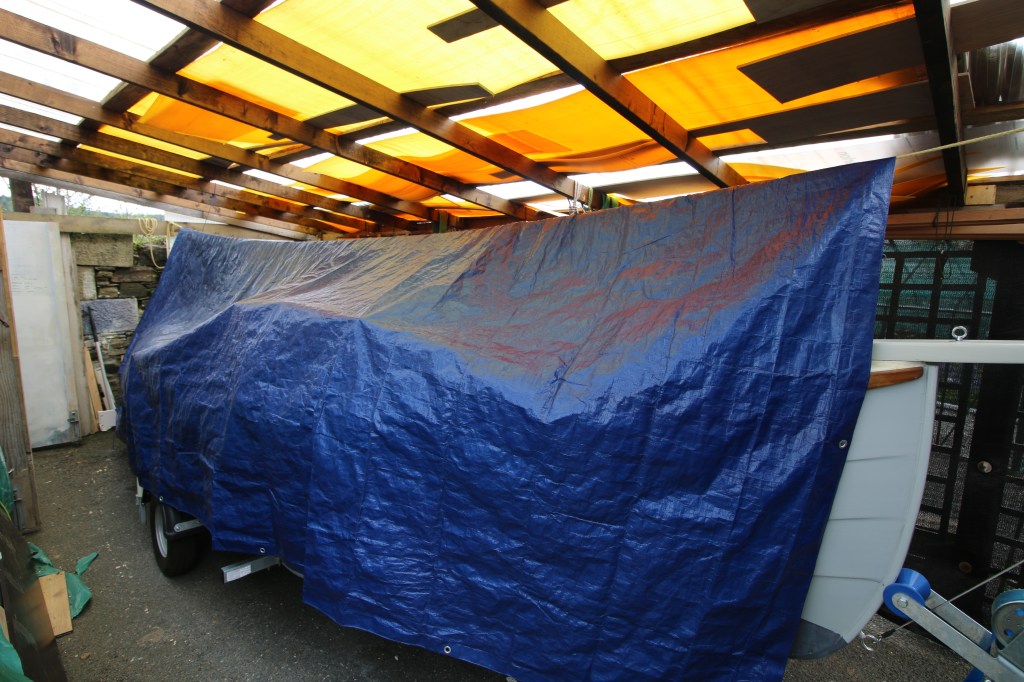
At home I have a variety of camping tarps that we’ve collected and used over the years, one of my oldest camping tarps did about 15 years of field work – often serving as a field kitchen for when I used to run bushcraft courses and then even more time as our ‘on the road’ rig and sun/rain protection at our regular summer camp. That tarp has just finished it’s working life by being the rain cover I rigged over the Pathfinder underneath the car port style open shelter – it got to the point where the fabric was tearing because of long term UV degradation and eventually became simply irreparable. Last winter I eventually replaced it with a large and heavy duty builders tarp and at much lower cost than a ‘proper’ camping tarp.
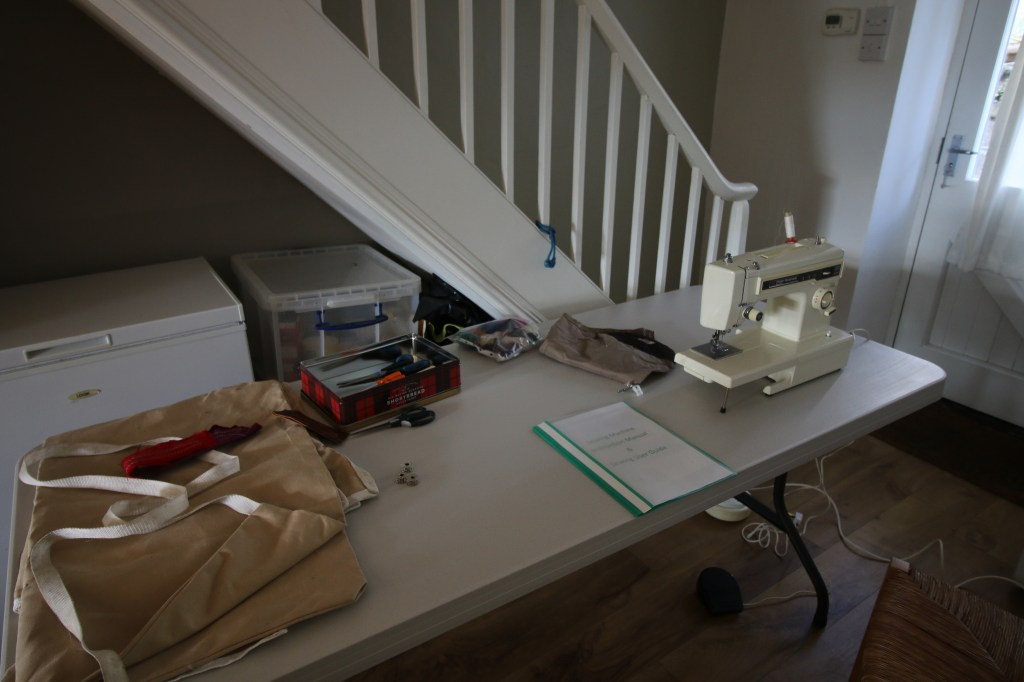
So anyway….I do happen to own a sewing machine which my partner bought for me a few years back – it’s a Frister & Rossmann machine, quite basic but it’s capable of quite heavy work with the correct needles. I haven’t done many canvas-work projects, in fact none for the boat as I mainly used it for making custom lightweight outdoor gear but this winter I set it up in the kitchen during the coldest part of the year to have another go at mending the previous boat cover tarp. I managed to repair some big tears but only temporarily as when the first big gale blew through it just ripped again somewhere else.
Fritz the Beaver….
This week, as I write, iv’e been doing all of the preparation of boat and trailer for it’s first road trip – even though that’s likely to be the short trip down to Plymouth. During that work I messed around with the idea of setting up the top end of the mast at different heights from it’s usual road-stowed position ; my idea and experiment was to set up a boat tent using the lowered mast in lieu of a ridgeline. That might sound utterly bonkers because it would then suggest having to lower the mast every time just to camp ….but….there are definitely times when I would need to do that anyway so….
One thing that I know I want to do and to be able to do quickly and easily is to lower the mast to get under low bridges ; to that end I spent the added time during main construction to build a tabernacle over a compression post to take the mast. Even now I can pull the boat out from under the shelter and almost immediately raise the mast and during my last week of work on the rig I also worked out the solo technique to lower it again under control. There are several places (even locally where I know I will want to lower the mast and, for example, consider a long road trip where we are likely to sleep inside the boat ; France is quite good for that approach at the many ‘aire’s’ on their motorway syetem.
Right now my immediate need is to make a simple shelter such that I can camp out on the boat when I launch it and probably live alongside a pontoon while I work out the next round of work – with that in mind iv’e ordered a smaller heavyweight tarp that will be very close to optimum size when the mast is down but raised above it’s road crutch. With access to several different sizes of camping tarp at home I played around with my two ‘in-use’ tarps partially to see if either would do the job – the answer was that the big 4 x 4 tarp would do but would need extensive modification and I would much rather keep it as is for the camping trips that we still do.
Long term I know I need to invest the time and materials to make a professional looking boat tent for the Pathfinder and my camping experience suggests not using the same techniques seen in most boat tent making video’s as usually seen on Youtube. The other side of that is that I also need to make other canvas-work pieces for the boat so i’ll quickly run through those as a lead-in to my proposed autumn and winter boat projects.
Tarp over lightweight tent technique….NZ if I remember.
Canvaswork projects.
1.Long term boat tent made in high quality polyester-canvas which can be rigged in three different configurations – over (lowered) mast, over boom and over conventional ridge line. My basic design takes features used by frontiersmen in existing designs such as the iconic ‘baker’ tent .
2.Custom stowage bags to fit the against-hull space each side under the cuddy for all of our soft items such as bedding and clothes. Each bag will also serve as a comfortable back rest for when we are sitting/reclining under the cuddy. Fabric and design as yet unknown, possibly nylon cordura and based on an asymetric rucksack/portage sac design except wider, lower and ‘thinner’ back in depth.
3.Custom stowage bags (as above) to take the 2 rolled up camping mats which I intend to re-purpose as fenders and which currently fit neatly under the side decks in the cockpit.
4.Custom sail covers for the mains’l, jib and ultimately stays’l.
5.Storage and road bags for the rudder assembly and especially the rudder blade.
These are one aspect of the list of autumn and winter jobs that currently comprises the second stage of the Pathfinder’s development as a cruising and expedition boat. Usefully I should be able to do all of that work inside the house during next winter when I will have a lot less work to do on the boat itself and when i’m not sailing. Just as a bit of a hint i’ll also be building the boat’s fixed electrical system including a huge and heavy (60 Kg) AGM battery and possibly the second rig for the boat.
The cuddy space where I intend the storage bags to go. (under the side windows where the gaff and tiller is sitting right now).

May…..
As you can tell from the video that goes with the post I set up ‘Fritz the Beaver’ again at home because it was a day of high pollen and thought that I would just set to and warm up by making the first 2 canvas bag covers…….several hours later……and this is not going well. I don’t know why but even going to the level of desperation of reading the instructions I still couldn’t get the machine to thread properly and when I finally did my stitching was all over the shop…..strange because I managed to make some quite neat pieces when I first used the sewing machine.
This, by the way (below) is the amazing and highly competent Howard Rice’s little SCAMP with which he cruised around the Magellan channel a few years back. He seems to know his way around both sewing and tent design as the tent on Southern Cross is all his own work.
Howard Rice photograph.


 Dirty Wet Dog, the great adventure.