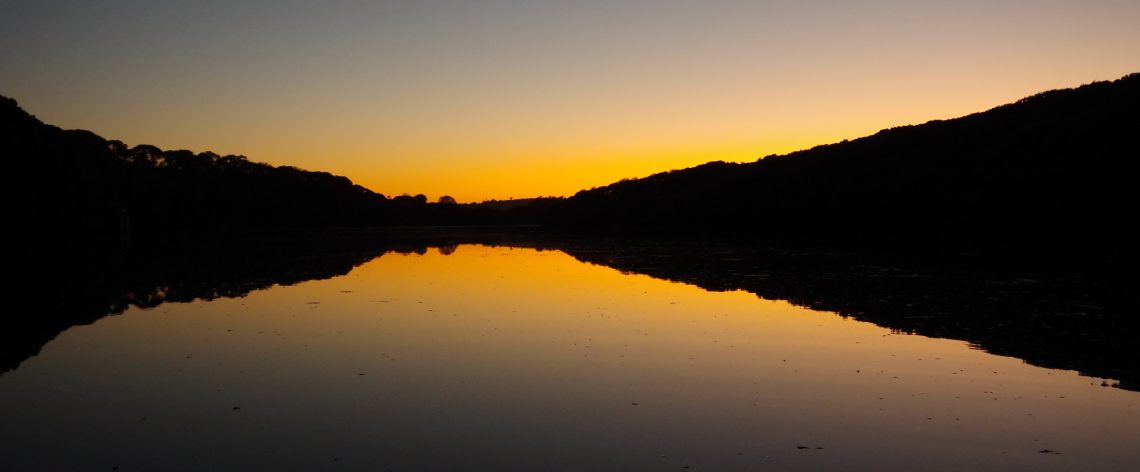

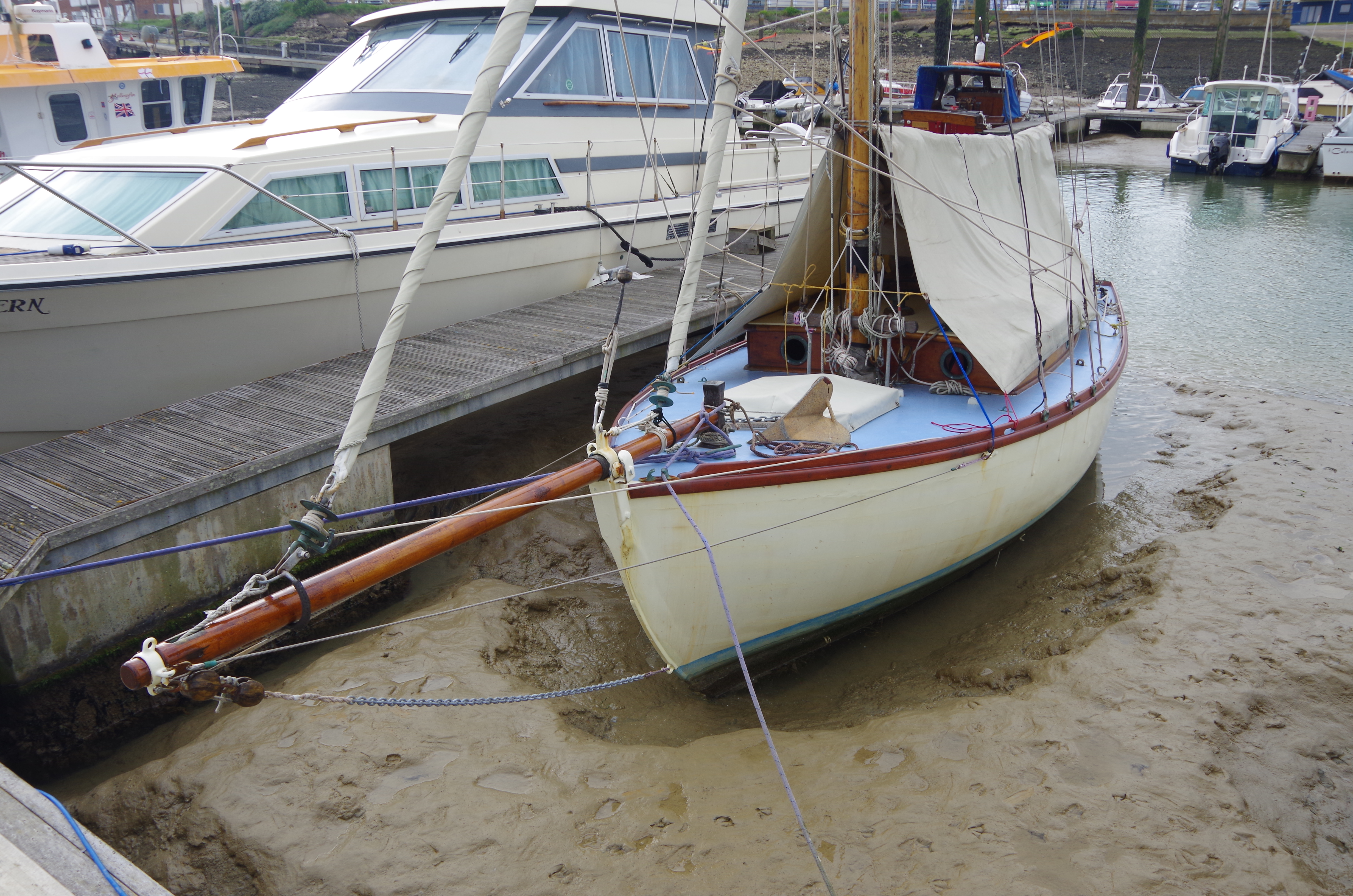
Maurice Griffiths that is.
My little boat is almost ready to go in the water for the first time so one of my jobs this week was to either continue working with my last logbook or go out and buy a new one – I chose the latter based on the principal of ‘new boat- new logbook. but I did also take some time down memory lane reading through my old ones. It might seem to be an unusual practice but even at this stage I have started to record the boat’s defects and omissions just as I would if I was at sea. My last one is a bit sad read because right at the end of my time with the little Liberty everything seemed to go wrong ; our engine packed up, then we were dismasted and the boat even tried to sink on us : the final kick in the teeth was the sale which was a horrible experience.
My old logbook provides the evidence that we had some great times with the little Liberty, notably when we finished a passage and fetched up in a quiet anchorage somewhere in the west country or over the water in Brittany. I note that I even had a personal code in my log book for those quiet days and nights at anchor where the only thing to disturb the peace was a bunch of Owls hooting away on either side of Ruan creek one night – just for effect I stood in the cockpit and politely shouted at them to be quiet – there was a final ‘oohwoo’ and then silence !
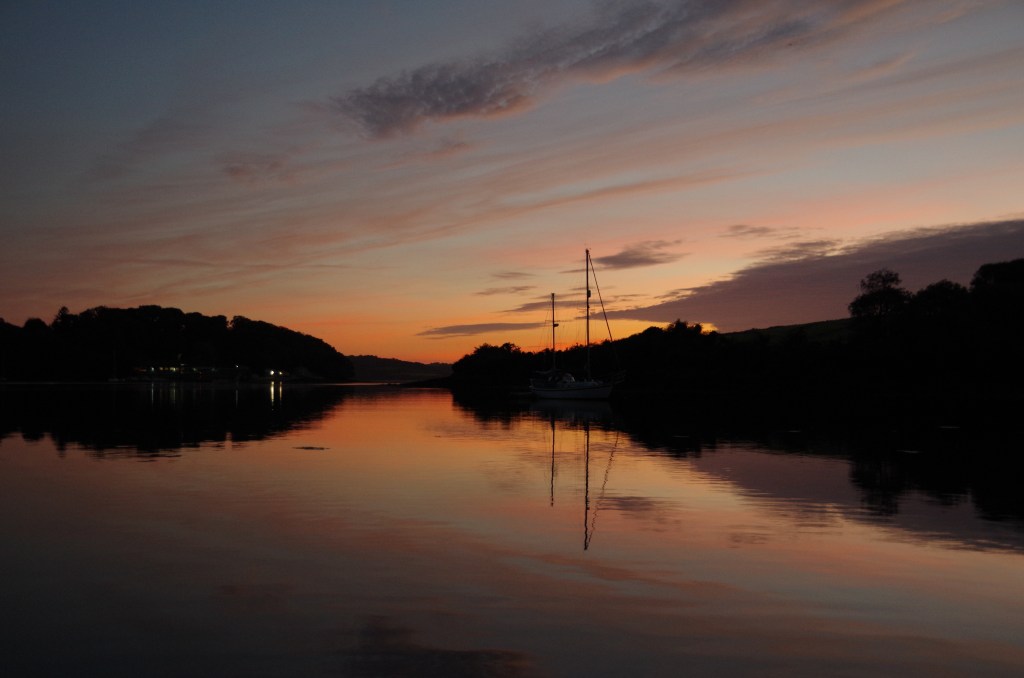
Several years ago a visitor to my blog remarked that I wrote like Maurice Griffiths and I strongly disagree ; he learnt to be a writer by turning out pieces for the yachting press on an old typewriter in a cold and damp bedsit somewhere at the cheap end of London bedsit land and then learnt to write books…..I , on the other hand am a ‘blogger’ and think of myself along Stephen Fry’s description which is ‘Graffiti with Punctuation. Griffiths designs for small and wholesome shallow draft yachts show both art and an understanding of the science of yacht design, his later writing captures something of the experience of being a Corinthian east coast sailor on a tight budget.
By all accounts MG’s early work life in cold and damp bedsit’s was a miserable experience and ultimately ruined his health ; to some extent I share that experience because I too spent years on a low income in bedsit land although not in London and not trying to be a writer. Although a shared experience and gladly left behind it’s not the kind of Maurice Griffiths moment that i’m talking about today. What i do wonder is whether what he did for work and how he had to live gave him the intense desire to be alone at anchor up a quiet creek somewhere – and he didn’t seem to mind if that was in the dead of winter.
Griffiths had to be in London because that’s where the work was and he sailed on the east coast because that’s where the branch line service out of Liverpool street would take him to any one of now defunct branch line stations where he kept a series of small yachts. Up until recently I have never sailed on the east coast having started my sailing life on the exact opposite side of the country and spent a lot of that time either thrashing around the Irish sea in a series of cruiser-racers or going deep ocean in one or other maxi yachts. In later years I feel that I grew up a bit as a sailor when I gave up racing and accepted that I too needed to get away from people for a while ; my escape from an insanely busy hospital job was also often an anchorage in one of the quiet winter-time rivers in this part of the world,
MG country, the Walton Backwaters.
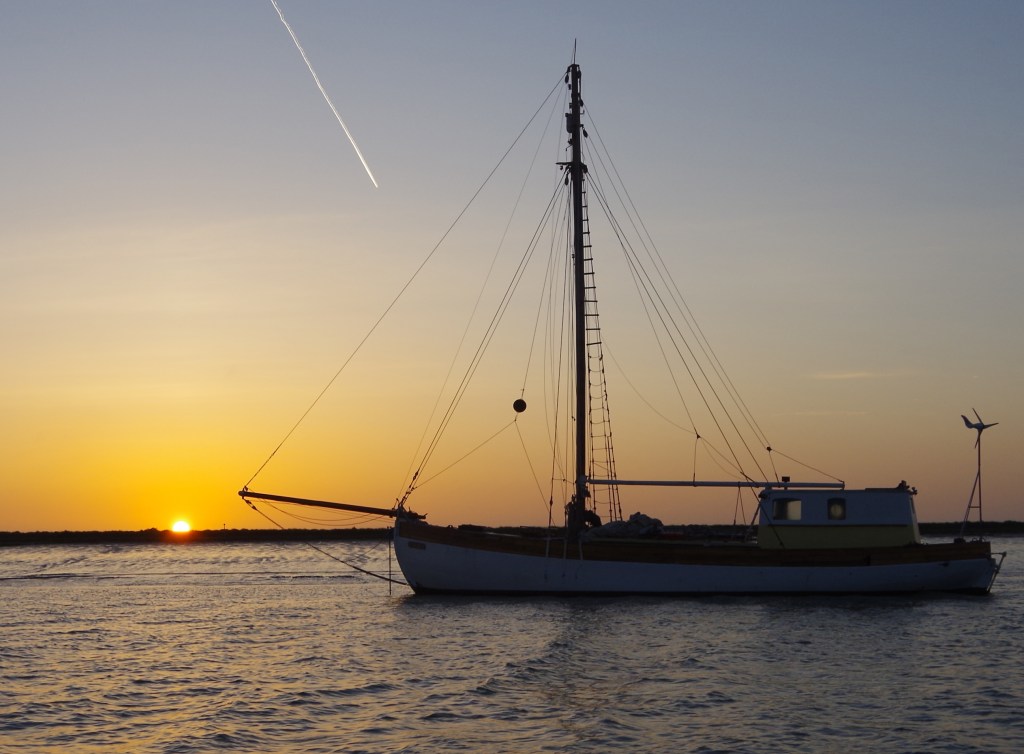
Those Maurice Griffiths moments…….or not.
My first real exposure to the east coast came via watching Dylan Winter’s video series about his time around the Thames estuary aboard the little boat that he affectionately named ‘The Slug’ and at about the same time I read one of MG’s most well known books ‘The Magic of the Swatchways’ so I figured that maybe I should go and search for a small boat on that coast and go take a look-see myself.
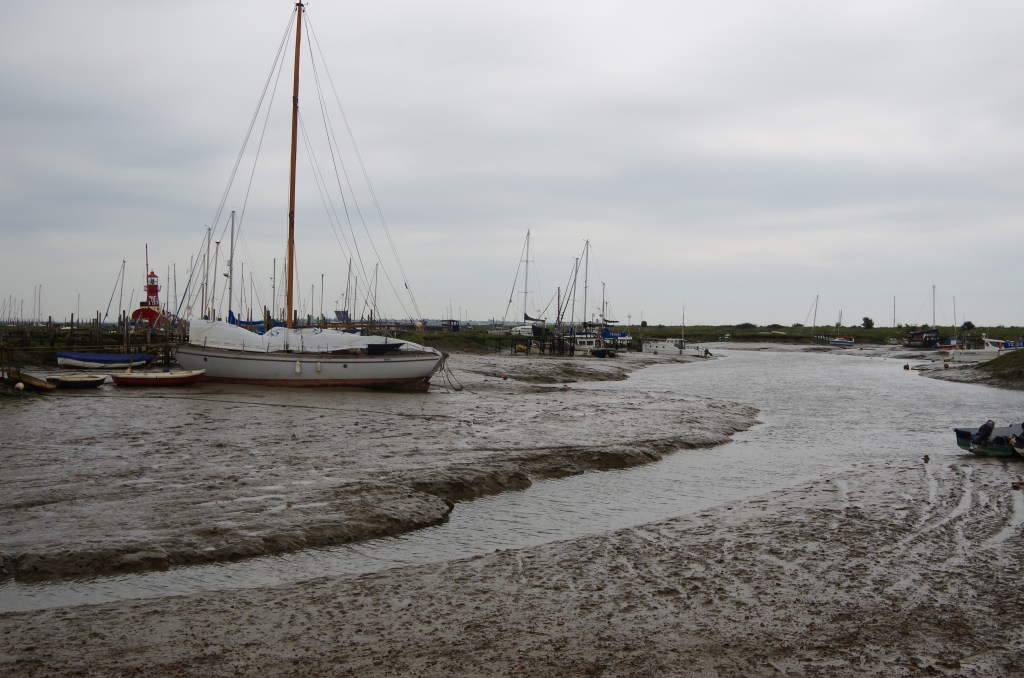
My first actual experience came when I drove all the way across the country from Cornwall to Essex via the M26 of course and then got fleeced for ‘extras’ (like actual parking and breakfast) by the Travel Lodge in Chelmsford and then had a thoroughly miserable drive out to the river Crouch the next morning to go and see a boat. Honestly….Essex doesn’t exactly sell itself on a damp and grey midweek morning at half tide when the whole view is somewhere between mud brown and slate grey sky, the boatyard was much the same and the boat even worse. I went aboard but only I think because I was already there – the boat was faded dull chalky GRP outside but damp inside and spotted with mold. A simple clean up I can deal with but the boat and it’s setting i just found ultimately depressing ; the south west isn’t all about white sand beaches and sparkling blue/green water but even on a bad day it was way better than this.
Maybe there is a charm to the muddy rivers and creeks but I couldn’t see it…..
Essex.
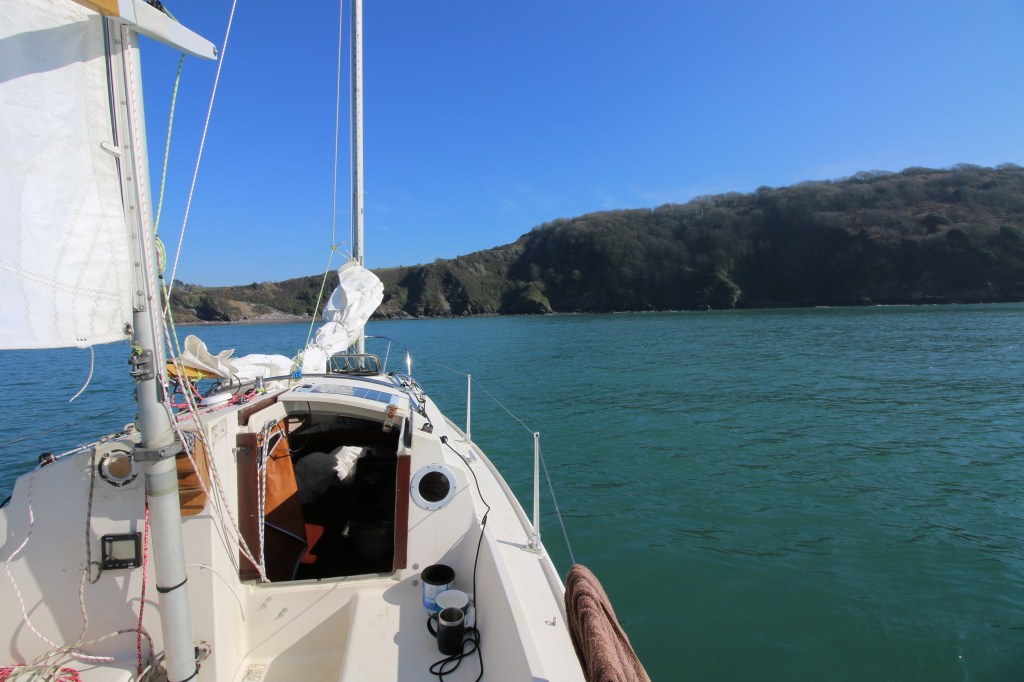
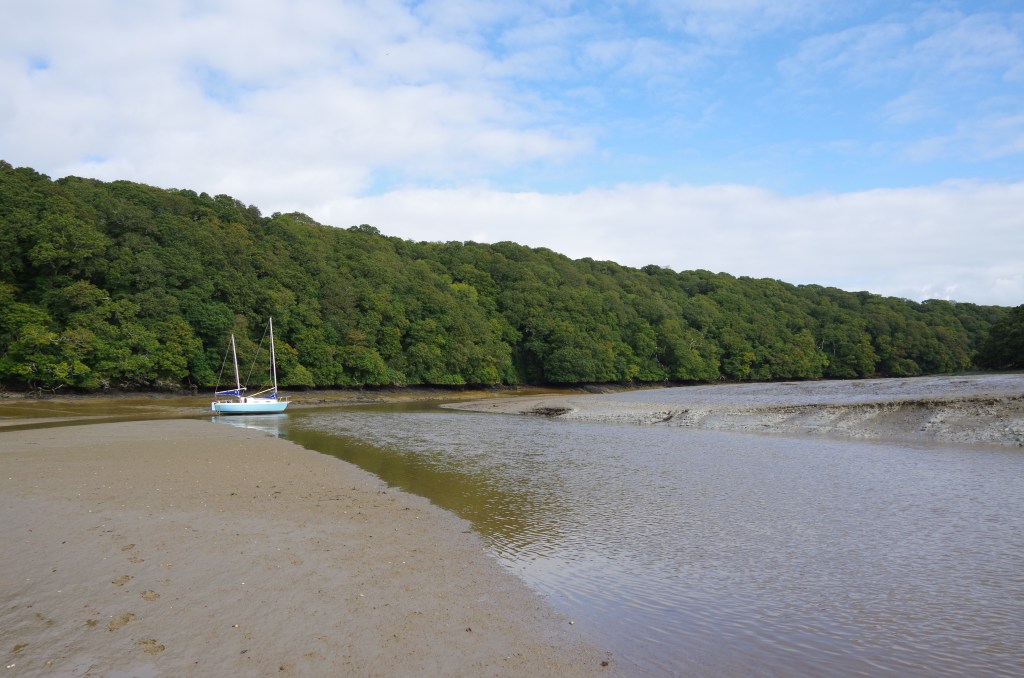
Cornwall.
That MG moment, second try.
For several years I thought that my ‘inner mud’ was calling me, like a deep and smelly version of local gravity, because every time that an interesting boat or potential project came up it was always in bloody Essex which, given that I live in between the major yachting centers of Plymouth and Falmouth did seem an odd coincidence. Maybe it was the kind of small boat that I was searching for at the time because small gaffers are relatively rare in the west country whereas it seems that you can’t move for them on the east coast ……thus it was another road trip up the M5, M4 and M26 – this time all the way to Suffolk and the ‘delightful’ port town of Ipswich where people, it seems, are a bit ‘special’.*
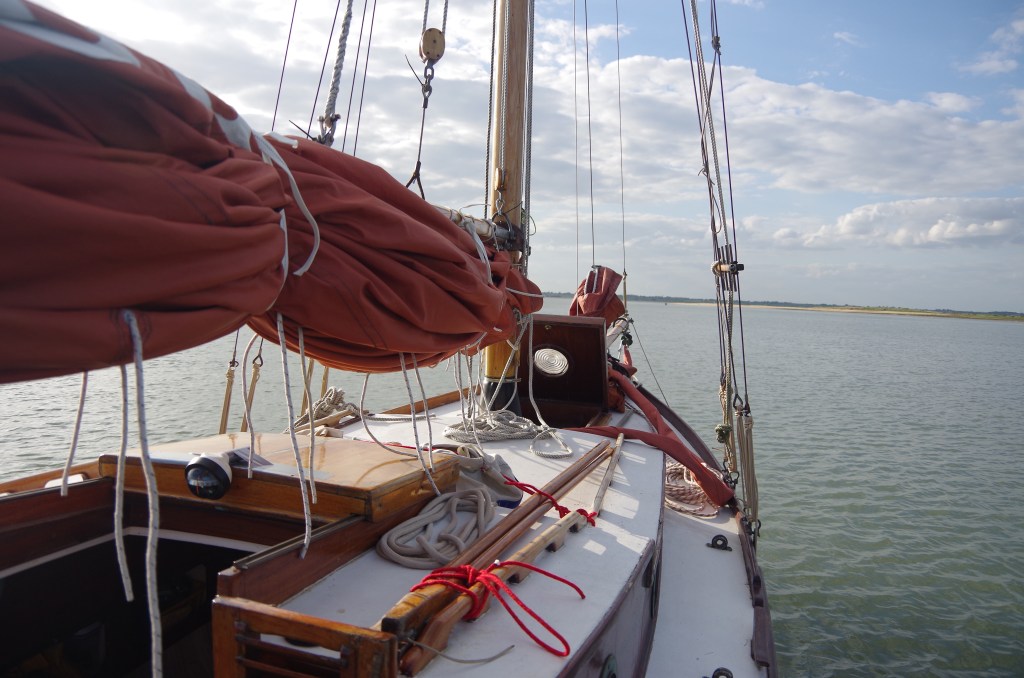
If your’e really going to try for the genuine east coast/Maurice Griffiths kind of experience then it should really be in a small and old wooden gaffer with no modern gear that had the genuine stamp of having been built in the area – thus it was with the 22 foot Deben 4 tonner that I found, bought , cleaned and cleaned again and then tried to sail home with. I have written about ‘Inanda’ several times in the past – she was a good idea but in practice a failure because while she sailed well in the Orwell and then the Thames she couldn’t cope at all with the bigger seas of the English channel and so by the time I got her onto my mooring I knew that I wasn’t going to keep her even though I’d had at least one genuine MG moment in her.
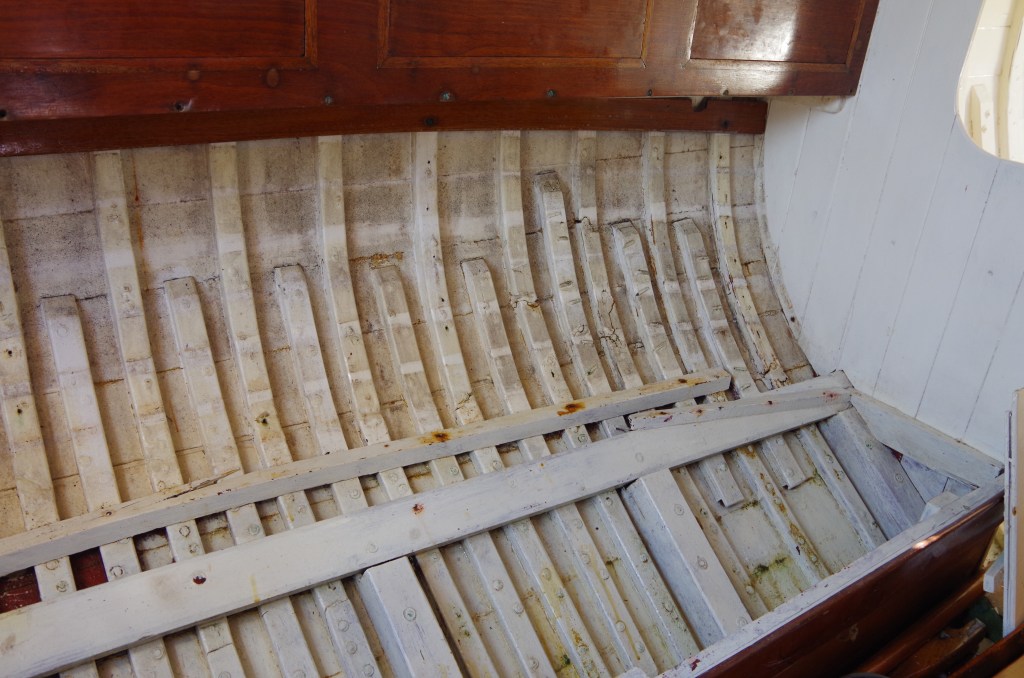
Inanda was filthy inside when I bought her and she smelt damp, stale and mouldy but I was much more prepared for that so I stripped her out totally, even to the extent of taking out the slatted lining to get to her hull which made her at least live-able inside while I set her up to sail. She had no modern gear except for her engine but she did have something i’d always wanted which was a charcoal ‘Pansy’ stove. I didn’t mind that all of Inanda’s stays and shrouds were held in place by simple lashings, as it happens several of them were so UV decayed that they came apart in my hands and I simply replaced the whole lot.
I also found Inanda hard to sail because the Wykeham-Martin jib furling gear continually ‘trolled’ me until I took it off and flew the jib free like an Essex smack, then, she had the nasty habit of always wrapping a jib sheet around one of the cleats at the gooseneck so I was continuously running up the mast to free that when short tacking later on. Of course she was a wet boat as well in the rain and I had one miserable night at anchor somewhere behind Dungeness point in the pouring rain where anything that could leak did leak and there was only one small section of bunk where I could sit and not get a continually running drip…..luckily i’d thought to take one of my ex army bivvi bags on the voyage with me otherwise my sleeping bag would have been soaked right through as well.
So….a damp, smelly and leaky old gaffer that was a total sod to sail in the narrow and shallow tidal rivers and creeks….how ‘Maurice Griffiths’ is that ?
Chichester.
That long wet and cold night behind Dungeness point spent mostly wrapped up in my bivvi bag I wrote up my own definition of what counted as points towards the ultimate MG moment and one of those was having to use the Pansy stove even in summer just to dry the boat out once the rain had passed…..here goes…..
To make it a genuine Maurice Griffiths experience the boat has to be old and very second, third or fourth-hand or way beyond plus it has to wooden, gaff rigged and leak like a sieve but it can have a stove, in fact needs one for any degree of winter comfort – MG often wrote about being at anchor with a full blizzard blowing over the boat so that counts.
Then, it has to be an awkward , difficult or bad tempered boat to sail that will always wrap a sheet around a cleat or deliberately head towards and onto a mud bank whenever it can and especially on a falling tide – it’s essential then that the engine is sulking and won’t start which necessitates getting in the dinghy on a wet night and rowing out a kedge to haul off with.
The ideal MG moment is when you, the skipper, have a specific anchorage in mind but the boat has a mind of it’s own and has chosen exactly the right moment to foul a sheet and get stuck in irons at which point it will always find a way to take advantage of a shifting wind and a tidal eddy to neatly bury it’s forefoot straight into the one mud bank that isn’t marked by Withy’s and when you aren’t carrying or towing a dinghy. For the full effect the boat then has to develop a sick making cyclical roll that shoots the kettle off of the stove and sets the whole boat to rattle and clatter until it settles at an angle in the mud…..which stinks.
Of course it will be cold and either raining or snowing.
Some people call me cynical.
Postscript – further thoughts.
I think that you can tell that I didn’t enjoy my brief time on the east coast compared say to being on my own in one of the many wooded valley rivers we have in the south west but there again I felt that my mission there was to get Inanda home so that I could start refitting her. That didn’t happen for two main reasons ; first that I had a knee replacement which would have made the actual work I had to do painful and difficult, secondly that the boat didn’t cope very well with the English channel and neither did it offer any real advantage over the little Hunter Liberty which gave me much better access to the same rivers and creeks.
Something that I took from Maurice Griffiths books though was that he got by with very basic boats and minimal gear plus he got a lot out of his boats by not always laying up in the winter, rather that the spring, autumn and winter sometimes seem to be his favoured times of the year. In his day and with far fewer boats on the water he seemed to easily find what he needed which was a quiet escape on the water and from his writings it is the times when weather was hard and he was tucked away in shelter somewhere with his stove going with a gale or one time a whole blizzard blowing over the boat. Times like that remind me more of being in a mountain hut or bothy and later on with being aboard the Liberty in a creek somewhere in winter with my own stove going and a kettle set in the fiddle rail just about to start whistling.
Of course it isn’t mandatory that an ‘MG’ moment can only be fully enjoyed and experienced aboard an old wooden gaffer somewhere up a muddy river on England’s east coast , I have had many in the south west by going out early in the year and late and several of those have been while hiding out from an autumn gale. Iv’e never been much influenced by Maurice Griffiths own designs mainly because iv’e never seen one that I liked that I could also afford so, like MG himself, I am a ‘make do’ kind of sailor – more influenced by his books than his yachts. On my bookshelf I have his Swatchways series, one of his yacht design books and his earlier work about Sailing on a small income – that one is dog-eared and yellowed – almost falling apart and I have to remember that he was writing actively over 80 years ago and might even have known ‘Inanda’ in her prime.
I don’t think that it’s essential to have a love for the east coast either ; one day I will most likely sail the Pathfinder there on it’s voyage around England – although i’m more likely to bring it home again on it’s trailer rather than having to deal with the long slog along the south east coast. If anything i’m more drawn to Norfolk and the strange waters of the Wash than I am the much written about rivers and creeks of Kent, Essex and Suffolk but if I take anything from MG’s life and writing then it is also to write about getting by with a minimal boat, simple gear and a tiny income – not just write about although I enjoy that but also to try and capture something about those MG moments in video form.
Best wishes Y’awl
This week’s video.

 Dirty Wet Dog, the great adventure.